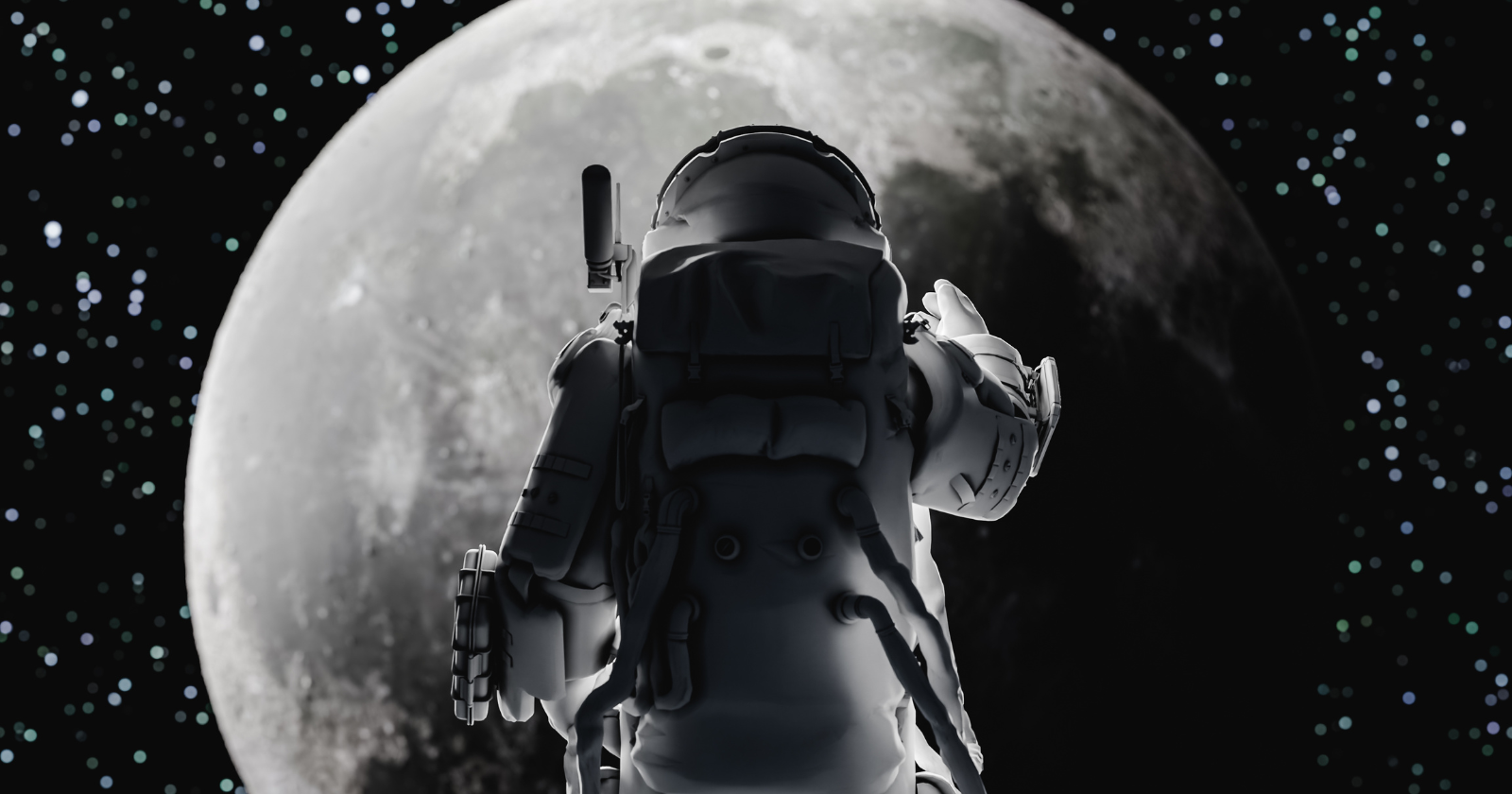
In 1965, a 30-year-old cosmonaut named Alexei Leonov became the first human to walk in space — and somewhere in the middle of the live broadcast, while the world was watching the Soviet Union's greatest propaganda triumph, mission control quietly cut the feed, for reasons that wouldn't be publicly known for almost thirty years
Space Science Mind & Meaning Long Reads Archive About Search Space Travel In 1965, a 30-year-old cosmonaut named Alexei Leonov became the first human to walk in space — and somewhere in the middle of the live broadcast, while the world was watching the Soviet Union's greatest propaganda triumph, mission control quietly cut the feed, for reasons that wouldn't be publicly known for almost thirty years On 18 March 1965, at 07:00 GMT, the Soviet spacecraft Voskhod 2 lifted off from Baikonur Cosmodrome carrying two cosmonauts: Pavel Belyayev, the mission commander, and Alexei Leonov, then thirty years old, the man assigned to make the first spacewalk in human history.
On 18 March 1965, at 07:00 GMT, the Soviet spacecraft Voskhod 2 lifted off from Baikonur Cosmodrome carrying two cosmonauts: Pavel Belyayev, the mission commander, and Alexei Leonov, then thirty years old, the man assigned to make the first spacewalk in human history. The flight plan called for Leonov to step out of an inflatable airlock attached to the spacecraft, spend roughly ten minutes outside on a tether, and return.
American television networks picked up the Soviet feed. Soviet state radio carried the live audio. Leonid Brezhnev, watching from the Kremlin, transmitted a personal congratulatory message to the cosmonaut floating above the Crimea. The mission was the first time anyone had left a spacecraft in orbit, and the Soviet space programme had once again beaten the Americans to a major first.
Then, in the middle of the broadcast, the feed cut out. State radio replaced the cosmonauts’ voices with Mozart’s Requiem on loop. The Soviet public was given no explanation. The American networks lost their picture. What was happening inside the airlock at that moment was something that did not become widely known for decades, in part because the people who lived through it had every reason not to tell the story while their careers depended on the Soviet space programme’s image.
The Soviet broadcast resumed once Leonov was safely back in the cabin. The public was told the mission had gone according to plan.
The spacewalk crisis turned out to be the first of a sequence of failures, almost any one of which could have endangered the crew. The Voskhod 2 mission was meant to last roughly a day. Before reentry, the spacecraft’s automatic guidance system malfunctioned. Belyayev had to orient the craft manually using an optical sighting device, which required him to lean horizontally across both seats while Leonov held him steady, then return both cosmonauts to their seats fast enough to fire the retro-rocket with the centre of gravity in the right place. The Voskhod design carried both a main and a solid-fuel backup retrorocket, but each was single-firing. There was no margin for a missed attempt.
The parachute deployed. The landing module came down in deep snow in dense taiga forest in Perm Krai in the Urals, roughly 400 kilometres from the intended landing site near the Kazakh steppe, though some Soviet-era sources cite figures closer to 1,000 kilometres depending on how the off-target distance is measured. According to the European Space Agency’s tribute to Leonov after his death in 2019, mission control did not initially know where they were. The rescue beacon was picked up by listening stations as far away as Bonn, but not, at first, by the Soviet recovery system.
Belyayev and Leonov spent the first night in the capsule with the exit hatch effectively missing (the explosive bolts had blown the hatch clear into the snow and the gap was open to the air), in country where, by Leonov’s later account, wolves and bears were a known seasonal hazard. Leonov subsequently acknowledged that no predators were actually sighted; the danger was the cold itself, with outside temperatures dropping to roughly minus 30 Celsius. The sweat that had pooled in his suit during the spacewalk was still inside the suit, threatening frostbite. The cosmonauts stripped naked inside the capsule, wrung out their underclothes, and reassembled the inner layers of the suits to retain enough body heat.
It took a second day for ground teams to reach them on skis. A helicopter could not land in the dense forest. A rescue party had to cut down enough trees to clear a landing site, which took another full day. The cosmonauts skied out to the cleared zone on the third morning before being flown to Perm.
Almost none of this was known to the public at the time. The Soviet space programme operated under tight secrecy as a matter of policy. Mission failures were not announced, and successful missions were sanitised for propaganda purposes. The public version of Voskhod 2 was that Leonov had performed the first spacewalk, the crew had returned safely, and the Soviet Union had once again led the world in space exploration. Each of those statements was technically true. The version told to the public left out everything that would have undermined the message.
The first cracks in the official account came in the late 1980s, during the era of glasnost, when Soviet historians and journalists began to acknowledge that the early space programme had been considerably more dangerous than the propaganda implied. Leonov himself spoke about the suit emergency in interviews from the early 1990s onward, including a series with the BBC. The full narrative, in his own voice and with the operational details intact, became broadly available in the West only with the 2004 publication of Two Sides of the Moon. The contemporaneous mission report he had written in 1965, which complicated some of his later dramatic telling, did not become publicly available until 2020, the year after his death. According to Britannica, Leonov continued to be candid about the close calls of the Voskhod 2 flight for the rest of his life. He died in Moscow in October 2019, aged 85.
The decision to suspend the live feed was, in retrospect, a careful piece of crisis management for the Soviet leadership’s purposes. If Leonov had died in the airlock, the broadcast would have made the death real-time and global. If he succeeded, as he did, the silence allowed Soviet officials to control how the story was told. The Requiem playing on state radio was probably standard contingency programming used by Soviet broadcasters when sudden silences needed filling, but it carried, for any listener who later learned what had been happening, an unintended weight.
The Voskhod programme did not continue beyond this flight. The remaining planned Voskhod missions were cancelled, partly because the Soviet leadership had decided to pivot to the Soyuz programme, partly because the chain of near-disasters on Voskhod 2 had made clear that the Voskhod design was a stop-gap built on a Vostok airframe and not really suited to longer or more ambitious missions. According to TIME‘s 2020 history of Leonov’s spacewalk, the engineering changes that came out of Voskhod 2, particularly to the spacesuit design, fed directly into the suits used on later Soyuz missions.
The first American spacewalk took place on 3 June 1965, when Ed White stepped outside Gemini IV for roughly 23 minutes. White’s spacewalk was longer than Leonov’s and was broadcast in full, in keeping with NASA’s broader operating principle that the American space programme would be conducted in public, with most failures included in the record. The contrast between the two approaches to publicity, on the same activity in the same year, became one of the recurring features of the space race for the rest of the decade.
Leonov himself returned to space ten years later as the Soviet commander of the Apollo-Soyuz Test Project in July 1975, the first joint American-Soviet crewed mission. The handshake in orbit between Leonov and the American astronaut Tom Stafford was, by then, a piece of carefully managed Cold War theatre. The man making it had nearly died on his first flight in a sequence of accidents that the world only began to learn about properly twenty-five years after they happened, and would not see fully documented until five years after his death.
Space Daily articles are produced with AI assistance and reviewed by editorial staff before publication. See our editorial standards and masthead.
The Space Daily Editorial Team produces content across our two editorial pillars: space industry news and Mind & Meaning. We cover launches, missions, satellites, defense, and the technology of getting humans to space, alongside the psychology of ambition, isolation, and meaning under extremes. Articles reflect our team's collective editorial process, source verification, drafting, technical review, and editing, rather than a single writer's work. Space Daily takes editorial responsibility for content under this byline. For more on how we work, see our editorial policy.
Highlights of the week in space, science, and the human mind - delivered to your inbox via Substack.
Original Source
This content was distilled for a focused reading experience. All rights belong to Space Daily.
Read original publication