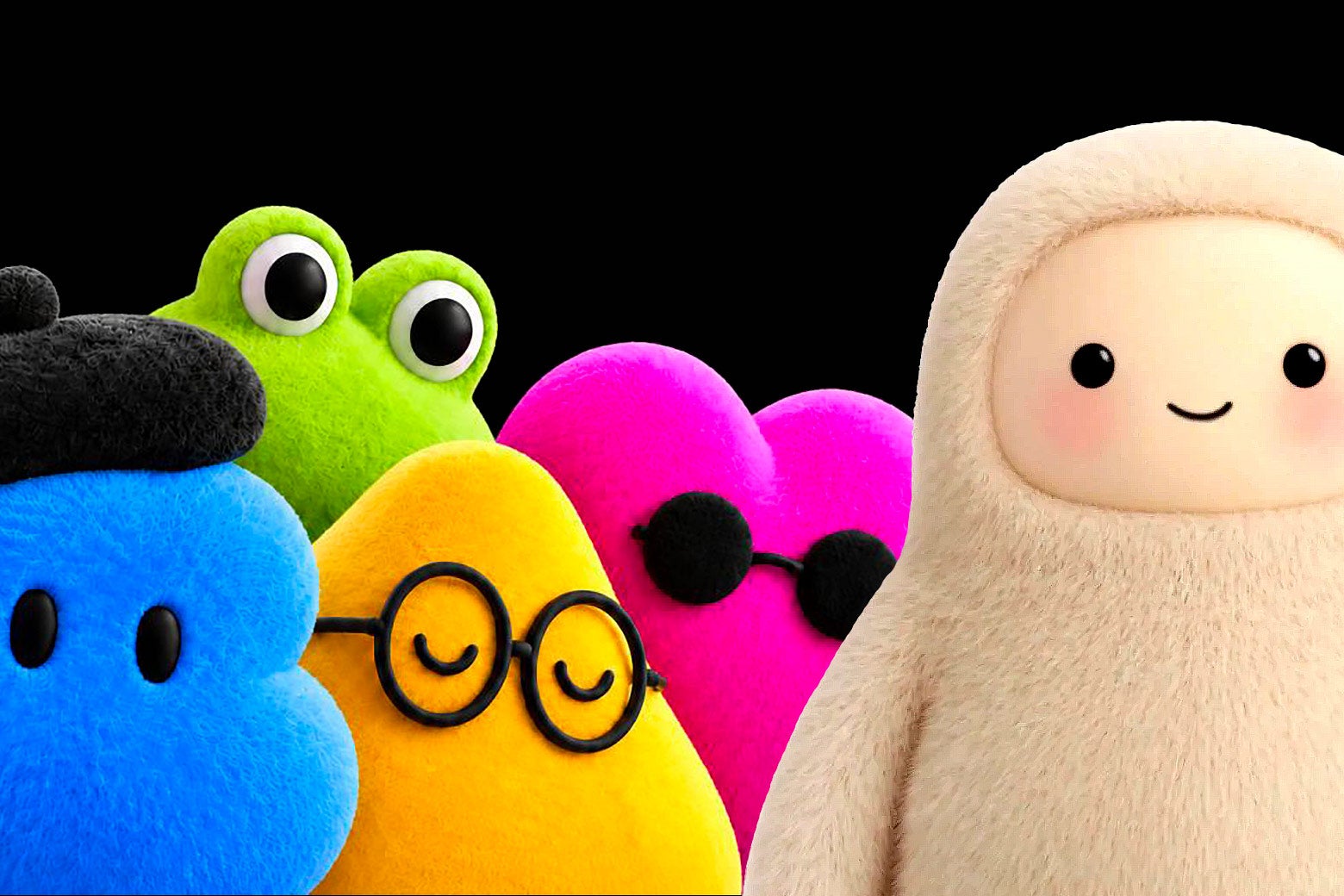
Meta’s Muse A.I.: How Mark Zuckerberg found a cute way to win your trust.
The shift here is hard to miss if you have followed how the technology industry presents A.I. tools in user interfaces. For the first few years of the boom, tech companies made design decisions that portrayed A.I. as a magical, mythical force. The “sparkle” icon was at the vanguard of this trend, a magical-looking diamond that suggested something incredible was behind the door if you just clicked that button. The industry has not totally done away with the idea of magic—heck, Meta uses the word explicitly to describe Muse completing a task—but Zuckerberg and Sam Altman have clearly identified their gateway to the wider use of agents. These things are not mysterious machines that may disrupt the world in all kinds of ways. They are cute, helpful little fellas who want to assist you in digesting the world, one bite at a time.
The timing is interesting. The leaders of Anthropic are at least flirting with the delusion that Claude (a wildly capable tool, no doubt) is conscious. The first hint may have been that “Claude” is a human name. Altman has tried to make hay out of that weirdness, writing recently, “I am very uncomfortable about people trying to ascribe religious force or a surrender of human judgment to AI models, and think it is a real safety issue.” But it’s not like Altman doesn’t see the value in ascribing just a little bit of humanlike shine to A.I. models. It’s Altman, not Anthropic’s Dario Amodei, who calls Dots “proactive assistants.”
These are big, unsettling matters. But do you know what is not concerning? A cute little guy. And the titans of tech have made clear that cute little guys will be your sherpas into the new world. If a model winds up causing a big problem in your life, you might feel tempted to blame the billionaire humans behind it. But if a cute little A.I. guy messes up, well, how could you be mad at him? He’s cute!
“Whenever I saw the Muse avatar, I could only think of a child’s toy,” Heather Turner, an associate chair and professor in the department of English at Santa Clara University, told me. This is not a new part of the UX playbook. Microsoft ran it with Clippy, the bouncing paperclip that came with Office as far back as the 1990s. Jeeves was a nice gentleman who answered our questions for decades. Muse is walking well-trod ground. Dots aren’t even OpenAI’s first cute little things: It launched an optional “pet” for its desktop app last spring. I have noticed a variety of other tech businesses moving in the same direction lately with their A.I. features. Descript, a video-editing app, has an A.I. interface that is dressed as a bouncing pumpkin right now. When you start seeing these cute little guys, you’ll never stop.
A few things are probably happening here. One is an unsubtle effort to make us nicer and more open-minded toward this tech. “If you designed your Muse avatar or if you designed your Dot in the likeness of your pet, perhaps you would feel a little bit more forgiving if your pet coughs up a hairball, right?” Turner said. “Or whatever the digital version of coughing up a hairball is.” Minutes before we talked, I read this hilarious Wall Street Journal story, which featured an anecdote about Elon Musk’s Grok putting someone’s bank statement into a group Slack channel. “That’s on me,” it said. “Wrong audience for personal cash—period.” Yep, that’s on it! Sometimes you order the wrong cereal, and sometimes you share someone’s bank statement with their co-workers. But what if you do that and are cute?
That specific failure is a bug, but being comfortable with its possibility is a feature. Agents can live up to that name and be good organizational assistants, rather than souped-up search engines that can talk back to you. But they can only do that if they’ve got a pretty wide sweep of your digital life and are instructed to work with what they’ve got. The leaders of the A.I. industries are extremely unpopular and make bad messengers for requesting this sort of access. It’s extremely reasonable to not want a man like Zuckerberg near more of your info. A cute little guy, on the other hand? “Would this Jellycat-esque toy be something that you might feel more comfortable giving over more data?” Turner asked, rhetorically. The little guy will protect it!
The little guy–industrial complex also feels like a natural pivot point in not just A.I. design but public messaging. The past few years of sticklike messaging have not resulted in a popular tech sector. (It turns out people aren’t elated about a machine worker taking their job or causing human extinction, both recent theories laid out by prominent tech people.) These little fellas represent a departure from all of that: cuddly digital pals whose highest calling is to help you reclaim some of your time. This is not a prediction of whether agents will ultimately do that for more than just power users, or whether that’s a good thing, given the clear externalities at play. Do I want to have to send out a little digital warrior to fight for me every time I want to book a golf tee time, lest there be none left? Probably not. But if our A.I. future winds up somewhere on the more dystopian end of the spectrum, won’t you want your guide through it to be a cute little guy?
Slate is published by The Slate Group, a Graham Holdings Company.
Slate relies on advertising to support our journalism. If you value our work, please disable your ad blocker. If you want to block ads but still support Slate, consider subscribing.
Original Source
This content was distilled for a focused reading experience. All rights belong to Slate Magazine.
Read original publication