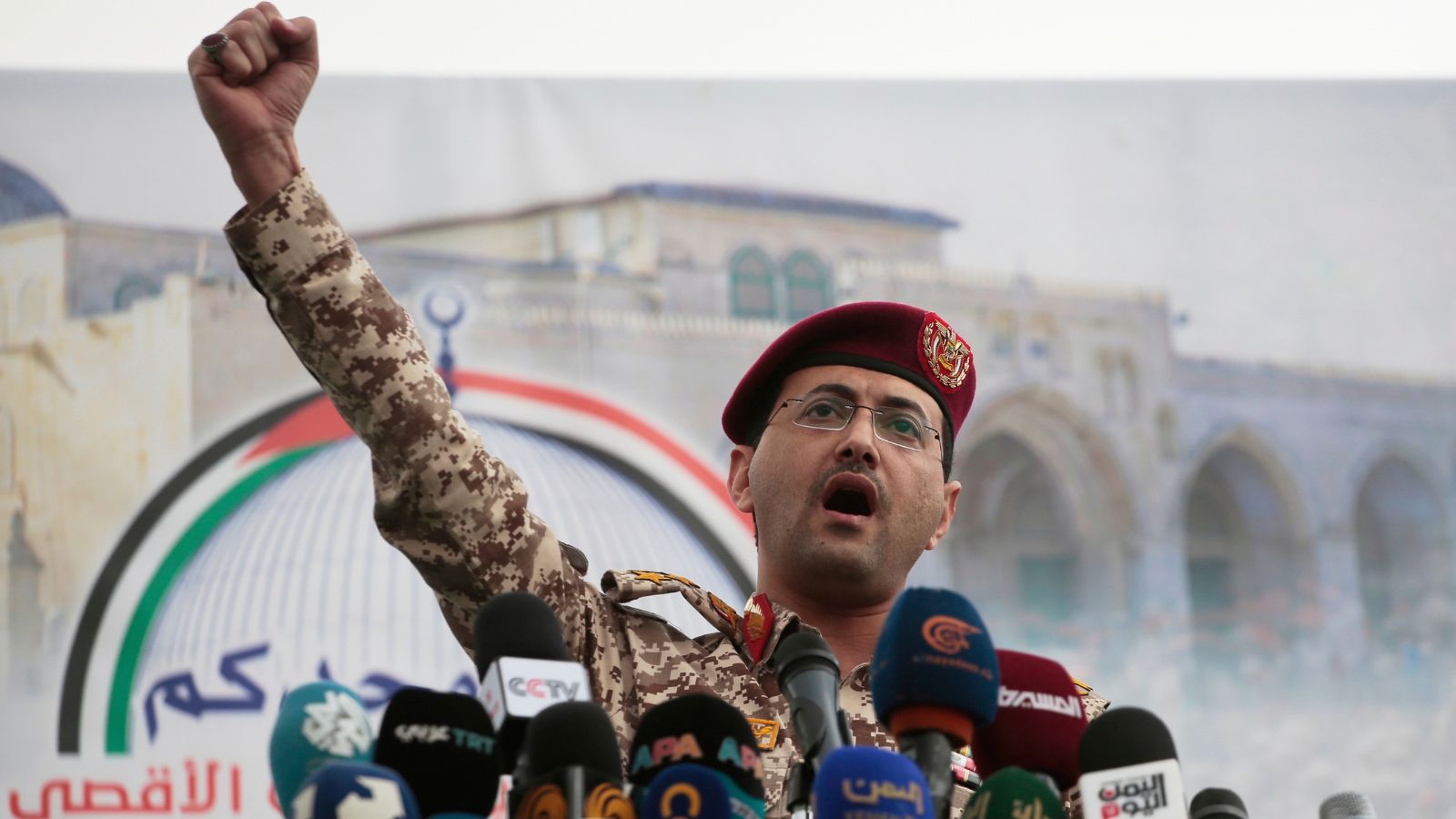
Iran asks Yemen’s Houthis to prepare Red Sea blockade: What it means for global oil
The report added that the Houthis were recently informed of Iran’s request.
A source close to Houthis, according to Reuters, said the group has deployed missiles and drones near the Bab el-Mandeb Strait and is awaiting orders to begin attacks on vessels transiting the strategic waterway.
With the Hormuz Strait already closed, Houthi attacks in the Red Sea could disrupt the Middle East’s two main oil export routes, deepening the energy crisis.
Representatives of Iran’s Islamic Revolutionary Guard Corps (IRGC), according to Reuters, will determine when to close the Bab el-Mandeb Strait.
After Iran’s partial blockade of Hormuz following the February 28 attacks disrupted most Gulf exports and delivered a global energy shock, the Red Sea emerged as the critical alternative outlet for Gulf oil — petroleum volumes transiting Bab el-Mandeb hit 7.4 million barrels per day in June, about 7 per cent of global output, up from 4.2 million bpd a year earlier, according to data from ship-tracking analytics firm Kpler cited by Reuters.
Saudi Arabia has moved all the shipments it could to its Yanbu port on the Red Sea coast, and Riyadh is considering expanding its crude pipeline to the Red Sea, Reuters reported last week. Closing Bab el-Mandeb would therefore not be a repeat of the 2023-24 Houthi campaign, when Gulf oil still flowed freely through Hormuz; this time, cargoes are actually being loaded at Red Sea ports, meaning a serious disruption would shut both of the region’s major oil export routes simultaneously — the scenario oil markets have feared since the war began.
For India, the threat cuts both ways. New Delhi sources the bulk of its crude from the Gulf and Russia, and both supply lines run through the threatened chokepoints — Gulf barrels through Hormuz and the Red Sea workaround, and Russian Urals cargoes through the Suez Canal and Bab el-Mandeb.
Amid the escalating tensions in the region, Washington and Tehran continue to exchange missiles, striking military targets.
The US Army on Friday said it carried out a fresh wave of strikes against Iran on President Donald Trump’s direction, marking a sixth consecutive night of American strikes. The US forces launched precision munitions, including fighter jets, aerial drones, and warships and hit dozens of Iranian military targets.
“US forces, including fighter jets, aerial drones, and warships, launched precision munitions that hit dozens of Iranian military targets such as coastal surveillance and air defence sites, military logistics infrastructure, and maritime capabilities. This was the sixth consecutive night of U.S. strikes against Iran,” US Central Command (CENTCOM) said in a post on X.
In response to America’s attacks on the Islamic Republic, Iran launched its retaliatory strikes targeting US military infrastructure in Kuwait, Qatar, Bahrain and Jordan.
Original Source
This content was distilled for a focused reading experience. All rights belong to The Indian Express.
Read original publication