UPSC Key-20th Oct 2026: Ethnic Conflicts in Manipur, Disinvestment and Free Trade Agreement
Listen 00:00 0.5x 0.75x 1x 1.25x 1.5x 2x AI Narration This audio is AI generated.
Manipur again: Three killed, attack triggers protests, revives fears
Preliminary Examination: Current events of national and international importance.
Mains Examination: General Studies III: Role of external state and non-state actors in creating challenges to internal security.
What’s the ongoing story: Three Meitei men were killed and three others injured in an attack by suspected Kuki militants near Nongsum Hills in Imphal East district on Monday, raising fears of renewed violence between the two communities after a brief period of relative calm between them.
• What is the difference between militant and insurgent? How militancy is different from insurgency?
• Know these terms-Terrorism, Insurgency, Belligerency and Civil war
• “The insurgent groups are intricately woven into the daily life in Manipur”-Comment
• For some time now, two parallel and provocative narratives in the portrayal of Manipur history were being pushed from certain quarters-What are those two parallel and provocative narratives?
• What is the role of ethnic and communal tensions in the North-eastern region of India with a focus on the Manipur conflict?
• The incident occurred around 9 am at Khongban Sunurok, under the jurisdiction of Sagolman police station. The site of the attack lies along the boundary between Imphal East and Kuki-dominated Kangpokpi district.
• The deceased have been identified as Arubam Ronil, 35, of Nongshum Mayai Leikai; Lairenlakpam Inaobi, 44, of Nongshum Awang Leikai; and Kshetrimayum Sushil, 32, of Uyumpok Mayai Leikai. Sushil reportedly succumbed to his injuries while being taken to hospital.
• The injured have been identified as Meisnam Somendro, 55; Bonson Khingdram, 45; and Ngangom Suraj, 19. All three are undergoing treatment at a private hospital in Imphal.
• The Meiteis are the largest community in Manipur. There are 34 recognized tribes, which are broadly classified as ‘Any Kuki Tribes’ and ‘Any Naga Tribes’. The central valley in the state accounts for about 10% of the landmass of Manipur, and is home primarily to the Meitei and Meitei Pangals who constitute roughly 64.6% of the state’s population. The remaining 90% of the state’s geographical area comprises hills surrounding the valley, which are home to the recognized tribes, making up about 35.4% of the state’s population.
📍Expert Explains | The long, fractured history of Manipur, and the road ahead
Previous year UPSC Mains Question Covering similar theme: 📍The North-Eastern region of India has been infested with insurgency for a very long time. Analyze the major reasons for the survival of armed insurgency in this region. (UPSC, GS3, 2017) 📍What are the major challenges to internal security and peace process in the North-Eastern States? Map the various peace accords and agreements initiated by the government in the past decade. (UPSC, GS3, 2025)
Beyond the name: The fault lines in the Centre’s Ladakh proposal
Preliminary Examination: Indian Polity and Governance-Constitution, Political System, Panchayati Raj, Public Policy, Rights Issues, etc.
Mains Examination: General Studies II: Indian Constitution—historical underpinnings, evolution, features, amendments, significant provisions and basic structure.
What’s the ongoing story: In May, months after violent protests over statehood left four dead and 44 injured in Ladakh, the Union Home Ministry and a sub-committee negotiating constitutional safeguards appeared to make their first breakthrough — a customised, “first-of-its-kind” body under Article 371.
• How are the new regulations different from existing provisions?
• Articles 371 to 371-J in Part XXI of the Constitution of India contain special provisions for certain states-know in detail
• The two sides seemed to be moving towards consensus, with the Centre proposing a unique Union Territory-level body under Article 371(K), requiring Parliament’s approval.
• But the October 15 meeting in Leh exposed how far apart the two sides remain. After several hours of negotiations, talks appeared to have stalled, with both sides blaming the other for the lack of progress. While Ladakh Chief Secretary Ashish Kundra said the talks were “somewhat stuck on the question of the name”, the region’s representatives called the proposal “unsatisfactory and unacceptable”, citing fundamental differences over the proposed body’s structure, powers and constitutional safeguards.
• The Union Home Ministry’s 32-page draft, handed over to Ladakh’s leaders on October 15, proposed a Union Territory-level elected body under an arrangement involving Article 371(K), while ruling out a legislature on the lines of Jammu and Kashmir. The leaders rejected it the following day, citing “significant gaps” between the two sides’ positions. Two days later, the Ladakh administration accused the leaders of dismissing the draft as “worthless within two hours”.
• “We had provided them with the draft. The expectation was that they would study it and tell us how to proceed. Unfortunately, that is not what happened. The officials come from Delhi. They had worked very hard to prepare these documents over 3-4 weeks, and they had done so in good faith,” Ladakh Chief Secretary Ashish Kundra said. “It was said that nothing had been offered and that there were no provisions for constitutional safeguards.”
• Ladakh’s demand for greater political and constitutional protection dates back to the reorganisation of Jammu and Kashmir in August 2019. There was initially considerable enthusiasm, particularly in Leh, after Ladakh was made a separate Union Territory. The Buddhist-dominated Leh district had long sought UT status, arguing that it had been neglected by the erstwhile Jammu and Kashmir government. That waned after it became clear that while the Union Territory of Jammu and Kashmir would have a legislature, Ladakh would not.
• The region had four MLAs in the erstwhile J&K Assembly. After 2019, its administration was largely led by bureaucrats, not by elected officials, deepening a sense of political alienation. Changes to domicile rules in Jammu and Kashmir also sharpened concerns in Ladakh over land, employment, demography and cultural identity. The Union Territory currently has two Hill Councils, in Leh and Kargil, but neither is under the Sixth Schedule. Their powers remain limited. These concerns eventually fed into demands for statehood, inclusion under the Sixth Schedule and greater democratic control over Ladakh’s administration.
• The Sixth Schedule, under Article 244 of the Constitution, provides for autonomous administrative divisions called Autonomous District Councils, or ADCs, which enjoy a degree of legislative, judicial and administrative autonomy within a state. ADCs can make laws, rules and regulations relating to subjects such as land, forests, water, agriculture, village councils, health, sanitation, inheritance, social customs and mining.
• The Sixth Schedule currently applies to tribal areas in Assam, Meghalaya, Mizoram and Tripura. In September 2019, the National Commission for Scheduled Tribes recommended that Ladakh be brought under the Sixth Schedule, noting that the new Union Territory was overwhelmingly tribal and had a distinct cultural heritage requiring protection. However, no region outside the Northeast has so far been included under the Sixth Schedule.
• Articles 371 and 371-A through J contain “special provisions” for specific states. These provisions vary considerably from state to state, but broadly seek to protect local political, cultural, social or economic interests.
• Under Article 371-A, for example, laws made by Parliament relating to Naga religious or social practices, customary law and procedure, and ownership and transfer of land and resources do not automatically apply to Nagaland unless the state Assembly agrees. Similar protections have been extended to Mizoram under Article 371-G. Articles 371-B and 371-C provide for special committees within the Legislative Assemblies of Assam and Manipur, while Article 371-F provides special arrangements for representation in the Sikkim Assembly. Special provisions also exist for Arunachal Pradesh and Goa. If Article 371(K) is introduced for Ladakh, it would mark a significant departure from this pattern because Ladakh is a Union Territory, not a state.
• The Sixth Schedule creates autonomous district-level institutions with constitutionally defined powers. The proposed Article 371(K), by contrast, appears to be aimed at creating a directly elected governing body at the Union Territory level with legislative authority over specified subjects. This would give Ladakh a separate constitutional arrangement, rather than simply extending the Sixth Schedule to the Union Territory. The exact difference will depend on the wording of the draft. The most important unresolved questions concern whether the elected body would have executive authority, control over budgets and planning, and powers over police and law and order. Until these are settled, it remains unclear how much power the proposed body would actually exercise.
Previous year UPSC Mains Question Covering similar theme: 📍Recent directives from Ministry of Petroleum and Natural Gas are perceived by the ‘Nagas’ as a threat to override the exceptional status enjoyed by the State. Discuss in light of Article 371A of the Indian Constitution. (UPSC, GS2, 2013)
Bending towards bold reform: IDBI stake sale, 26-year arc of governance
Mains Examination: General Studies III: Indian Economy and issues relating to planning, mobilization, of resources, growth, development and employment.
What’s the ongoing story: N.K. Singh Writes— Has Prime Minister Narendra Modi’s governance brought about winds of change? Modi has just commenced his 26th year in public office. The IDBI strategic disinvestment, the largest FDI in India’s financial sector, carries a broader significance.
• What is the difference between privatization and disinvestment?
• What is the role of Department of Investment and Public Asset Management (DIPAM)?
• What are the advantages and limitations of strategic disinvestment?
• What are the potential implications of a foreign strategic investor acquiring control of an Indian bank?
• The cabinet’s decision to divest it to a private entity, Fairfax, is a major step toward improving the efficiency of financial intermediation. It could signal lower capital costs. Even so, it will be a long haul.
• The arc of capital reform has come full circle: From nationalising private banks to privatising a national bank. This matters because India’s cost of capital remains above that of ASEAN peers, weakening competitiveness. Within the domestic regulatory framework, the legacy burden of the cash-reserve ratio, statutory liquidity ratio and priority-sector lending circumscribes optimum credit allocation. A banking system steeped in PSU culture may not consistently give Indian entrepreneurs capital at a globally competitive cost.
• In the past, I have lamented the tardy pace of reforms in India’s factors of production (land, labour, capital) despite the big changes of 1991. Post-Independence India was shaped by Fabian Socialism and a deep distrust of private capital. The nationalisation of 14 banks in 1969, and six more in 1980, brought 91 per cent of banking under public control. Political lending and recurring bad-loan crises were the deleterious features of this model.
• I recall the mixed opinions when private banks in India were nationalised. That was an era of political dependence on left-oriented policies. The much-applauded far-reaching economic reforms of 1991 bypassed the structural changes needed in other factors of production. It took PM Modi’s leadership to implement the four labour codes. Land and agricultural reforms have encountered political constraints. IDBI’s divestment builds on the asset monetisation model launched during the pandemic.
• The matrix of Modi’s governance is captured by Lee Kuan Yew’s maxim: “Policy is implementation; implementation is policy.” Six Cs stand out clearly in the model rehearsed in Gujarat but refined and implemented in Delhi.
• First, consistency. Modi inherited a state recovering from the Bhuj earthquake and recast governance from an administrator-oriented approach to one centred on enabling. Vibrant Gujarat (2003) signalled investor confidence through “minimum government, maximum governance”. In Delhi, that focus on delivery has powered Jan Dhan, Aadhaar, UPI, Swachh Bharat, Ayushman Bharat, IBC, GST, DBT and PRAGATI.
• Second, continuity or the capacity to judge what works amongst programmes he inherited, while recalibrating them for greater development. Aadhaar has been scaled into one of the world’s largest digital public infrastructures. VB-G RAM G builds on MGNREGA, retaining its statutory employment guarantee while raising it from 100 to 125 days and linking employment more closely to durable rural assets, livelihoods and infrastructure.
• Fourth, sustained efforts to persuade and build a consensus. The Nobel prizes to Daniel Kahneman and Richard Thaler recognised behavioural economics and “nudge” theory. Modi has mastered both, reaching people through Mann Ki Baat, Swachh Bharat and Beti Bachao Beti Padhao. The GST Council is a unique experiment in pooled sovereignty: Modi persuaded states to vest their taxation sovereignty in a body of which they are members. This cooperative federalism could extend to state-level regulation, audit and procurement, with the Finance Commission as constitutional anchor for sharing best practices. Decisiveness need not shade into authoritarianism.
• Fifth, commitment. The fiscal glide path has survived a pandemic and more than halved the central fiscal deficit. Under the IBC, gross NPAs fell from 11.2 per cent in 2018 to 1.8 per cent in 2026. Inflation targeting anchored monetary policy. For the first time, effective capital expenditure (4.4 per cent of GDP) exceeded the fiscal deficit (4.3 per cent). PM Gati Shakti maps over Rs 100 lakh crore of infrastructure across 16 ministries. Make in India 2.0, PLI and the Semiconductor Mission drove structural reform. Solar capacity surpassed India’s Paris climate pact targets five years early.
• Sixth, calibration. The old world order has dissolved, and multilateralism is being displaced increasingly by plurilateral, if not bilateral, transactional mercantilism. The challenge remains of harmonising the past with the emerging new order. Nine FTAs signed by the Modi government cover 38 countries. The G20 and BRICS presidencies gave the Global South and Africa a greater voice.
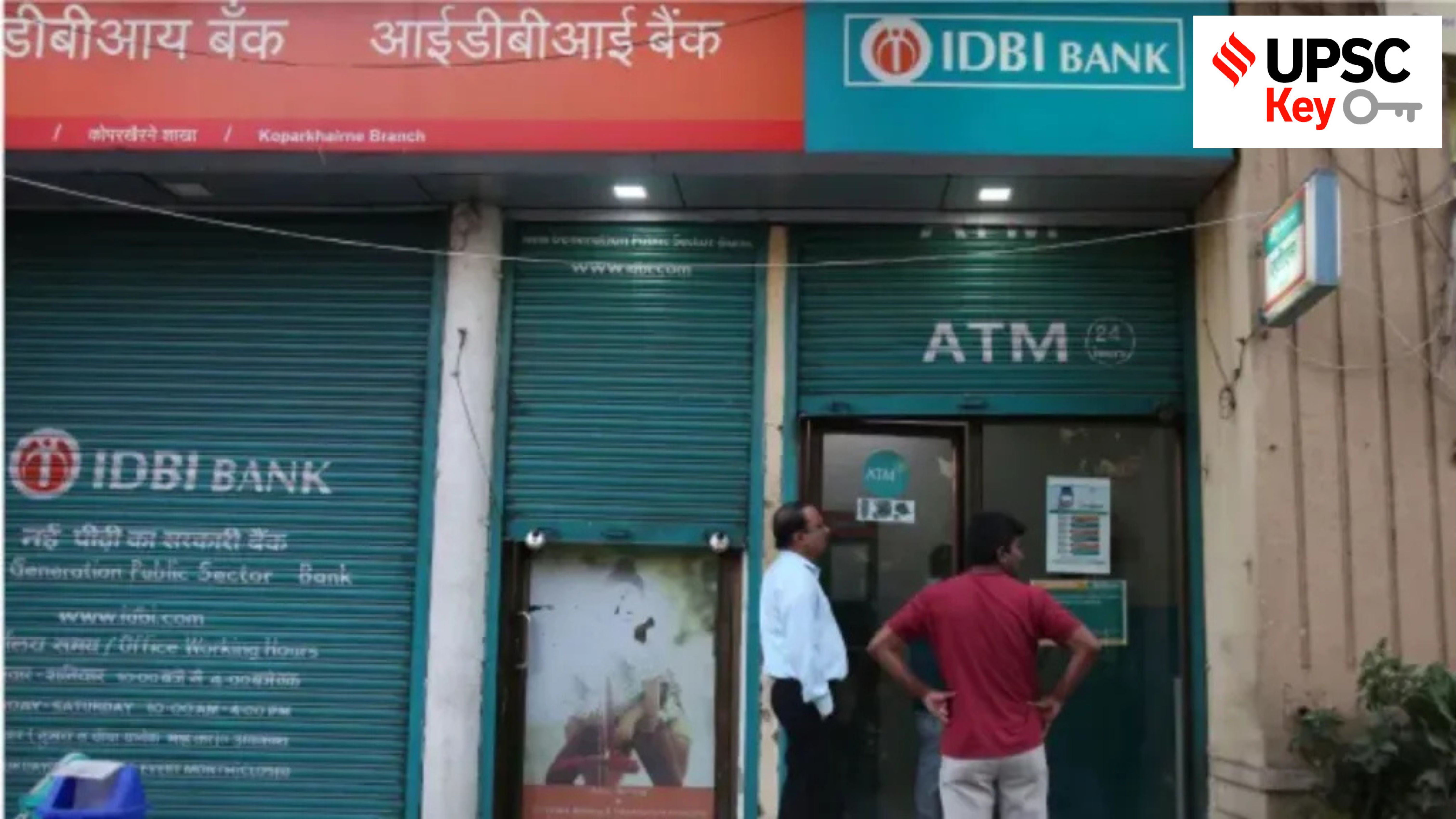
• The Cabinet Committee on Economic Affairs Wednesday cleared the long pending disinvestment of IDBI Bank, choosing Toronto-based Fairfax Financial Holdings, backed by Indian-Canadian billionaire Prem Watsa, as the ‘strategic buyer’ for Rs 52,878 crore.
• The sale of 60.72% stake in IDBI Bank, the largest ever Foreign Direct Investment (FDI) in India’s financial sector, is expected to be completed by March 2027.
• Following the CCEA nod, Union Finance Minister Nirmala Sitharaman said, “It is not a disinvestment, but a restructuring. This is because the government will remain invested in IDBI Bank.”
• According to the PIB, IDBI Bank Ltd. is a scheduled commercial bank regulated by the Reserve Bank of India (RBI). Due to its poor financial health, the Bank required repeated infusion of capital, initially provided by the Government of India and later by the LIC. On 5th May, 2017, the Reserve Bank of India (RBI) put the IDBI Bank under the Prompt Corrective Action Framework and imposed several restrictions in view of its non-performing assets and losses incurred by the Bank. After considering the improvement in the Bank’s financial health, the RBI later, vide its letter dated 10th March, 2021, lifted the restrictions imposed on the IDBI Bank subject to certain conditions and continuous monitoring.
📍In fact: The gradual evolution of India’s disinvestment policy
Mains Examination: General Studies III: Conservation, environmental pollution and degradation, environmental impact assessment.
What’s the ongoing story: From the Opinions Editor— A rainfall-deficit monsoon has given way to an unseasonal heat spell in Mumbai. On October 12, the city recorded 38°C — more than 5°C above normal — and residents sweated through much of the past two weeks as they would in peak summer.
• How concrete structures, asphalt roads, reduced vegetation and dense urban development contribute to elevated temperatures in cities?
• What are the health implications of PM2.5, PM10 and ground-level ozone, and distinguish between their major sources?
• What is the relationship between climate change and urban air pollution?
• How temperature, wind speed, humidity and rainfall influence the concentration and dispersion of pollutants?
• Know the significance of mangroves, wetlands, urban forests and open spaces in improving urban climate resilience and protecting coastal cities such as Mumbai.
• The India Meteorological Department attributed the unusual weather to an anticyclonic circulation and shifting wind patterns that delayed the sea breeze, depriving Mumbai of its natural cooling mechanism. High humidity compounded the discomfort, while the urban heat-island effect, caused by concrete buildings, asphalt roads and shrinking green spaces, trapped heat in densely built neighbourhoods.
• More worryingly, the weather appeared to aggravate the city’s pollution problem. Weak winds and stagnant atmospheric conditions impeded the dispersal of pollutants, while high temperatures and intense sunlight favoured ground-level ozone formation.
• Mumbai’s experience is a reminder that climate change and air pollution, often treated as separate environmental challenges, can interact to magnify the risks facing urban populations. The city’s coastal climate may moderate temperatures under normal conditions, but it can no longer be taken for granted as a shield against weather vagaries and deteriorating air quality.
• Fine particulate matter, particularly PM2.5, penetrates deep into the lungs and can enter the bloodstream, contributing to respiratory and cardiovascular disease.
• Ground-level ozone damages the respiratory system, while extreme heat places additional stress on the heart and kidneys. Exposure to both hazards can be particularly dangerous for people with existing illnesses. Outdoor workers, older people, children and residents of poorly ventilated homes are especially vulnerable. The problem is not confined to Mumbai.
• Climate change is making unusually warm spells a concern even during winter, when public-health systems may be less prepared for heat-related risks. Research by the University of Chicago’s Climate Impact Lab, published last month, has highlighted the potential for substantial heat-related health impacts in India during winter, underscoring the need to prepare for risks beyond the conventional summer season.
• A week after Mumbai came fifth in the list of most polluted cities in the world, a latest ranking carried out by IQAir — an independent US-based global air quality assessment organisation has classified Mumbai as the third most polluted city globally, with an AQI reading of 166, in a list of 122 global cities.
• Kuala Lumpur (Malaysia) topped the list with an AQI of 192, while Kolkata ranked second with an AQI of 170. In all three Indian cities, PM 2.5 has been identified as the primary pollutant.
• The Central Pollution Control Board (CPCB) on Monday showed Mumbai’s AQI in the unhealthy category at 114. The CPCB dashboard also showed that 13 out of the 20 AQI monitors operational in Mumbai have shown unhealthy readings — Navy Nagar (Colaba) 158, Bandra Kurla Complex (BKC) 156, Andheri East 145, Siddharth Nagar (Worli) 143 and Malad 138.
📍Mumbai air has turned dangerous, city jumps from 5th most polluted to 3rd in a week
Previous year UPSC Prelims Question Covering similar theme: 5) Artificial way of causing rainfall to reduce air pollution makes use of (UPSC CSE, 2025) a) silver iodide and potassium iodide b) silver nitrate and potassium iodide c) silver iodide and potassium nitrate d) silver nitrate and potassium chloride
Previous year UPSC Mains Question Covering similar theme: 📍Describe the key points of the revised Global Air Quality Guidelines (AQGs) recently released by the World Health Organisation (WHO). How are these different from its last update in 2005? What changes in India’s National Clean Air Programme are required to achieve revised standards? (UPSC, GS3, 2021)
What’s the ongoing story: The Supreme Court on October 15 held that “the right to access and use the internet is a fundamental right of every individual.” A bench of Justices J B Pardiwala and K V Chandran added that children, “irrespective of their age, enjoy the same rights”, and that “the safety of our children and their freedom are not at odds with each other. Our children are entitled to both.
• What restrictions did the court decline? Does that rule out all curbs?
• Is access to the Internet a fundamental right under Article 21 of the Indian Constitution?
• Which all are the major barriers that prevent access to internet?
• What does the right to access the internet mean when several states, including Karnataka and Andhra Pradesh, plan screen-time curbs for children, some countries restrict minors’ use of social media, and governments suspend internet services during protests?
• In 2024, a two-judge bench of the Supreme Court comprising Justices D Y Chandrachud and J B Pardiwala held that viewing, possessing, and not reporting the possession of any child pornographic material constitute offences under the stringent Protection of Children from Sexual Offences (POCSO) Act and the Information Technology (IT) Act, even if this is not disseminated further.
• It overturned a Madras High Court order that had quashed the chargesheet against an accused, holding that downloading and privately viewing such material, without publishing or transmitting it, was not an offence. Just Rights for Children Alliance, a coalition of NGOs, challenged the Madras HC order before the court and sought directions to intermediaries on reporting such material.
• The Supreme Court in later orders noted platforms’ lapses in complying with those directions, and that news reports showed paid promotion of child sexual exploitation and abuse material (CSEAM) through redirect links.
• Another ruling, in Pragya Prasun v Union of India (2025), a two-judge bench held that excluding persons with disabilities from digital KYC violated Article 21 and that “the right to digital access is an intrinsic component of the right to life”.
• It also cited Cricket Association of Bengal (1995): Article 19(1)(a) includes “the right to know and to receive and impart information and ideas”. Last week’s ruling said that “for many children, particularly in remote areas, it is often the only source of learning and information.”
• The Court’s reading of the right to access the internet as a fundamental right underpins its rejection of blanket bans or disproportionate restrictions on children’s internet access.
• The Supreme Court has held that the right to access and use the internet is a fundamental right that extends to children. It said safety measures should target harmful material and those responsible for it, not children’s access. It did not rule out safeguards: it left the Union to design a parental-consent and “child mode” framework, and said the Union can restrict categories of content that are inherently harmful.
• The Union must frame guidelines, amend the IT Rules where needed and file an affidavit before the next hearing on December 10, 2026. States enacting laws on screen time curbs for minors will have to ensure these restrictions remain within constitutionally permissible limits.
India-New Zealand FTA kicks in, gives exports zero-duty access
Mains Examination: General Studies II: Bilateral, regional and global groupings and agreements involving India and/or affecting India’s interests.
What’s the ongoing story: India-New Zealand trade deal, which has secured full tariff elimination for all Indian exports to New Zealand while reducing tariffs on 95% of New Zealand’s imports into the country, came into effect on Tuesday. Under the pact, New Zealand has also committed to invest $20 billion in India over the next 15 years.
• Know the significance of the India–New Zealand FTA for India’s exports.
• What are the areas of cooperation and conflict between India and New Zealand?
• A host of Indian goods from labour-intensive sectors such as leather, footwear, apparel and textiles will attract zero import duty in New Zealand from October 20, when the India-New Zealand FTA comes into force, Commerce and Industry Minister Piyush Goyal said on Monday.
• He added that sensitive sectors such as dairy, onions, chickpeas, peas, corn, almonds, artificial honey, and sugar have been kept out of the trade deal. The commerce ministry has also notified the procedure for allocation of Tariff Rate Quotas (TRQ) under the trade agreement. Goods under TRQ include apples, kiwi fruit, albumin and Manuka honey.
• The Minister said Centres of Excellence would be established under the agricultural partnership, particularly in areas such as apples, kiwifruit and honey. He said that sensitive agricultural sectors, including dairy, would remain protected under the agreement.
• Goyal said the Commerce and Industry departments would work with state governments to inform farmers, entrepreneurs and businesses about opportunities arising from the FTA. The agreement was signed on April 27 and ratified on September 21. Bilateral trade in goods and services currently stands at $ 2.4 billion.
• India and New Zealand have little bilateral trade, standing at $1.3 billion in 2024–25. New Delhi’s goods exports during the last financial year stood at $711.1 million, and imports stood at $587.13 million.
• Even as New Zealand is one of the largest producers of dairy products, India has maintained its red lines on the product category. The Ministry of Commerce and Industry said that the products that are kept in exclusion are mainly dairy, including milk, cream, whey, yoghurt, cheese, and animal products, other than sheep meat, vegetable products, including onions, chana, peas, corn and almonds, among others.
• However, a number of products from New Zealand will see lower tariffs. These products include wine, pharmaceutical drugs, polymers, aluminium, iron and steel articles, etc. India has also allowed honey, apples, kiwi fruit, and albumins, including milk albumin, under a tariff rate quota.
• Under the trade pact, New Zealand has created a dedicated pathway for student mobility and post-study work visas with India. The agreement removes numerical caps on Indian students, guarantees a minimum of 20 hours per week of work during study, and provides extended post-study work opportunities-up to three years for STEM Bachelor’s and Master’s graduates, and up to four years for Doctorate holders-creating clear pathways for skills development and global careers, the ministry said.
📍PM Christopher Luxon interview: ‘New Zealand, working with India, needs to remake case for a rules-based system’
Original Source
This content was distilled for a focused reading experience. All rights belong to The Indian Express.
Read original publication