UPSC Mains Answer Practice GS 1 (Week 163)
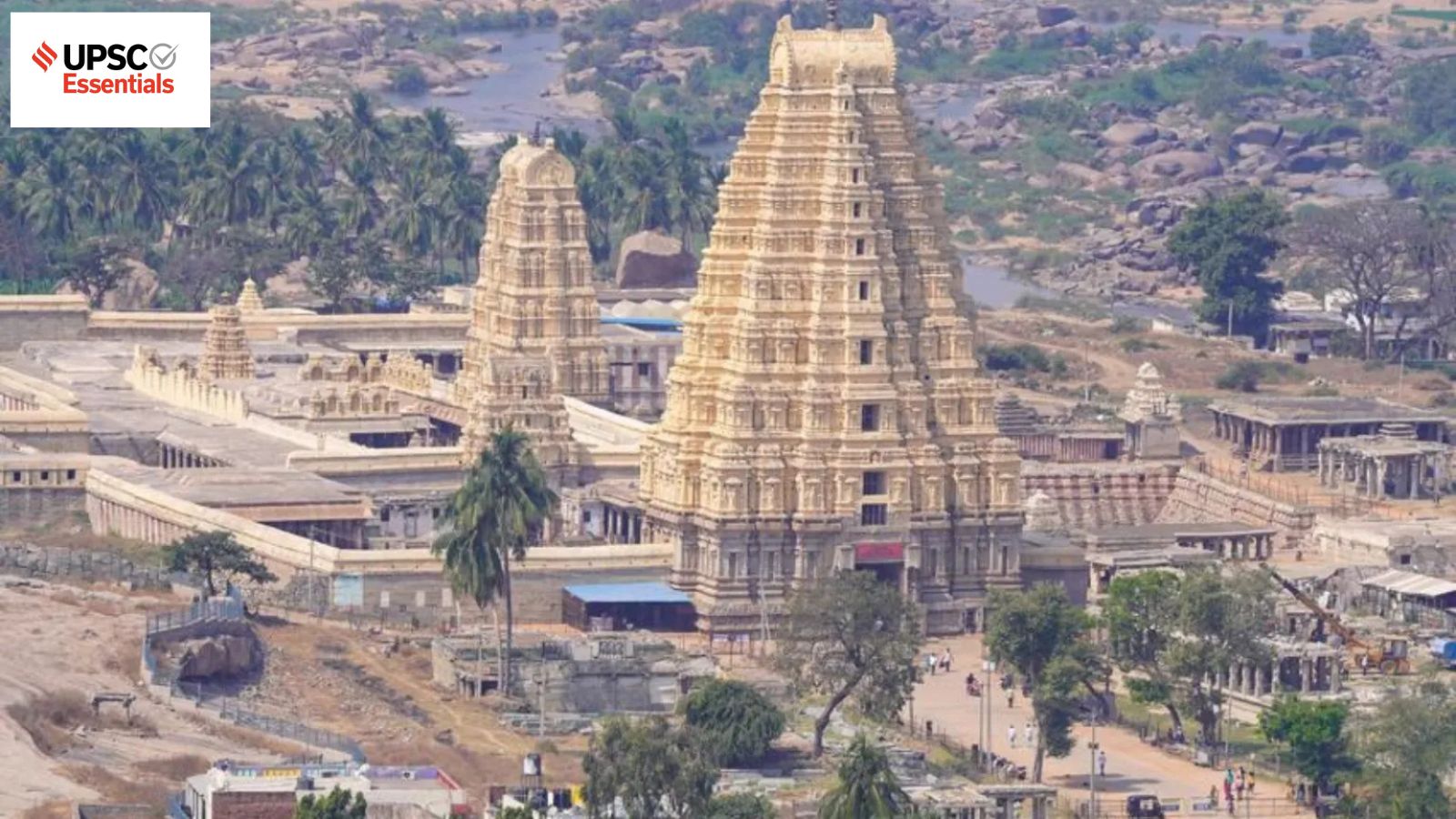
Medieval Indian temples functioned not merely as religious institutions but also as centres of political authority, economic power, and social influence. Discuss.
B.R. Ambedkar’s ideas on citizenship, social justice, and labour welfare were part of a larger vision of building an inclusive democratic nation. Discuss.
QUESTION 1: Medieval Indian temples functioned not merely as religious institutions but also as centres of political authority, economic power, and social influence. Discuss.
Relevance: The role of temples in medieval India is an important GS-1 theme linking Indian culture with medieval history. It reflects UPSC’s emphasis on analysing historical institutions through political, economic, cultural, and social dimensions.
Note: This is not a model UPSC answer. It only provides you with a thought process which you may incorporate into the answers.
— Temples in medieval India expanded beyond their religious role to become important institutions of administration, economy, and society.
— Temples amassed wealth, legitimised political authority, administered resources, and influenced cultural life, making them indispensable in statecraft and public life.
You may incorporate some of the following points in your answer:
— Rulers used large temples to strengthen dynastic authority and represent divine approval for their rule. Mughal monarchs such as Akbar provided land and patronage to famous temples in order to strengthen relationships with Rajputs and regional leaders.
— Temples served as bridges between kings and local elites, enhancing administrative control.
— Royal temples represented the reigning dynasty’s sovereignty, and assaulting or patronising them transmitted political statements.
— Temples acquired large tracts of land through royal grants and endowments. Donations of gold, gems, and other riches transformed temples into great treasuries.
— Temple activities boosted agriculture, irrigation, crafts, trade, and markets in the surrounding area. They hired priests, artists, musicians, accountants, guards, and workers.
— Temples hosted festivals, rituals, and public meetings to promote social togetherness. They favoured architecture, sculpture, music, dancing, literature, and education.
— Association with significant temples elevated the status of monarchs, merchants, and local elites.
— Medieval Indian temples were significant components of governance, economy, and society. Appreciating their multifaceted function allows for a more balanced picture of India’s historical evolution and emphasises the importance of interpreting the past using evidence rather than current ideological lenses.
(Source: Temple, wealth, and power: Lessons from Medieval India, Tirupati laddu controversy: How India’s temples are run)
How will you explain that Medieval Indian temple sculptures represent the social life of those days? (2022)
Persian literary sources of medieval India reflect the spirit of the age. Comment. (2020)
QUESTION 2: B.R. Ambedkar’s ideas on citizenship, social justice, and labour welfare were part of a larger vision of building an inclusive democratic nation. Discuss.
Relevance: Questions around B.R. Ambedkar remains an important UPSC theme, covering Modern Indian History, social reform movements, and nation-building. It is relevant in light of contemporary debates on citizenship, equality, social inclusion, and constitutional morality.
— B.R. Ambedkar envisioned democracy as a social order based on liberty, equality, and fraternity, rather than just a constitutional system.
— His efforts on citizenship, employment rights, and caste change were part of a larger project to create a more inclusive nation in which everyone had equal rights and dignity.
— During the Constituent Assembly deliberations, Ambedkar was staunchly opposed to differentiated citizenship based on provinces or regions, stating that citizenship should unify rather than divide the nation. While addressing migratory concerns, notably those raised by Assam, he maintained that citizenship should be based on constitutional values rather than geographical or political expediency. He underlined that equal citizenship was critical to maintaining national unity and democratic governance.
— In Annihilation of Caste, Ambedkar claimed that caste was incompatible with democracy because it entrenched inequity and denied human dignity. He believed that political democracy could only be sustained by social and economic democracy.
— Liberty, equality, and fraternity: These ideas, rooted in Buddhist philosophy and constitutional norms, served as the ethical foundation for his ideal society.
— His campaign for fundamental rights and affirmative action aimed to empower historically underprivileged communities while ensuring substantive equality.
As a Labour Member of the Viceroy’s Executive Council, Ambedkar implemented changes that acknowledged workers as stakeholders in nation-building:
— Reduction of factory working hours to the eight-hour workday, expansion of maternity benefits and welfare measures for women workers, and strengthening of employees’ welfare, social security, and compensation systems.
— Promoting tripartite consultation among the government, employers, and workers to achieve industrial harmony.
— B.R. Ambedkar’s achievements went far beyond crafting the Constitution. By combining equal citizenship, social justice, and worker welfare into a cohesive democratic vision, he lay the groundwork for an India in which democracy would only be relevant if every person can participate with dignity, equality, and freedom.
(Source: Long before Supreme Court ruling, how Ambedkar grappled with Assam’s citizenship question, How Ambedkar laid the foundations of India’s modern labour legislation, How Babasaheb defined an ideal society in ‘Annihilation of Caste’)
How did Ambedkar conceptualise citizenship during the Constituent Assembly debates?
How did his critique of caste complement his vision of democracy?
Mahatma Gandhi and Dr. B. R. Ambedkar, despite having divergent approaches and strategies, had a common goal of amelioration of the downtrodden. Elucidate. (2015)
Original Source
This content was distilled for a focused reading experience. All rights belong to The Indian Express.
Read original publication