RTX Spark: All your questions about Nvidia’s new PC platform, answered
Listen 00:00 0.5x 0.75x 1x 1.25x 1.5x 2x AI Narration This audio is AI generated.
However, I have received many questions from readers about the RTX Spark and what it can actually do. Unsurprisingly, many of them are developers, engineers, and AI enthusiasts. Given that the RTX Spark is a new hardware platform and only a handful of laptops featuring it are currently on sale, I thought it would be helpful to explain its capabilities in an easy-to-understand, digestible Q&A format.
Here’s a quick snapshot of the new platform, how its silicon differs, and the applications it supports.
The RTX Spark is an Arm-based system-on-chip (SoC) platform that combines an Nvidia Grace CPU, a Blackwell RTX GPU, and dedicated AI acceleration hardware. It powers Windows 11 laptops as well as compact desktops designed for gaming, content creation, and running AI models locally. Available in different N1X configurations, the RTX Spark offers up to 20 CPU cores (10 performance cores and 10 efficiency cores), 6,144 CUDA cores, and up to 128GB of unified LPDDR5X memory running at 9,400 Mbps. A slightly less powerful configuration is also available, featuring 18 CPU cores and 5,120 GPU cores. The RTX Spark CPU was co-designed by Nvidia and MediaTek.
The RTX Spark combines both components on a single chip. Instead of pairing a standalone processor with a separate graphics chip, it integrates the CPU and GPU into a single platform.
The key thing to remember is that the RTX Spark is based on Arm architecture and is designed for Windows-based machines. Windows on Arm is not new, thanks to Microsoft’s partnership with Qualcomm. The RTX Spark, however, brings more powerful graphics, greater computing performance, and the ability to run AI models locally and use agentic AI tools.
The Arm-based Grace CPU handles general computing, while the Blackwell RTX GPU accelerates graphics, rendering, and AI workloads, with fifth-generation Tensor Cores boosting AI performance. A unified memory pool allows the CPU and GPU to share memory, reducing reliance on separate system RAM and graphics memory.
I would describe the RTX Spark as a superchip. Built on TSMC’s 3nm process, it operates at a configurable TDP of 45W to 80W, enabling powerful AI workloads on ultraportable laptops weighing as little as 3 pounds. Nvidia also claims that the new architecture delivers consistent performance whether the laptop is plugged into a wall outlet or running on battery power, promising up to 99 per cent of plugged-in performance on battery.
The Grace Blackwell architecture connects the Grace CPU and Blackwell GPU through NVLink-C2C, a dedicated interconnect offering 600GB/s of bandwidth. This enables low-latency communication and shared access to unified memory, reducing data-transfer bottlenecks and redundant memory copies. Compared with traditional laptop architectures, particularly Intel-powered laptops that rely on separate CPU and GPU memory, this approach can improve efficiency across demanding computing and AI workloads.
The architecture also shares several similarities with Apple’s M-series chips, which are based on Arm technology and combine high-performance and energy-efficient CPU cores.
Perhaps the biggest benefit of the RTX Spark is its on-device AI capabilities. Unlike cloud-based AI tools such as OpenAI’s ChatGPT, Anthropic’s Claude, and Microsoft Copilot, Nvidia believes the RTX Spark is the first chipset for Windows designed to run AI workloads locally and securely without sacrificing performance.
Much of the RTX Spark’s ability to run AI models comes from its unified memory architecture, which I mentioned earlier. It allows supported AI workloads to access more shared memory, making it useful for running large local language models and handling complex AI workloads. However, since the platform is still evolving, the 128GB configuration is currently best suited for the most demanding local workloads. It can run models with up to 120 billion parameters and support context windows of up to 1 million tokens when using local AI agents.
Nvidia and Microsoft say RTX systems support popular AI models, including Qwen, Llama, Mistral, Stable Diffusion, and FLUX.2. NVIDIA also recommends its own Nemotron Bolt, a model specifically optimised for the RTX Spark. Agentic tools such as OpenClaw, Hermes, and Perplexity’s Personal Computer require substantial processing power beyond what standard LLMs need, and the RTX Spark is designed to handle these demanding workloads. That being said, actual performance still depends on memory bandwidth, software optimisation, and workload requirements.
Although PCs powered by the RTX Spark are not marketed as gaming laptops, I would argue that gaming is a significant part of the platform. It’s the first Windows on Arm platform to deliver relatively strong gaming performance, supporting a wide range of Nvidia gaming technologies, including ray tracing, DLSS 5, Multi Frame Generation, neural rendering, Reflex, G-SYNC, and RTX Remix. With its Blackwell GPU supporting RTX 50-series features, including DLSS 5, the RTX Spark is expected to deliver performance similar to that of an RTX 5070, with 1440p as the target resolution. However, actual gaming performance will depend on power limits, cooling, memory behaviour, and whether a game runs natively or through Windows on Arm emulation.
To be clear, since the RTX Spark is Arm-based, it won’t be able to run every Windows game natively. However, my understanding is that upcoming titles such as Control Resonant and Gears of War: E-Day will be supported through Microsoft’s Prism emulator for x86 software. NBA 2K27 and World of Warcraft are among the games that run natively on the platform. Nvidia also says it’s working with major anti-cheat providers to support their software, an issue that has prevented some multiplayer games from running on Windows on Arm systems in the past.
For content creators, the RTX Spark supports GPU-accelerated rendering, video processing, and AI-assisted editing. Nvidia highlights features such as AV1 encoding, modern video encoding and decoding capabilities, and support for Nvidia Studio software. The RTX Spark also supports hardware-accelerated creative workflows in tools like Blender, while Adobe is reworking Photoshop and Premiere for Nvidia’s platform, sending a sense of confidence in the future of Arm-based Windows systems.
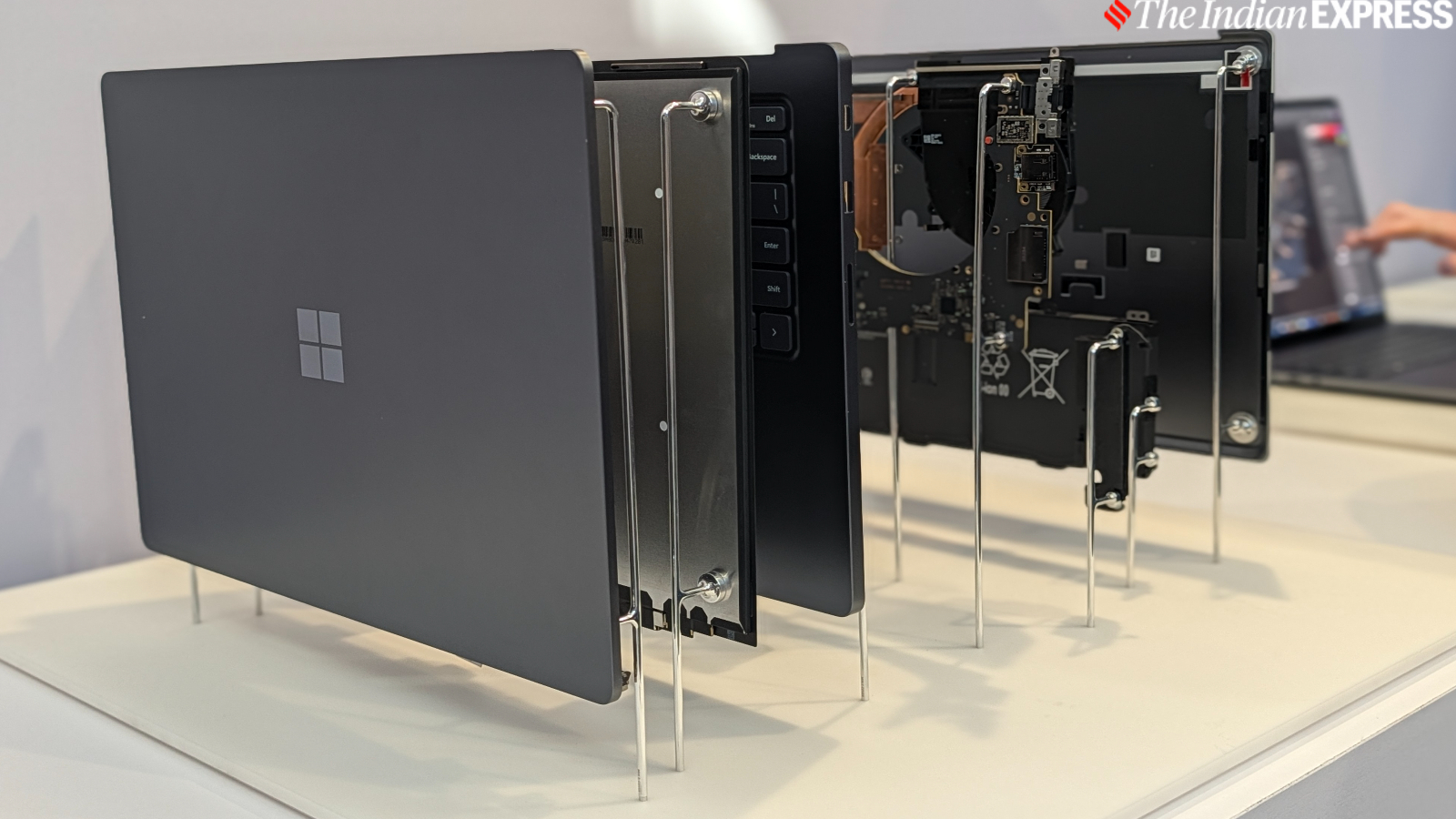
Internationally, several PC vendors, including HP, Dell, Asus, and Microsoft with its Surface lineup, have started selling laptops powered by Nvidia’s RTX Spark platform, with prices starting at $2,599 (or approx Rs 246,637). Although these companies have yet to launch RTX Spark-powered laptops in India, I expect announcements to follow soon. These laptops are likely to be expensive and positioned at the premium end of the market.
The important thing to remember is that the price of an RTX Spark laptop covers the entire system, not just the integrated GPU. Therefore, comparing the price of an RTX Spark laptop directly with that of a standalone RTX 5070 graphics card would be a bit misleading.
Both the RTX Spark and Apple’s M-series chips follow a similar design philosophy, integrating CPU, GPU, and memory resources into a unified platform. However, the difference lies in the ecosystem. While Apple’s M-series processors are designed around macOS and benefit from tight integration between hardware and software, the RTX Spark brings Nvidia’s Blackwell graphics, CUDA acceleration, and high-capacity unified memory to Windows 11.Frankly, if you are comparing the two platforms solely on the basis of core counts, I think a fairer comparison would consider sustained performance, software compatibility, and the applications you use most frequently.
As I mentioned earlier, Windows laptops powered by the RTX Spark are primarily aimed at developers, software engineers, programmers, and content creators. The platform makes sense for developers experimenting with local AI models, content creators who need GPU acceleration, and users who want high unified-memory capacity in a portable system. That being said, gamers may get better performance from a PC with a dedicated GeForce graphics card. For users with everyday computing needs, RTX Spark laptops are difficult to justify given their high prices.
The writer attended Nvidia’s RTX Spark Editors’ Day event in San Francisco at the company’s invitation. Nvidia covered the travel and accommodation expenses.
Original Source
This content was distilled for a focused reading experience. All rights belong to The Indian Express.
Read original publication