Vande Mataram was once a song of Hindu-Muslim unity
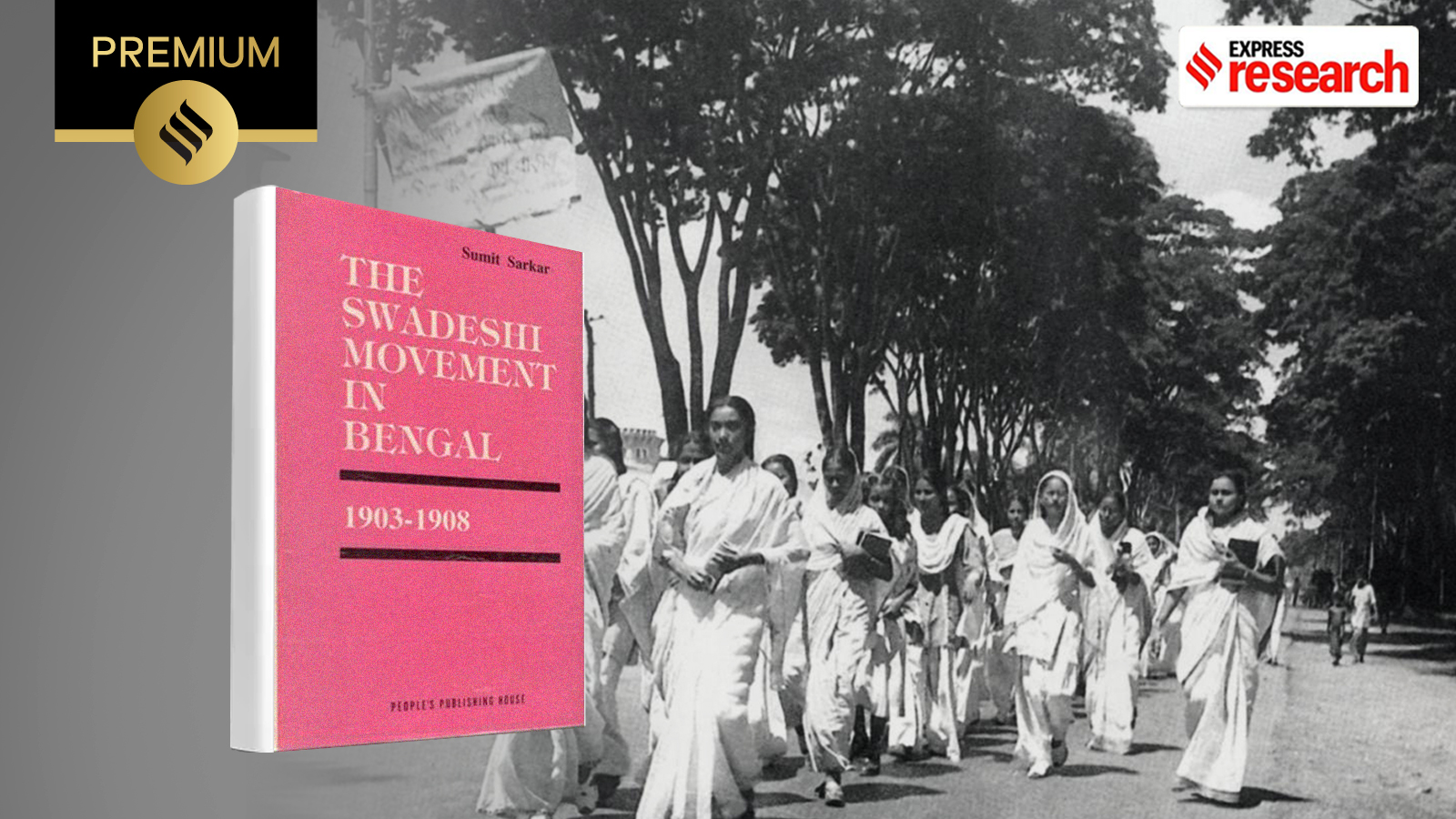
Historian Sumit Sarkar died on August 13, leaving behind a body of work that transformed the study of modern India. His first book, The Swadeshi Movement in Bengal, 1903-1908 (1973), offers a compelling way to remember him today, not merely for what it tells us about the anti-colonial struggle, but for what it reveals about India’s national song, Vande Mataram.
Written by Bankim Chandra Chatterjee in 1875, the song has come under intense scrutiny, both from those who want it sung in its entirety and from those who have historically espoused it for nationalist reasons but acknowledged the importance of restraining its performance to its first two stanzas. During the Swadeshi movement, Vande Mataram was a battle cry against the British administration as well as communalism.
The Partition of Bengal was announced on July 19, 1905, by Viceroy Lord Curzon, with its implementation scheduled for October 16. Six years later, in December 1911, the Partition was annulled. The months between its announcement and implementation, however, marked a frenzied period in the history of Vande Mataram. Between October 1905 and September 1906, the British colonial government undertook a major clampdown on the poem, seeking to counter the solidarity that the song had galvanised among Bengalis across political and social factions.
“Brahmin pundits and Muslims,” wrote Sarkar, “embraced each other,” as cries of Vande Mataram and Allah-o-Akbar resonated in the monsoon winds. According to Sarkar, the earliest recorded instance of Vande Mataram being sung during Swadeshi processions that year occurred on August 29 in Hooghly, as reported by the Amrita Bazar Patrika. Another procession was held at Muktagacha in Mymensingh on October 18, where the two slogans were again paired to assert a pan-Bengali ethnic identity.
Among the most vivid instances of Hindu-Muslim sloganeering around Vande Mataram was witnessed during the Printers’ Union victory celebration on June 16, 1906. According to Sarkar, it was one of the clearest examples of Hindu-Muslim unity in the history of the song, with its performance punctuated by the Islamic slogan. The celebration was held at City College in Calcutta, presided over by Krishna Kumar Mitra and “attended by 5,000 Muslims, Hindus, Eurasians, Madrasis”. Sarkar called this “a considerable social achievement”. Muslim nationalists and revolutionaries openly embraced Vande Mataram as the slogan and song of the Swadeshi movement.
Several individual Muslim revolutionaries are also known to have espoused Vande Mataram. These included Liakat Husain of Patna, whom Sarkar described as “the great Muslim patriot”. Husain organised nocturnal musical processions dedicated to nationalist songs. In November 1906, the Swadeshi movement procession organised by Husain was reported to be “going out every evening from College Square, carrying lamps” and singing “national songs in the streets of Calcutta”. Husain suffered for his patriotism.
In May 1907, his anti-British appeal, published in Mymensingh’s nationalist weekly Charu Mihir, prompted a raid on the newspaper. Because Husain was marked as a critic of Muslim orthodoxy as well as the Curzon administration, a section of public opinion swung in favour of him being tried for sedition. He was subsequently sentenced to three years of “rigorous imprisonment”, writes Sarkar. But he was no lone wolf.
Husain’s Muslim compatriots included Abdul Rasul, Abul Kasem, Abdul Halim Guznavi, Abul Husain, Din Muhammad, Dedar Bux, Abdul Gafur, and Ismail Husain Shiraji, whom Sarkar considered “every bit as patriotic and sincere” as their Hindu counterparts. Kasem hailed from Burdwan and had served on Congress committees. Guznavi was a zamindar from Tangail and a lawyer based in Calcutta. Rasul was an Anglicized barrister from Comilla who represented swadeshi Muslimness, a critical faction of the Swadeshi movement, according to Sarkar. All of them were, according to Sarkar, practically “indistinguishable in social position and outlook from the usual middle-class Hindu Congress leader” of the revolution.
On September 23, 1905, Rasul led a mass of 10,000 Hindu and Muslim students and civilians who declared their unwavering allegiance to “the same mother-country — Bengal”. That Rasul would later become secretary of the Bengal Mohammedan Association and belong to the pro-Muslim faction of the Calcutta Congress is significant to the communal history of the song: Vande Mataram had sympathisers even among leaders with active Muslim cultural ties.
Alongside him, Din Muhammad (born Monoranjan Ganguli before converting to Islam), was closely linked to the Brahmo-led Anti-Circular Society. He led meetings in Jessore (now in Bangladesh), Ranaghat and Gobardanga, where Muslims actively participated and outnumbered Hindu counterparts. Vande Mataram inaugurated these anti-partition mass meetings. Husain and Gafur travelled between the two Bengals, addressing large gatherings in Nadia, Dinajpur, Pabna, Tippera, Dacca, Bakargunj, Noakhali, Chittagong, Burdwan, and Mymensingh, where the Vande Mataram rang out as both slogan and song.
Seen against these later assertions of orthodox Islamic subjectivity, Muslim adoption of Vande Mataram during the Swadeshi movement can appear pragmatic and strategic on the part of Muslim revolutionaries, while they laboured to conceal the tensions emerging from the then small, though organised, Islamic orthodoxy.
According to Sarkar’s account, Vande Mataram transformed from a tool of protest against Curzon’s unilateral decision to partition Bengal into a vehicle of internal, cross-communal social discipline among the revolutionaries. As the song became the rallying cry of processions involving picketing and the burning of foreign cloth, the collateral damage of the movement was borne, sometimes disproportionately, by Marwari and Muslim traders. As the processions multiplied and Muslims continued to join, the “Swadeshi enthusiasm” eventually came to be perceived as an attack on the livelihoods of ordinary Indians, including Muslims, in addition to British imperialism.
The organised role of the British administration in sowing these divisions also deserves emphasis. Curzon sought to draw the Nawab of Dhaka with economic incentives to curb Muslim participation in the revolution.
The purported textual provenance of Vande Mataram as a song from Anandamath, although the song had been composed seven years before it was incorporated into the novel, became a liability when the identity of the original adversary, partition and colonialism, seemed to erode in some Muslim eyes. Muslims had sung the song as a patriotic anthem, often alongside chants of Allah-o-Akbar, while setting aside its religious coding until the time the Islamic orthodoxy was practically won over by the promise of economic and identitarian emancipation. Over time, however, as questions of economic and communal identity became more prominent, Vande Mataram was increasingly seen as a vehicle of Hindu revivalist symbolism, particularly because of its imagery of Durga and Kali.
The adversary itself was fragmented from the erstwhile villain of the British regime to Hindu cultural revival and assertion, in some Muslim eyes, and orthodox-Islamic resistance to the revolution, potentially, in Hindu eyes.
It is also important to underscore Sarkar’s argument that the Swadeshi movement unfolded largely under bhadralok leadership, encompassing both Muslims and Hindus, without securing the participation of peasants and the working class. The various factional categories of Bengal, and elsewhere in India, that were affected by the Partition and the Swadeshi movement contained critical values of social, cultural, and economic identity.
Sarkar, Sumit. The Swadeshi Movement in Bengal, 1903–1908. People’s Publishing House, 1973.
Original Source
This content was distilled for a focused reading experience. All rights belong to The Indian Express.
Read original publication