Ladakh autonomy row: why leaders reject Centre’s Article 371(K) plan
Listen 00:00 0.5x 0.75x 1x 1.25x 1.5x 2x AI Narration This audio is AI generated.
In May, months after violent protests over statehood left four dead and 44 injured in Ladakh, the Union Home Ministry and a sub-committee negotiating constitutional safeguards appeared to make their first breakthrough — a customised, “first-of-its-kind” body under Article 371. The two sides seemed to be moving towards consensus, with the Centre proposing a unique Union Territory-level body under Article 371(K), requiring Parliament’s approval.
But the October 15 meeting in Leh exposed how far apart the two sides remain. After several hours of negotiations, talks appeared to have stalled, with both sides blaming the other for the lack of progress. While Ladakh Chief Secretary Ashish Kundra said the talks were “somewhat stuck on the question of the name”, the region’s representatives called the proposal “unsatisfactory and unacceptable”, citing fundamental differences over the proposed body’s structure, powers and constitutional safeguards.
The Union Home Ministry’s 32-page draft, handed over to Ladakh’s leaders on October 15, proposed a Union Territory-level elected body under an arrangement involving Article 371(K), while ruling out a legislature on the lines of Jammu and Kashmir. The leaders rejected it the following day, citing “significant gaps” between the two sides’ positions. Two days later, the Ladakh administration accused the leaders of dismissing the draft as “worthless within two hours”.
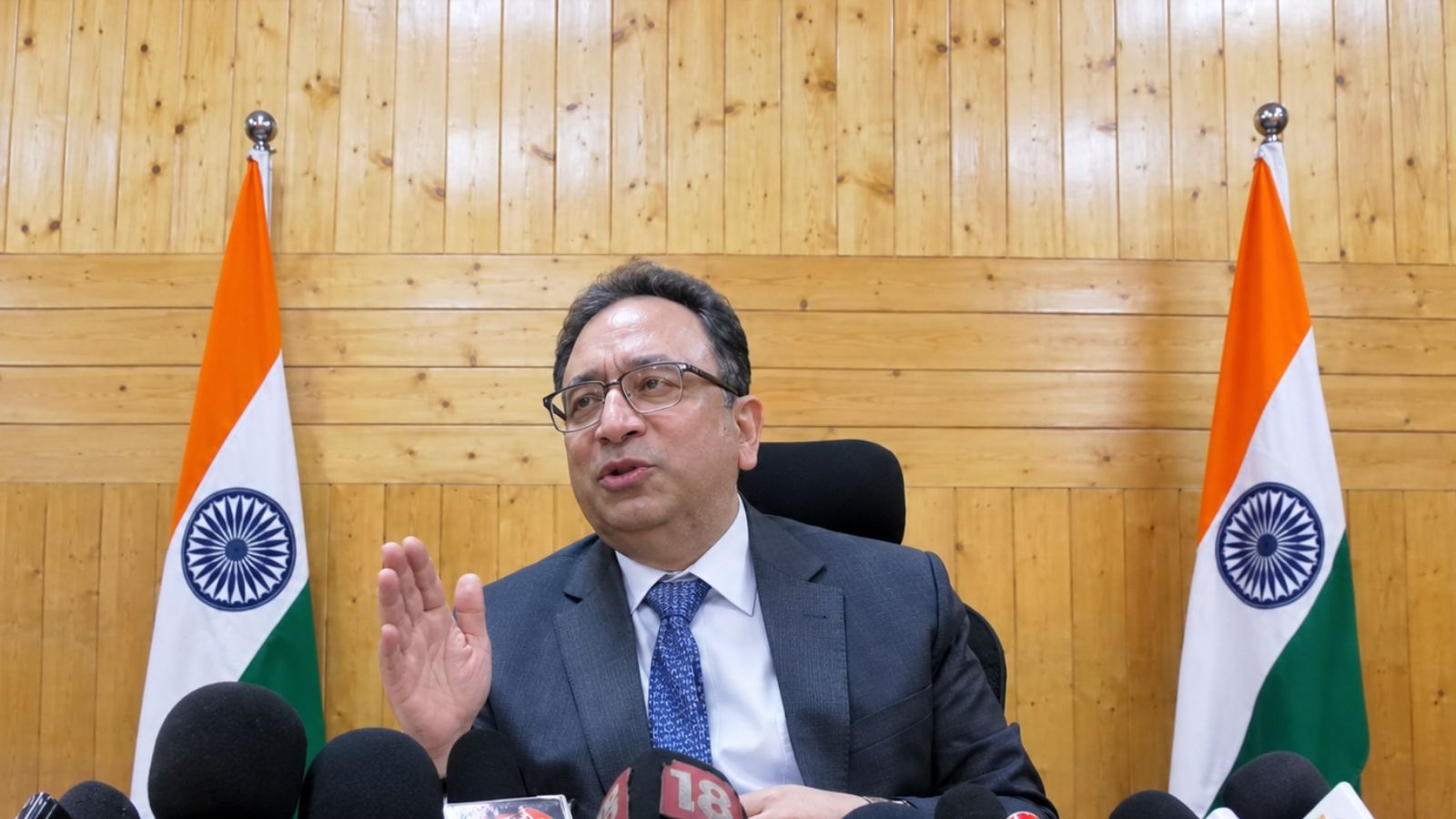
“We had provided them with the draft. The expectation was that they would study it and tell us how to proceed. Unfortunately, that is not what happened. The officials come from Delhi. They had worked very hard to prepare these documents over 3-4 weeks, and they had done so in good faith,” Ladakh Chief Secretary Ashish Kundra said. “It was said that nothing had been offered and that there were no provisions for constitutional safeguards.”
Ladakh’s leaders, however, say Kundra was “confusing their reaction to the presentation with their reaction to the draft proposal”.
Kundra said Ladakh’s representatives had scaled down their demands for Sixth Schedule status and statehood, agreeing instead to constitutional safeguards under Article 371(K) and a Union Territory-level elected body. He ruled out a legislature on the lines of Jammu and Kashmir, making the proposed body’s nature and powers a key sticking point.
“Several issues were discussed. The first concerned the name of the proposed body. The Central Government suggested several names, such as ‘Union Territory-level Frontier Agency, along with four or five other possible names. It was also stated that any other name could be suggested. The discussion became somewhat stuck on the question of the name,” Kundra said.
The Ladakh leaders, he said, had suggested calling it a legislature or an assembly. “We said that this matter had already been decided. Ladakh was neither going to become a state nor a Union Territory with a legislature. Instead, a sui generis model was being developed—a unique model suited to Ladakh’s aspirations and demands,” he said.
“They want to create confusion among the people, but they will not succeed because the people don’t trust them,” Chering Dorjay Lakrook, chairman of the Apex Body Leh (ABL), said. “They say people are not with us. We have shown it several times how many people are with us. The fact is that people are not with them, and that’s why they had to get school children and government employees when the Prime Minister had to inaugurate the airport”.
Lakrook says the Centre has backtracked on promises made in May and has not responded positively to any of the seven points put forward by the ABL and KDA, including its suggestions for the name of the elected body and its head.
“We had suggested it should be called the Assembly of Ladakh. There could have been a little bargaining, and it could have been called the Assembly of UT Ladakh. Similarly, we had suggested the chief minister’s name for the head of the elected body,” Lakrook said.
While Ladakh’s leaders want clear constitutional guarantees, Kundra says not everything “can be written in the constitutional amendment” and that a separate regulation will be made under Article 240.
“It was explained that Article 371K would clearly provide for the establishment of a directly elected Union Territory-level body. It would also clearly specify the protection of land, natural resources, culture and other issues,” he said at a media briefing last week. “Their protection will be written clearly in Article 371K.”
Ladakh’s leaders see the Centre as buying time. In a video statement after the October 15 meeting, climate activist and delegation member Sonam Wangchuk said the people of Ladakh were “saddened, surprised and angry” over the stalled talks.
“Yesterday, we were shocked. We thought we would have some minor differences. But we saw the differences were huge. They (Centre) reneged again,” Wangchuk said.
KDA co-chairman Sajad Hussain believes the Centre is trying to buy time. “We had expected that the draft would outline the structure of the UT level-body, but the draft is talking about something on the pattern of a territorial council. There is no empowerment in it. They have actually tried to dress the existing (Hill) councils and present it to us in a different form,” Hussain said. “They (Centre) are confused about what to do with Ladakh. They have nothing to offer”.
Another concern is the extent of the powers offered to Ladakh. According to Lakrook, while changes to Article 239 require Parliament’s approval, Article 240 can be amended by the President. “It gives all the powers to the LG,” he said.
Ladakh’s representatives are now looking to the next meeting, scheduled for October 22 in Delhi.
“We were told that Ladakh will be given a stronger legislative structure than Jammu and Kashmir. We were promised that all the bureaucrats, including the chief secretary, would be under the elected legislature,” Hussain said. “But in this draft, we see that everything is a complete framework to disempower us. We have rejected the draft proposal, and in the coming meeting we will also give them the reasons why we have rejected it.”
He added: “They (Centre) have said that this is not the final draft and it was put forward for discussion and can be improved. We will wait and see what they have to offer us”.
Original Source
This content was distilled for a focused reading experience. All rights belong to The Indian Express.
Read original publication