BJP’s Punjab reset: How the party is trying to reinvent itself before polls
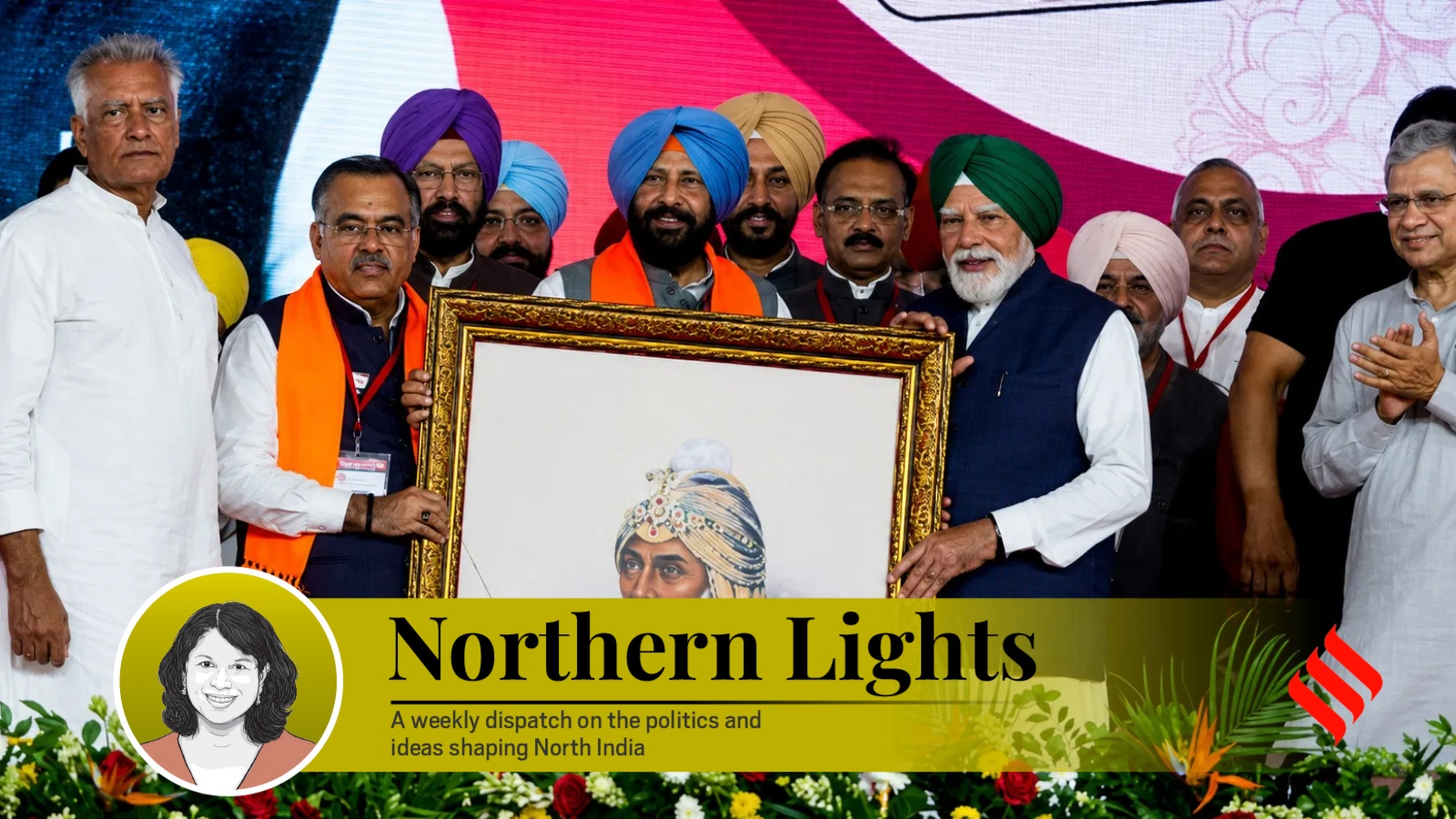
Prime Minister Narendra Modi’s second visit to Punjab this year, coming barely a month after BJP national president Nitin Nabin’s three-day tour of the state, is a clear signal that after decades in a supporting role in Punjab politics, the BJP now wants to take centre stage ahead of the 2027 Assembly elections.
Emboldened by its win in West Bengal, the other defiant border state, the BJP believes it has a chance in Punjab despite the lingering scars of the 2020 farm law protests that left it isolated.
For most of its history since 1980, the BJP was content to play second fiddle to the Shiromani Akali Dal, contesting just 23 of the Assembly’s 117 seats. The alliance, famously described by the late five-time Chief Minister Parkash Singh Badal as a “nau-maas da rishta (the relationship between nail and flesh)”, was seen as a guarantor of communal harmony after the divisive years of militancy. Even before the BJP, the Akalis had repeatedly partnered with its precursor, the Bharatiya Jana Sangh, often after elections, to cobble together governments.
The two parties first joined hands in 1952 to form the state’s first non-Congress government. Another post-poll arrangement followed the 1967 elections in reorganised Punjab despite Jana Sangh founding leader Yagya Dutt Sharma’s earlier fast-unto-death against the creation of a Sikh-majority state. Political expediency, it seemed, eventually trumped ideological differences.
Yet, reducing the alliance to electoral arithmetic alone misses the larger story. The partnership reflected Punjab itself, whose people have long resisted religious binaries despite petty quibbles. A recent post-Satluj Instagram reel by one Advocate Sahil, liberally punctuated with Punjabi expletives, struck a chord because of the point he made: don’t try to divide Punjab.
Punjab’s social fabric resembles its Phulkari: a tapestry of multiple colours. Hindus and Sikhs have long shared language, customs, marriages and, in many families, bloodlines. Cricketer Abhishek Sharma has a Sikh brother-in-law and former cricketer Harbhajan Singh is married to a Hindu, while Master Tara Singh, one of the foremost champions of Punjabi Suba and a former Akali Dal president, was born Nanak Chand Malhotra into a Hindu Khatri family.
Even today, though less frequently, families with one Sikh and one Hindu brother can still be found. Earlier this year, I met two such brothers at a Chandigarh car dealership, one turbaned and bearded, the other clean-shaven. The turban itself, often seen as a Sikh identity, is worn by many Punjabi Hindus as well. Former SSP Charanjit Sharma, an accused in the Behbal Kalan firing on anti-sacrilege protesters, always sported a turban.
Of course, the state has its fair share of exclusionist voices. Some panthic groups pooh-pooh any suggestion that Sikhism emerged from Hinduism, while some Hindu organisations like to portray Sikhs merely as the “sword arm of Hinduism”. Yet both remain on the fringes. Outside Punjab, people from the state tend to wear their Punjabi identity on their sleeve, not their religion. Hence the boisterous declarations of Duniya vich log vasde bathere, Punjabiyan di shaan vakhri (there are many people in the world but none like the Punjabis) and Diljit Dosanjh’s triumphant Punjabi aa gaye oye (Punjabis have arrived). Modesty is not our strong suit.
Although Sikhs account for about 58% of the population and Hindus around 38% as per the 2011 Census, neither community has historically voted as a bloc. It’s ditto for Dalits, who comprise over 32% of the population, the highest proportion among states. Punjab has consistently rewarded parties that build broad social coalitions instead of relying only on religious or caste mobilisation. Even the panthic Akali Dal fielded numerous Hindu candidates in its heyday.
The 2024 Lok Sabha election reinforced that lesson for the BJP. Despite around 50% Hindu voters in constituencies such as Gurdaspur and Anandpur Sahib, the party failed to win a single seat. It did, however, almost double its vote share to around 19%, overtaking the Akali Dal.
Since then, the BJP has sought to recast itself. No longer focused primarily on Hindu consolidation, it is attempting to project itself as a party comfortable with Punjab’s layered identity. The transformation is visible in both leadership and symbolism. Former Congress leaders, first Sunil Jakhar and now Kewal Singh Dhillon, head the state unit. It’s a running joke that the BJP is a disciplined “Congress in a new bottle”. It has also inducted leaders from the Aam Aadmi Party (AAP).
The party is consciously embracing the language of Punjabiyat. New offices are inaugurated with Sukhmani Sahib path — recitation of hymns composed by the fifth Guru, Guru Arjan Dev Ji — and Jo bole so nihal — the traditional Sikh slogan that translates to “Whoever utters the phrase shall be blessed” — now regularly echoes at BJP events, and senior leaders maintain ties with religious leaders such as Damdami Taksal chief Baba Harnam Singh Dhumma. Friday marked the Prime Minister’s second meeting this year with Dera Sachkhand Ballan chief Sant Niranjan Dass, the spiritual leader of the numerically significant Ravidassia community.
During his recent New Zealand visit, PM Modi highlighted initiatives such as Veer Bal Diwas observed to honour the martyrdom of the sons of Guru Gobind Singh, FCRA clearance for the Golden Temple, bringing copies of the Guru Granth Sahib from Afghanistan and preserving Sikh relics.
The party has also deployed former diplomat and Delhi Lieutenant Governor Taranjit Singh Sandhu to build a rapport with opinion-makers in the state, often in their drawing rooms.
The balancing act was visible in its reaction to the film Satluj as well. So while Union Minister Ravneet Bittu lashed out, calling it one-sided for not showing the killings of Hindus by militants, many others defended it.
Whether this strategy succeeds depends less on organisational engineering than on collective memory. The scars of the farm agitation remain, as does Punjab’s long-held suspicion of the Dilli durbar. Electoral maths can be worked out. Trust cannot. And in Punjab, it is trust that will decide whether the BJP’s reset succeeds or stalls.
Original Source
This content was distilled for a focused reading experience. All rights belong to The Indian Express.
Read original publication