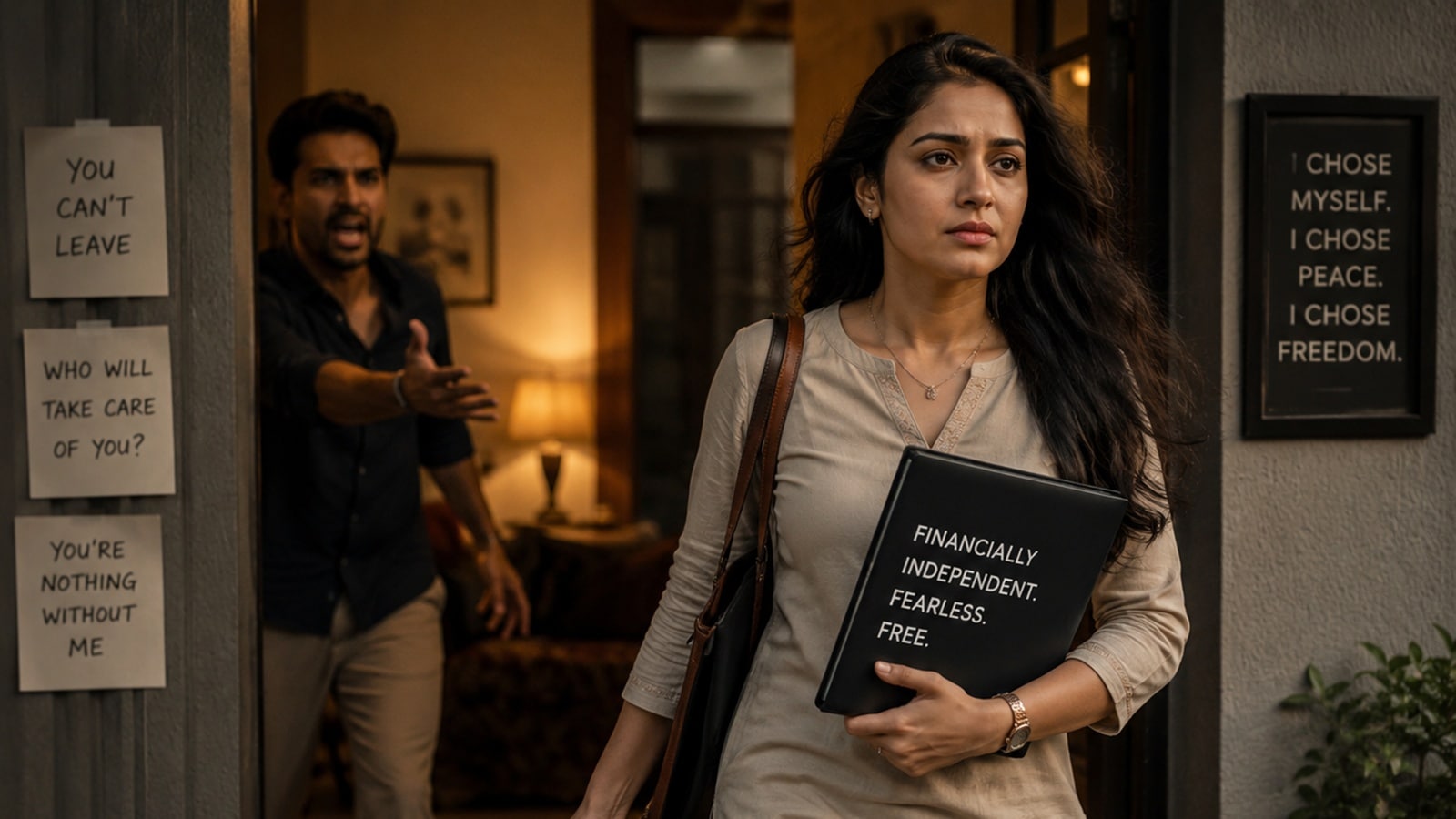
Is Money Not Enough to Escape Abuse? Why Financial Security Is A Need
India reported 5,737 dowry death cases in 2024, involving 5,811 victims, according to National Crime Records Bureau (NCRB) data. This statistic holds up a mirror to a worrying reality that, though dowry has been banned in the country since the Dowry Prohibition Act was passed on May 1, 1961, dowry-related violence continues to claim thousands of lives each year.
Dr Parin Somani, the CEO of London Organisation of Skills Development, a company focused on upskilling, says that throughout her years of research, she has met several individuals who shared deeply painful experiences of feeling trapped as they lacked economic security. “One survivor explained that although she wanted to leave her abusive partner, she feared homelessness and could not financially support her children independently. Another revealed that their spouse controlled all household finances, restricted access to bank accounts, and prevented them from pursuing employment opportunities,” she adds.
Somani points out that abuse also extends beyond physical violence and often includes emotional manipulation, psychological control, and financial dependency. “In many situations, the inability to access financial resources becomes one of the greatest barriers preventing victims from leaving abusive environments,” she elaborates.
Dr Munia Bhattacharya, Senior Consultant, Clinical Psychology, Artemis Hospitals, agrees. Financial dependence often creates a silent psychological prison, she says. Financial independence, on the other hand, creates emotional agency, she adds. It gives people the confidence that they have options. And psychologically, Dr Bhattacharya explains that the moment a person feels they have options, they begin to reclaim their voice. “They set healthier boundaries, tolerate less disrespect, and are less likely to stay stuck in cycles of manipulation,” she shares.
No, Dr Bhattacharya says this does not mean financially independent people never experience abuse. They do. But they often feel more empowered to seek help, walk away, rebuild, and heal. “Financial security reduces helplessness, and helplessness is one of the core emotions that keeps people trapped in unhealthy dynamics,” she reiterates.
Tanvi Singh, mental health expert and founder of Leap of Foundation, highlights that for many Indian women, this conversation carries an added emotional reality. “Many grow up feeling like they move from one form of dependence to another, from their father’s homes to their husband’s homes, without ever fully experiencing ownership over their own lives,” she says. In that context, financial independence becomes far more than income; it becomes the freedom to make choices without fear.
Men, too, are deeply affected by financial expectations, says Singh. “Society often measures masculinity and self-worth through the ability to provide, leaving many men feeling inadequate, disrespected in relationships, or diminished when they struggle financially,” she points out.
Delhi-based lawyer Bani Kaur Allagh says one of the biggest misconceptions many women have is that marriage automatically guarantees long-term financial security. According to Allagh, many women realise the importance of financial independence only during separation, divorce, or family disputes—when they discover that emotional partnership does not necessarily translate into financial ownership.
“Maintenance as a remedy is very insufficient,” she cautions, adding that many women do not have independent assets in their own name—whether savings, investments, or property—which can leave them financially exposed during major life transitions.
Adding, Priti Rathi Gupta, founder of Lxme, a woman-first financial app, points out that there’s a marked difference between being financially independent and secure, and it’s often the key to making important life decisions.
“Financial independence comes from earning money, having skills, and creating the confidence to stand on your own feet. But financial security comes from what you build over time—an emergency fund, investments, retirement savings, a child’s education fund and importantly, having ownership and control over them yourself,” she says.
Gupta says women must actively manage their money and understand where it is invested, “so that when life demands strength, they can access and use it without fear or permission”.
Binitha Dalal, Founder and Managing Director, Mt K Kapital, says financial freedom is no longer about bringing home a paycheck, but true independence means understanding money, building assets, and participating in wealth creation.
Dalal tells us that women have already started moving in that direction. “They are continuously breaking barriers by actively participating in conversations related to investments, real estate, or alternative assets.”
Become financially aware first: Understand the basics of money management, even if your income is modest.
Build disciplined saving habits: Start small, but set clear long-term financial goals.
Diversify your investments: Spread your money across assets such as real estate, equities, and fixed-income instruments for more balanced wealth creation.
Think long-term: Financial planning requires patience, consistency, and resisting short-term market panic.
Ashwini Kumar, advocate and founder of My Legal Expert, believes fear of economic instability, especially where children are involved, discourages women from initiating legal action or seeking protection.
While laws do provide several safeguards, including protection orders, residence rights, maintenance, child support, and relief under the Protection of Women from Domestic Violence Act, 2005, Kumar says the real challenge often lies in timely implementation and accessibility.
According to him, there is also an urgent need to strengthen grassroots legal awareness. “Many women are unaware that they are entitled to maintenance, shared household rights, custody protections, and interim financial relief even while legal proceedings are ongoing,” he shares.
Beyond legal remedies, Supreme Court lawyer Sana Raees Khan, founder of SRK Legal, says society must focus on “financial education, knowledge of law, and also on available support services for women”.
Mahalakshmi K, senior health and wellness coach, says that leaving an abusive relationship is enabled by a constellation of factors, with money as a critical but not singular pillar. “Having independent income, savings, and financial literacy is not merely about access to money, but the confidence and competence to manage it independently,” she explains.
Recognising and beginning to untangle the trauma bond is also essential. This often requires therapeutic support, and cannot happen through willpower alone. “The presence of trusted people—family, friends, colleagues, community organisations—who can offer shelter, solidarity, and practical help matters,” says Mahalakshmi.
According to her, isolation is itself a tool of control, and connection is its best antidote. Without this, financial independence is insufficient. “Many survivors return to abusers not because they lack money, but because they lack a safe roof. Practical plans for schooling, childcare, and emotional support for children during and after the transition…,” she elaborates, adding that the invisible and yet most profound factor is that abusers systematically dismantle a person’s sense of self.
The key lies in rebuilding it, knowing that one has value independent of the relationship, which becomes foundational to a sustained departure.
Ultimately, it’s not about ego or power, but psychological safety. It allows a person to stay in a relationship out of love and choice, not out of fear, survival, or dependency. And at the end of the day, empowering people financially and emotionally is essential for long-term healing.
Original Source
This content was distilled for a focused reading experience. All rights belong to The Indian Express.
Read original publication