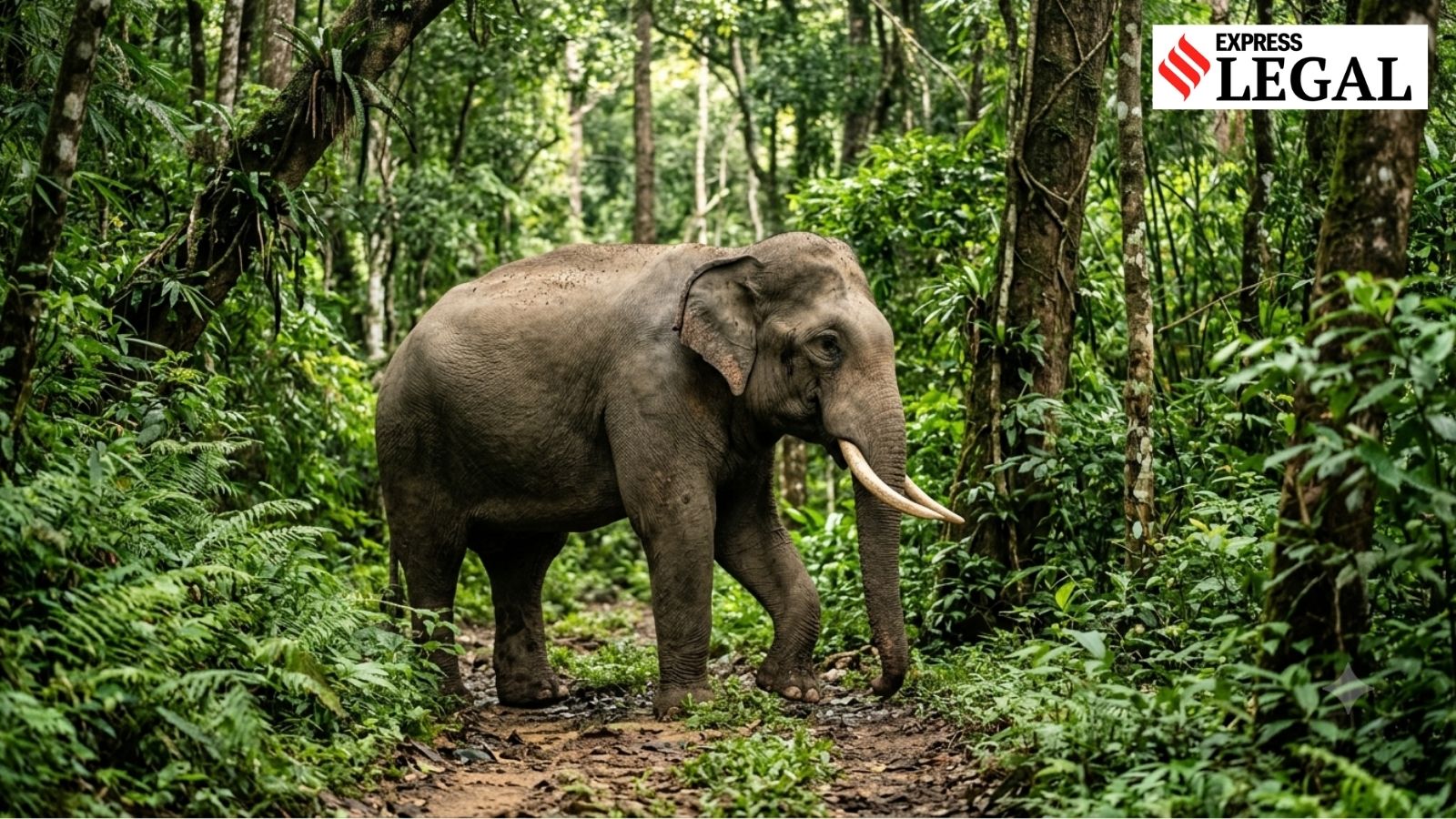
State is ‘custodian’ of wildlife, liable for animal attacks, rules Kerala High Court
Justice Mohammed Nias C P made the observation while dismissing an appeal filed by the forest department authorities against orders directing them to pay compensation to the family of a man who was killed in a wild elephant attack in Wayanad in 2001.
“It is reasonable to assert that if wild animals, being the property of the Government, cause harm to any citizen or farmers, it is the Government’s duty to take responsibility for the loss, and this, in fact, is a failure of the State Government to protect the right to life guaranteed under Article 21 of the Constitution of India,” the order dated August 21 read.
It further added that citizens are entitled to claim compensation for any damage caused by wild animals, whether or not such claims are specifically mentioned in existing government orders, schemes, or provisions.
The government had earlier paid the family Rs 20,000 as compensation. The family, however, sought additional compensation, limiting its claim in the civil suit to Rs 1.80 lakh. The forest department contested the claim, arguing that the incident occurred on a forest road and that the deceased was intoxicated and negligent. It was also argued that the compensation claimed by the family was exorbitant and unreasonable.
Both the trial court and the district court found that the incident had occurred on a panchayat road near residential houses and not inside the forest. The trial court calculated the compensation at Rs 1.98 lakh. After deducting the Rs 20,000 already paid, it directed the government and forest department to pay the remaining amount.
Before the high court, the forest department argued that the state cannot be held as a keeper of the wild animals. It was further pointed out that the government is required to protect the forest and wildlife under the directive principles of state policy and, at the same time, every citizen has a constitutional duty to protect forest and wildlife. It was contended that the incident occurred due to the negligence of the victim, for which the State cannot be held liable.
Emphasising that the state is the deemed owner and custodian of wildlife, the court noted that it also has the constitutionally mandated responsibility to protect the fundamental rights of citizens. “The State has the duty to take due care to avoid human-wildlife conflict. State has to take adequate measures to ensure that wild animals do not trespass into human habitations or agricultural properties,” the court added.
It observed that no forest fencing or trenches were made along the forest boundary to prevent wild animals from entering the private property. It further remarked that the contention of the appellants that the wild elephant is not under the control of the officers of the forest department did not absolve the state of its liability. “If precautionary measures were taken by the Forest Department, the incident could have been avoided,” it noted.
The court also rejected the contention that the compensation awarded was exaggerated. “The courts are duty-bound to ensure that the compensation awarded is just, fair and reasonable and commensurate with the nature and extent of the injury suffered. The compensation must reflect the true value of the loss occasioned, for the worth of a human life cannot be reduced to a figure that fails to adequately recognise the magnitude of the loss,” it said. The court, therefore, dismissed the plea.
Original Source
This content was distilled for a focused reading experience. All rights belong to The Indian Express.
Read original publication