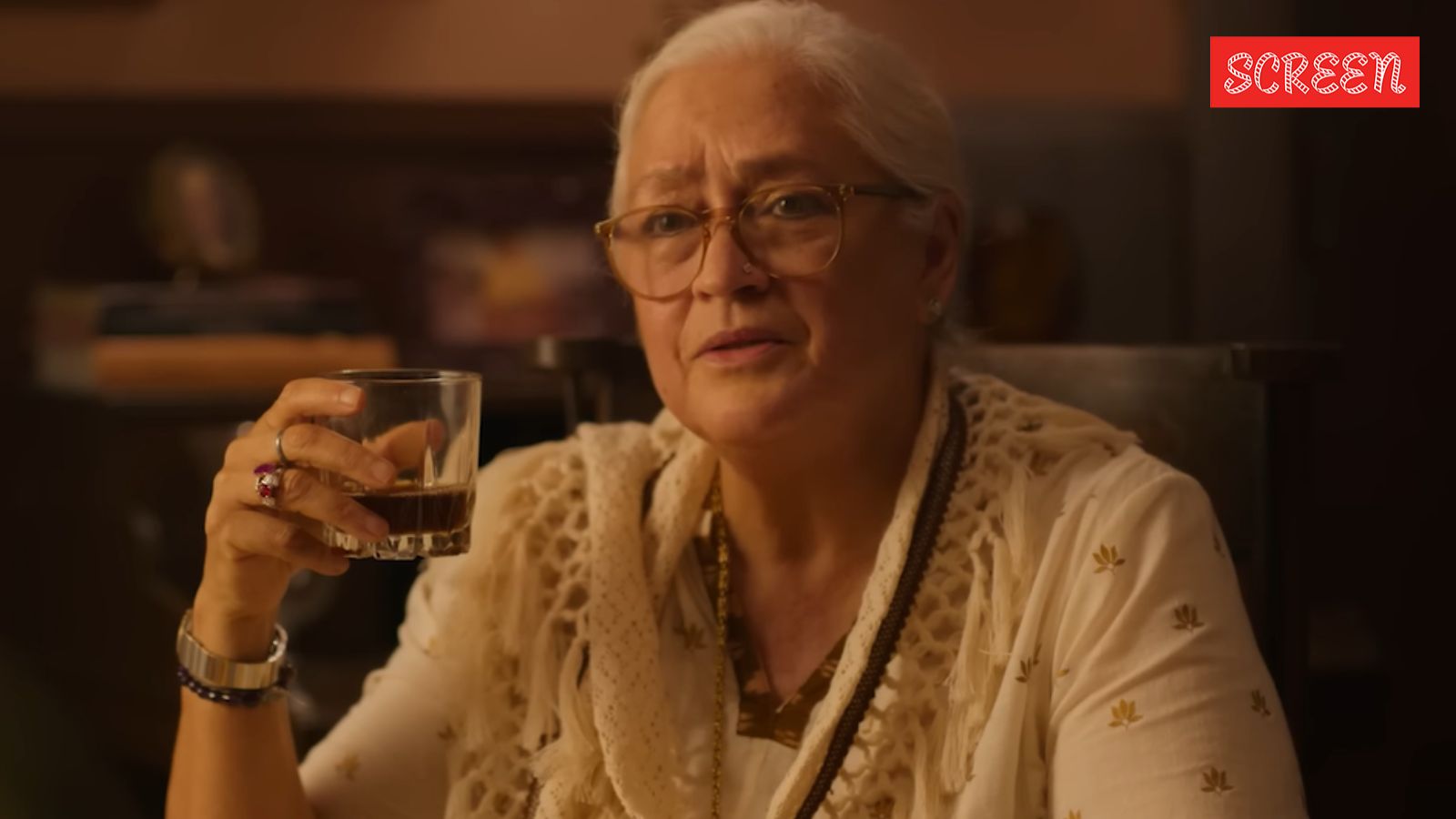
Nafisa Ali says she’s in fourth stage of cancer, in remission: ‘Won’t be silenced now’
In an exclusive conversation with SCREEN, Nafisa said, “I always believe that a human being is put on this earth for a purpose. And it’s important that every human being does good for this planet, because it’s only one little planet in the cosmos, in the universe. And cancer is something that tears families apart. It tears your financial balance apart. It is the scariest journey that I have ever been on because earlier I could fight for the world; now I’m fighting for my life.”
She then added, “I’m in the fourth stage of cancer, in remission for the third time. So it has taught me that I need to leave a message for my children, for my family, and for the young people: that the world definitely deserves to be a better place. And I will not step back and allow the powers that be to silence me. I want to tell the truth because, one, it is the future that belongs to everybody else. And we owe it to them to do right.”
The actors, who will soon share screen space in the upcoming romantic drama Max, Min and Meowzaki, releasing on July 24, spoke about the importance of backing intimate, human stories at a time when hyper masculine, violence-driven narratives increasingly dominate mainstream cinema. Ali, in particular, argued that films rooted in empathy and family hold far greater value in today’s social climate.
“I hate violence in cinema because I think the youth of India don’t deserve to know that part, because a lot of it is politically sponsored today, which nobody has the guts to bring out. It’s a threat to democracy, for me, as an artist. And therefore, a film like this shares the importance of what family should be.” Nasser, who has acted in more than 500 films over a career spanning five decades and is widely recognised by younger audiences for his work in SS Rajamouli’s Baahubali franchise, reflected on the distinction between cinema that merely entertains and cinema that leaves an emotional imprint. According to him, films like Max, Min and Meowzaki offer audiences something far more enduring than escapist spectacle.
“When you escape from reality by watching a man kill hundreds of people single-handedly, it’s only an escape. But here, you can see yourself in the film. You can see your uncle, you can see your auntie, you can see your own people. So you come closer to this kind of film. When you go out of the film, you feel nice.” He added, “So there is a difference between, I don’t know, in my vocabulary, pleasure and happiness? Pleasure and happiness cannot be the same. You may get pleasure from watching an action movie. But here, when you watch this kind of thing, you feel happy. Your soul becomes full.”
Also Read | In Diljit Dosanjh’s Satluj, the state writes the obituary but the river remembers the truth
Speaking about portrayal of violence in cinema, Dhurandhar inevitably entered the discussion. Nasser drew a distinction between Aditya Dhar’s revenge-driven spectacle and D-Day, the 2013 spy thriller in which he starred. While both films revolve around Indian intelligence operations on Pakistani soil, he said he preferred the grounded, more realistic approach adopted by D-Day. “See, D-Day was entirely different. Even though it was also a fictional story, it was much closer to reality. But Dhurandhar was on a much larger canvas. Still, I prefer D-Day’s way of dealing with an issue like that.” And speaking of issues, for Ali, however, the larger conversation was about cinema with purpose. Reflecting on her film choices, she pointed to Life in a Metro, in which she shared screen space with the late Dharmendra, as an example of storytelling that can genuinely influence society.
“Life in a Metro was again a very important film because the message there, again, is that if, as an elder, you are singled out or left alone in today’s world, why should you be alone? that’s why I did Life in a Metro. And there are many people whom I’ve met at airports and at functions who told me that after seeing this movie, they allowed their single parent to remarry. So the importance of doing cinema like that is very important for me because you only think about yourself. the importance of understanding somebody else’s point of view can only be visualised through cinema that portrays a seriousness of purpose.”
Click here to follow Screen Digital on YouTube and stay updated with the latest from the world of cinema.
Original Source
This content was distilled for a focused reading experience. All rights belong to The Indian Express.
Read original publication