How Bihar and Jharkhand resolved their 25-year Sone water dispute
The agreement is expected to pave the way for long-delayed irrigation, reservoir and river-linking projects in the drought-prone regions of both states.
The dispute dates back to November 2000, when Jharkhand was carved out of Bihar. It inherited major upper catchment areas and tributaries of the Sone River, while lower riparian agricultural hubs remained in Bihar.
The core of the dispute traces back to the 1973 Bansagar Agreement, a tripartite agreement involving Madhya Pradesh and Uttar Pradesh, under which undivided Bihar was allocated 7.75 MAF of Sone water out of the total basin yield. After Bihar’s division, no binding formula existed to split that 7.75 MAF allocation between Bihar and the newly formed state of Jharkhand.
While various inter-state committees attempted mediation over the last two decades, negotiations repeatedly stalled over reservoir height, land submergence, and exact volumetric splits. While negotiations occurred between senior officers from both sides, they rarely reached the Chief Minister level. Differing political alliances in power across Bihar and Jharkhand also delayed the pact until the current leadership agreed to break the long-standing stalemate.
Under the pact, the two states agreed that Bihar will receive a water allocation of 5.75 million acre-feet (MAF), while Jharkhand will receive 2 MAF of Sone water. The agreement clears the path for the full operation of the Indrapuri Barrage (also called the Indrapuri Dam or Sone Barrage) across the Sone River in Rohtas district, located near Dehri-on-Sone about 5 km upstream. The barrage sits near the border connecting Jharkhand’s northern districts of Garhwa and Palamu.
Built in the late 1960s, the barrage serves as a primary diversion structure supplying water to the extensive Sone Canal network, which irrigates the surrounding Shahabad agricultural belt (Rohtas, Bhojpur, Buxar, and Kaimur districts). Following the pact, Bihar will receive additional water from the barrage to irrigate local farmland. In turn, Jharkhand agreed to specified reservoir water levels to minimise land submergence, backed by clear rehabilitation provisions.
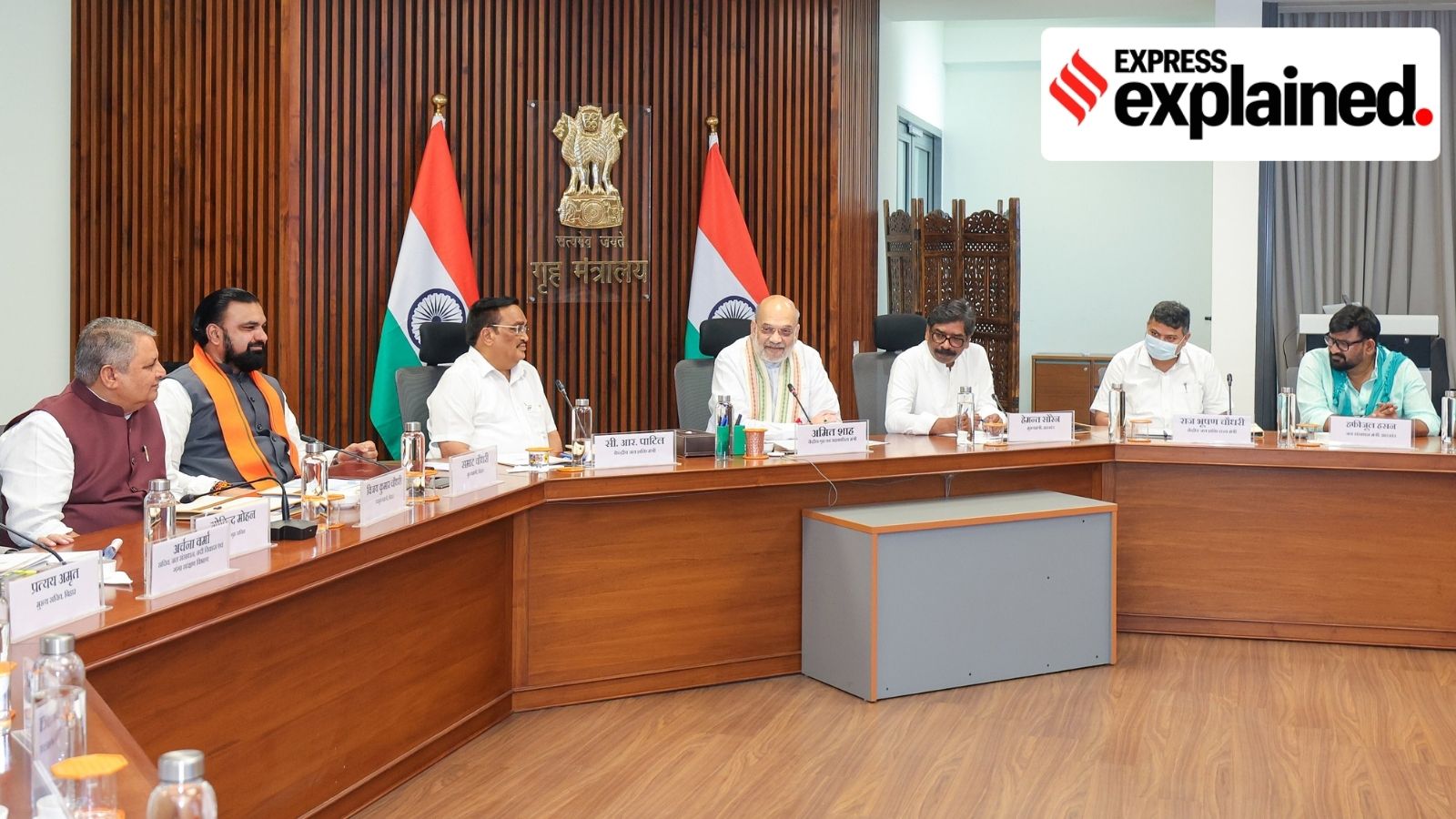
The pact guarantees critical irrigation supplies to South Bihar (Rohtas, Bhojpur, and Aurangabad) while enabling new canal networks in the drought-prone Palamu and Garhwa districts of Jharkhand. Bihar Chief Minister Samrat Choudhary and his Jharkhand counterpart Hemant Soren played key roles in finalising the pact, with the Ministry of Jal Shakti presiding over the process.
Did the dispute create political tensions between the two states?
While there were no major state-level confrontations between Chief Ministers, the water dispute frequently surfaced as a political issue during election seasons—particularly in Bihar’s Shahabad region and Jharkhand’s Palamu region. Leaders across party lines in Bihar’s Shahabad and Magadh belts (Rohtas, Bhojpur, Aurangabad) routinely targeted the state government over water shortages in the Sone canal system during the summer sowing season.
Meanwhile, Jharkhand leaders from the Palamu and Garhwa regions raised concerns over displacement, fearing that increasing the Indrapuri Dam’s height would submerge local agricultural land and displace thousands without fair compensation. Differing political coalitions in Patna, Ranchi, and New Delhi over the last 25 years also created friction between the Centre and the states, stalling inter-state coordination and leading each government to blame the other for delayed agricultural development.
The Central Water Commission (CWC) provided key technical frameworks, hydrology studies, and modified dam-height specifications acceptable to both states. The CWC’s intervention motivated both governments to prioritise a resolution to secure long-term irrigation guarantees for their agrarian regions. CWC had also made several attempts in the past to help resolve the issue but without any success.
As a result of the current pact, Jharkhand’s water security interests in drought-prone Garhwa and Palamu were met, while negotiated reservoir water levels will protect local communities from land submergence.
Original Source
This content was distilled for a focused reading experience. All rights belong to The Indian Express.
Read original publication