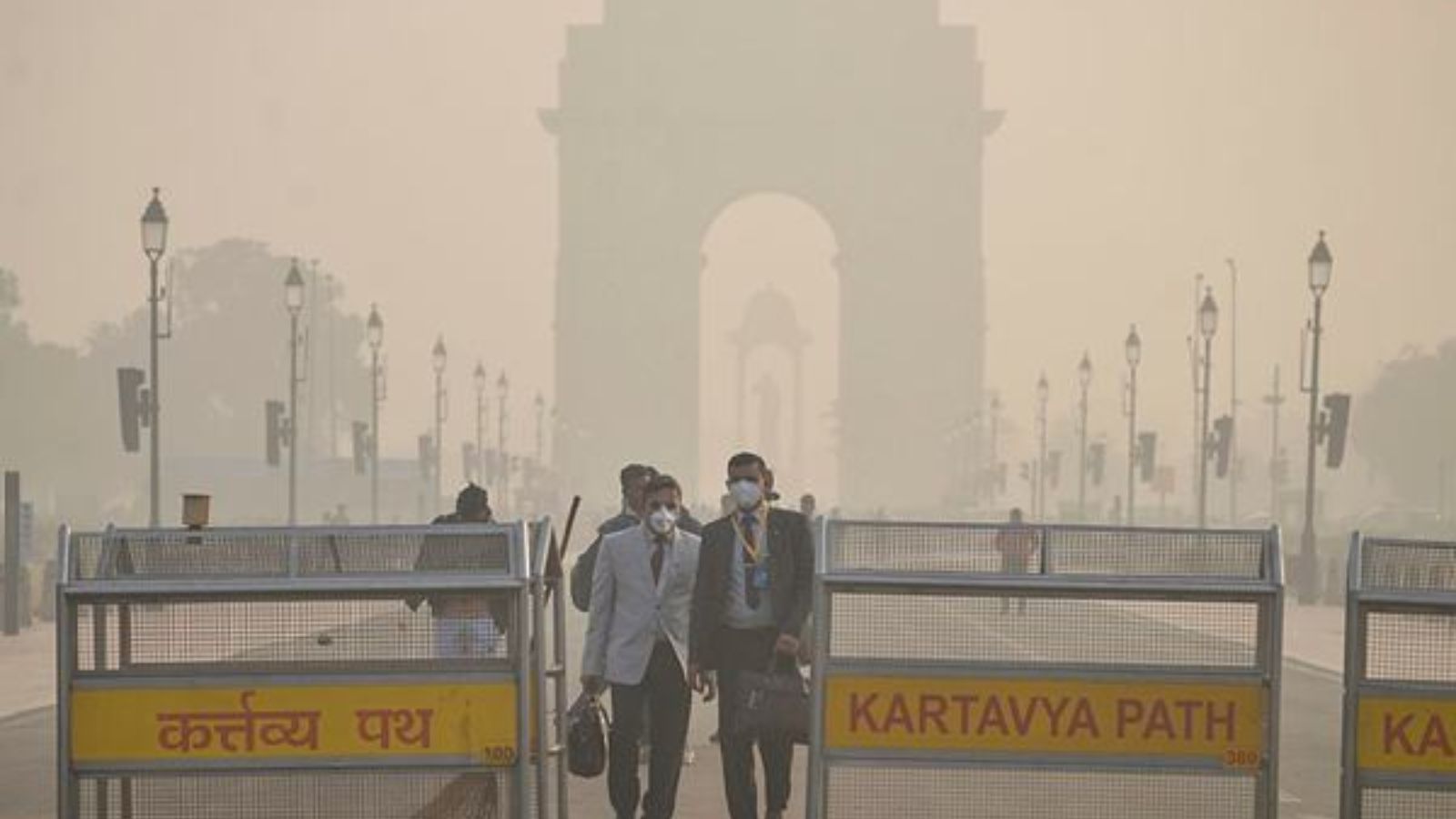
Delhi turns to private firms to test pollution-control technology
Listen 00:00 0.5x 0.75x 1x 1.25x 1.5x 2x AI Narration This audio is AI generated.
The Delhi government is turning to private firms and startups to tackle the city’s air pollution. For the first time, it is inviting them to test new technologies at 40 sites under a Rs 104-crore pilot project that aims to cut PM 10 and PM 2.5 levels by 20% at each location.
The sites, spanning 1 to 1.5 acres each, will serve as testing grounds for pollution-control solutions. The firms will also have to maintain the reduction in these locations, said officials in the Delhi Pollution Control Committee (DPCC).
“Open or semi-enclosed public spaces in Delhi” have been shortlisted, including at Khan Market, Connaught Place and Defence Colony, where pollution-control technologies would be set up.
Read | A real-time dashboard to watch local spikes in air pollution: Inside the country’s biggest monitoring centre
Discussions and initial planning for the project began last month and technical reviews are being done this month. Officials said the pilot’s launch operators will be given a strict four-week window to fully install and commission the pollution-control devices once the sites are handed over. The pilot is slated to run for an initial period of one full year.
The densely populated trans-Yamuna region in East Delhi accounts for five sites, or 12.5% of the total.
Commercial areas account for 29 of the 40 sites, or 72.5%, while the only educational site identified is an open or semi-open area near the Arts Faculty in Delhi University’s North Campus, officials aware of the matter said.
The three tourist locations identified are Central Park in Connaught Place, the India Gate Children’s Park area, and the Lotus Temple corridor.
The transport hubs in focus are ISBTs at Kashmere Gate, Anand Vihar and Sarai Kale Khan. Four hospitals — G B Pant Hospital, Rajiv Gandhi Super Specialty Hospital, Indira Gandhi Hospital in Dwarka and Deen Dayal Upadhyay Hospital — have been narrowed down.
The DPCC has also identified road stretches for targeted reduction: Chandni Chowk Main Market Road, from Gauri Shankar Mandir to Fatehpuri; Lotus Temple Road, from the Astha Kunj crossing to Okhla NSIC Metro station; and Baba Kharak Singh Marg, between Connaught Place Police Station and the Delhi Traffic Police Training Park.
In previous assessments by the DPCC, it had found “road dust from unpaved roads” and tailpipe “vehicular emissions” to be key concerns in these stretches.
A senior DPCC official said the pilot differs from the conventional approach of targeting pollution hotspots as it will focus on selected “public and commercial locations where targeted interventions can be implemented and their impact assessed”.
The official added that the sites were finalised following ground-level consultations with district magistrates and traffic police, who were tasked with identifying public stretches. District administration officials were directed to identify vulnerable locations based on the air quality index data and localised sources — traffic congestion, vehicular emissions, road dust from unpaved surfaces, and vehicle idling — within a 3-km radius.
For instance, the Anand Vihar Bus Terminal was chosen because of heavy vehicle parking and congestion. Sensors will be installed in these areas, with DPCC supervision for daily monitoring.
Regarding the equipment to be deployed, the DPCC has kept the project technology-agnostic. Officials said innovative devices such as outdoor air purifiers, mist-based scrubbers, electrostatic precipitators, among others can be used as long as the equipment is certified by a government lab, achieves the 20% particulate matter reduction target, and does not cause a secondary environmental hazard such as ozone emissions or excessive noise.
The impact of the interventions will be “assessed by an independent committee responsible for monitoring the sites”, the official said.
Original Source
This content was distilled for a focused reading experience. All rights belong to The Indian Express.
Read original publication