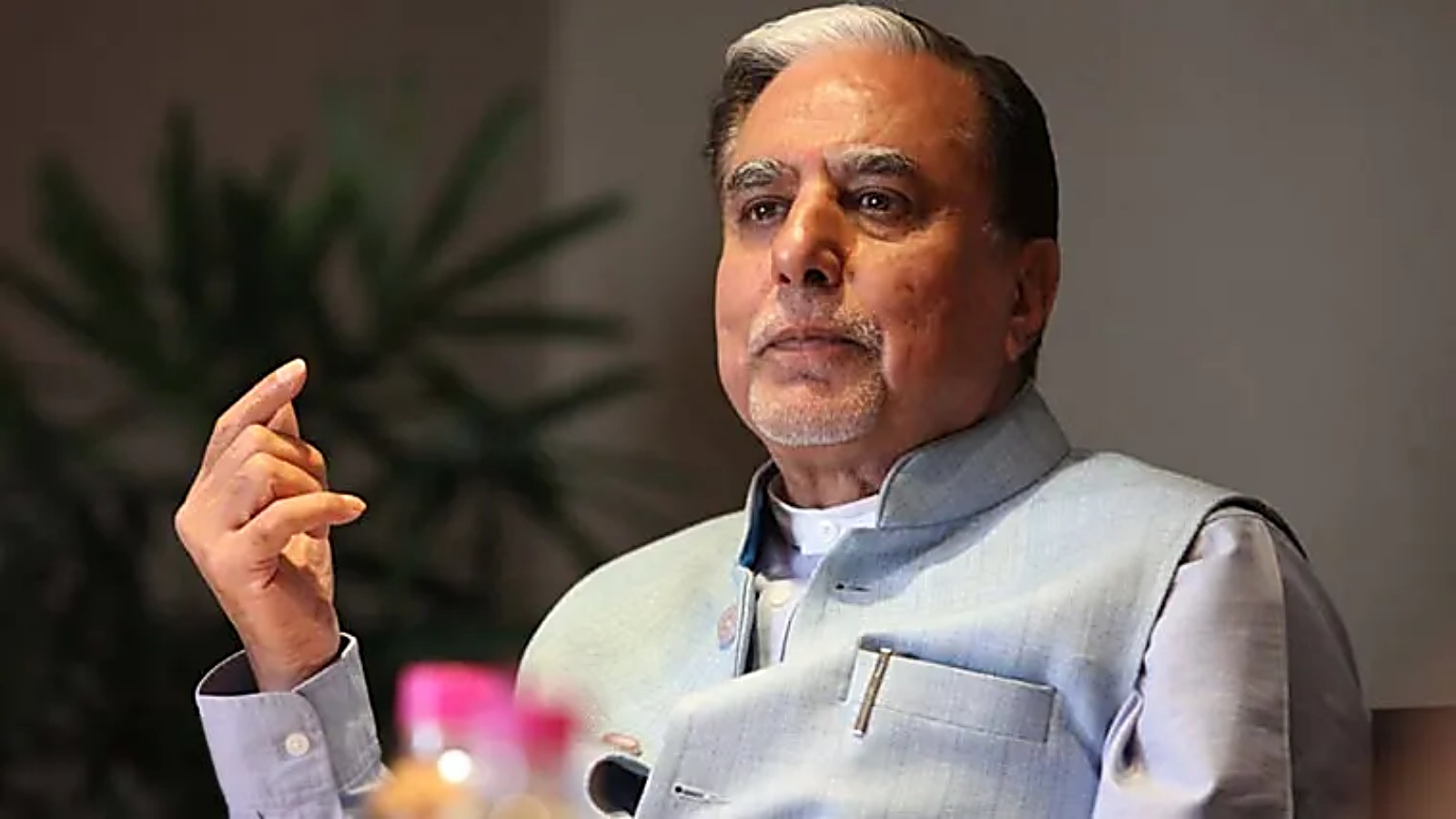
Zee founder Subhash Chandra’s Rs 6.25-cr settlement plan against Rs 22,006 cr claims on hold
The Bench, comprising President Justice (retd) Anupinder Singh Grewal, Judicial Members Bachu Venkat Balaram Das and Mahendra Khandelwal, and Technical Members Atul Chaturvedi and Ravindra Chaturvedi, directed Chandra, in his capacity as guarantor, not to alienate – sell, transfer or dispose of — any of his properties, either directly or indirectly.
The tribunal also issued notices to all parties and decided to rehear the matter, noting that there was no clear majority view on the earlier verdicts.
The constitution of the larger Bench follows the NCLT’s earlier order approving a repayment plan under which creditors would receive only about Rs 6.25 crore against guarantees of around Rs 22,000 crore signed by Chandra. The case has attracted considerable attention because of the exceptionally large gap between the claims and the amount proposed to be paid to creditors.
The personal insolvency proceedings against Chandra were initiated in 2024 following a petition by Indiabulls Housing Finance. The proceedings relate to personal guarantees given by Chandra for borrowings of Essel Group-linked companies and are separate from corporate insolvency proceedings involving group companies and regulatory proceedings concerning Zee Entertainment Enterprises.
The NCLT’s August 25 order approving the repayment plan came after a split verdict by a two-member Bench was resolved by a third member. The plan received 80.814 per cent of the voting share, while banks opposing it accounted for only 19.186%.
Banks and other creditors had raised objections over the exceptionally low recovery and questioned whether Chandra’s financial position and assets had been examined sufficiently. They had also questioned whether a forensic investigation was warranted.
Banks now say that at least five entities — which held 61.78% of the votes cast and backed the repayment plan — are linked to Chandra either as associates or related parties. As many as 23 creditors participated in the voting under the insolvency mechanism, and banks which opposed the plan, got a vote share of only 19.186%.
On August 30, Subhash Chandra said borrowers associated with his personal guarantees had assured him that they would reconcile the accounts with lenders and settle the balance of Rs 4,262 crore.
The previous tribunal order concluded that the repayment plan could provide a better outcome for creditors than pushing the matter into bankruptcy. It also held that where creditors had approved a plan in accordance with the Insolvency and Bankruptcy Code, the tribunal would not ordinarily substitute its own commercial assessment for that of the creditors.
The August 25 order has nevertheless triggered further questions over the effectiveness of personal guarantees and the ability of lenders to recover money when the guarantor’s available assets are substantially lower than the liabilities.
The development adds another layer to a closely watched insolvency case that has raised questions about creditor recoveries, promoter guarantees and the limits of the personal insolvency framework.
The most striking aspect of the case is the contrast between Chandra’s historical financial standing and the assets disclosed during the insolvency process. Creditors pointed to net-worth certificates issued in 2017 and 2018 showing figures of about Rs 45,888 crore and Rs 40,562 crore, respectively. Against that, the insolvency process recorded Chandra’s current assets at roughly Rs 31.79 crore. That huge difference became a central point of contention.
Creditors wanted a forensic investigation and asset-tracing exercise to establish what happened to the wealth that had been attributed to Chandra and the promoter group in earlier years. NCLT’s view was that the old net-worth certificates, by themselves, did not establish that assets had been concealed or diverted. The Tribunal also held that appointment of a forensic auditor or asset-tracing agency was not a mandatory precondition for considering a repayment plan.
Original Source
This content was distilled for a focused reading experience. All rights belong to The Indian Express.
Read original publication