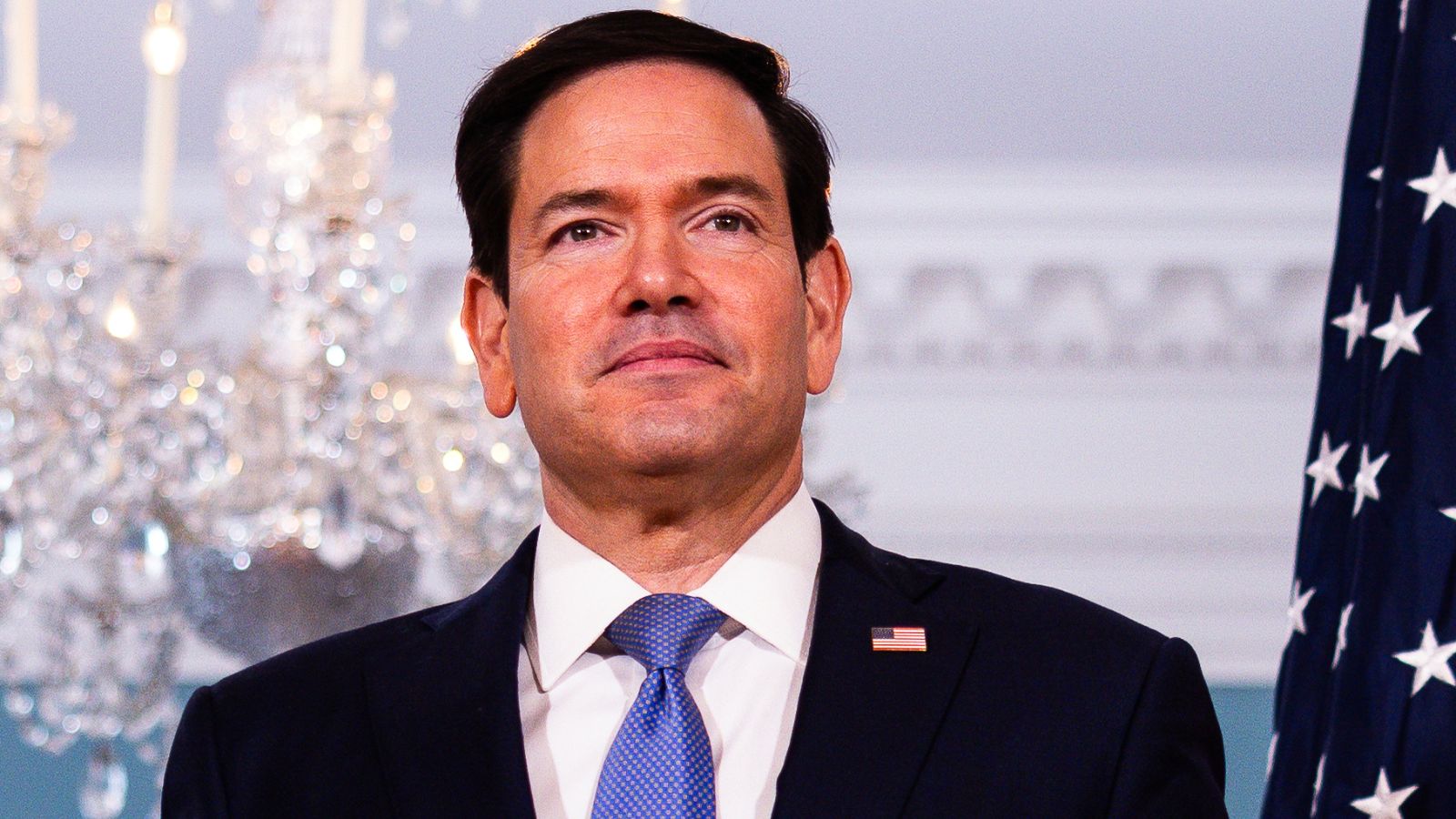
Rubio in Jamnagar, and the power of capital in diplomacy
Listen 00:00 0.5x 0.75x 1x 1.25x 1.5x 2x AI Narration This audio is AI generated.
The significance of US Secretary of State Marco Rubio’s visit to the Reliance refinery in Jamnagar on Wednesday will extend beyond the familiar debate over India-US relations. Jamnagar offers a window into India’s complex energy politics that have shaped Delhi’s recent engagement with Washington, Moscow and Tehran. Rubio’s interaction with the Tatas and the Adanis in Mumbai and his talks with Mukesh Ambani in Jamnagar also highlight the growing connection between Indian capital and the nation’s foreign policy. As Indian companies acquire greater economic weight and wider global reach, they are becoming an important part of India’s diplomatic arsenal, much like in other large nations.
The relationship between American business and foreign policy was captured in the adage “what is good for General Motors is good for America”. General Motors no longer occupies the commanding position it once did, but the principle remains relevant. American finance and technology companies loom large in US foreign policy today.
The House of Morgan’s involvement in the geopolitics of the early 20th century endures in a different form today. The CEO of JPMorgan Chase, Jamie Dimon, is received like royalty in Beijing and other capitals. Meanwhile, the new tech bros of Silicon Valley have begun to exercise great influence in 21st-century world politics. Europeans pioneered this approach through their East India companies in the 17th century. Today, European governments work closely with their companies to win markets and contracts. China’s “go out” policy since the late 1990s has encouraged Chinese firms to expand overseas, extending Beijing’s economic reach and political influence.
The sight of Mukesh Ambani alongside world leaders might seem unusual to Indian audiences. But it reflects the culmination of a long-running change. A few years ago, foreign leaders visiting India routinely toured the Infosys campus in Bengaluru, when the country’s IT companies were emerging as global players. Last October, British Prime Minister Keir Starmer visited Mumbai (not Delhi!) and met Prime Minister Narendra Modi there. He engaged with Indian business leaders and struck deals with Bollywood producers on film production partnerships with British studios. Where Indian capital commands scale or possesses a distinctive advantage, it increasingly becomes part of the diplomatic equation.
At Jamnagar, that advantage lies in the old economy of hydrocarbons. The world’s largest refining complex can process different grades of crude oil and supply refined products to markets across the globe. Reliance is a major crude importer and an important exporter of diesel, aviation fuel and other petroleum products. Its commercial decisions connect oil producers with consumers thousands of kilometres away. Jamnagar’s importance has grown since Russia’s invasion of Ukraine in 2022 and the disruption of oil supplies through the Strait of Hormuz. Ensuring India’s energy security has been a central challenge for Indian diplomacy since the Russian invasion of Ukraine in 2022. The Biden administration sought to limit Moscow’s revenues through a price cap, recognising that shutting out Russian oil would destabilise global energy markets.
Jamnagar has been at the centre of these shifting currents in oil politics. Its ability to switch suppliers and redirect products across markets demonstrates the value of a sophisticated refiner with global reach. As Washington gained control over Venezuelan oil exports, Jamnagar emerged as a preferred destination for the country’s heavy crude. Reliance’s engagement with the US is also becoming more direct. In March, the US announced the launch of a new refinery in Brownsville, Texas, to be backed by Reliance.
Washington wants greater energy cooperation with India and more Indian investment in the US. Reliance offers a substantial private-sector partner. The question is how Delhi can turn the company’s growing importance in American calculations into an asset for India-US relations.
Business has played a role in Indian diplomacy before. The Hindujas used their commercial connections with Iran to facilitate a rapprochement between Delhi and Tehran after the 1973 oil crisis. After the 1998 nuclear tests, Delhi turned to the Hindujas to facilitate engagement with British Prime Minister Tony Blair. American businesses, too, have been important partners in overcoming India’s difficulties in relations with Washington. Companies such as General Electric helped build support in the US for better ties with India during the 1990s. Beijing, meanwhile, has long relied on American business to help moderate tensions with Washington.
The international system has never been shaped by states alone. Capital and technology have long influenced the choices available to governments. Capital cannot replace the state as the principal actor in international relations, but it is becoming an increasingly important part of the diplomatic process around the world. Sensible states prevent the excessive concentration of capital at home and set the terms for its global role. As Indian companies acquire the scale to operate across borders and navigate geopolitical turbulence, they will become more consequential actors in India’s external relations.
Rubio’s visit to Jamnagar is a reminder that understanding contemporary Indian foreign policy requires a better appreciation of the intricate and inseparable relations between capitalism and modern international relations. That, in turn, means tempering Delhi’s abstruse foreign policy debates with Mumbai’s commercial logic and Bengaluru’s technological imperative.
The writer is a professor and director at the Motwani Jadeja Institute of American Studies, Jindal Global University, Delhi
Original Source
This content was distilled for a focused reading experience. All rights belong to The Indian Express.
Read original publication