What makes this SCO summit different for India is Iran
Prime Minister Narendra Modi’s presence in Bishkek for the Shanghai Cooperation Organisation summit comes at an unusually consequential moment. The war in Ukraine continues, the Gulf has been shaken by the US-Israel conflict with Iran, maritime commerce remains vulnerable, and the international system is searching for a new equilibrium. In such circumstances, the significance of the SCO lies perhaps less in what its declarations say, and more in who is sitting around the table.
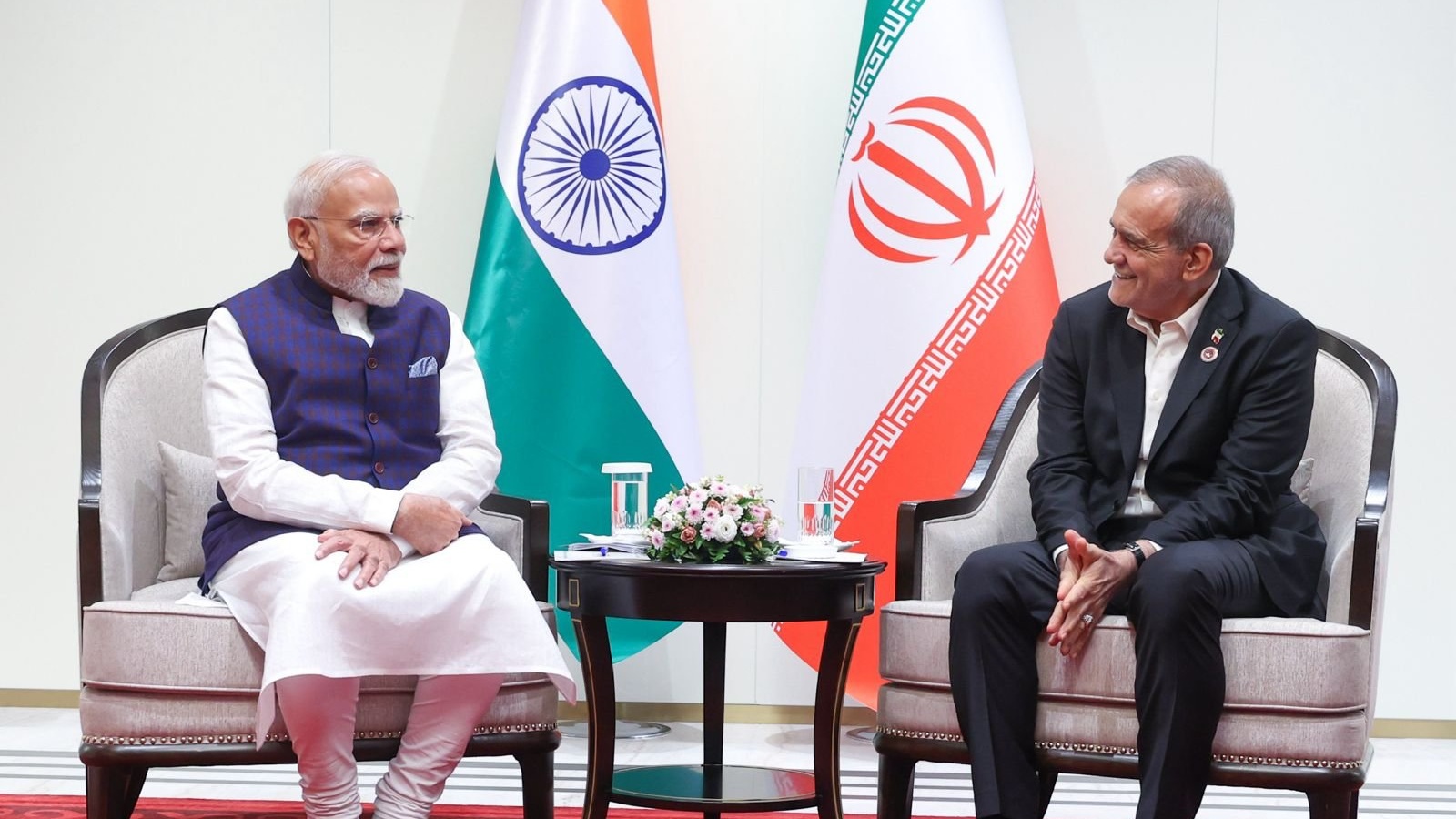
PM Modi is there with Russia’s President Vladimir Putin, Chinese President Xi Jinping, Iran’s President Masoud Pezeshkian and the leaders of Central Asia. For India, this is precisely where it needs to be.
The SCO has never been an entirely comfortable strategic space for India. China dominates its economic architecture; Russia retains enormous political influence, and Pakistan’s presence inevitably complicates India’s participation. Yet none of this diminishes the importance of the organisation. India cannot aspire to become a leading power while remaining absent from the tables at which Eurasia’s future is being discussed.
The PM’s bilateral engagement with Putin is therefore significant. Russia remains an important strategic partner even as India has consistently advocated dialogue and diplomacy to end the Ukraine conflict. Their Bishkek discussions covered defence, energy, economic cooperation and the consequences of conflicts in West Asia and the Black Sea for maritime trade. India again stressed dialogue and diplomacy as the way forward.
Xi’s presence is equally consequential even without a formal bilateral meeting. India and China remain competitors with an unresolved boundary question, but they are also two ancient civilisations, major economies and neighbours whose interests intersect across Asia.
Sharing platforms such as the SCO provides opportunities to manage competition without pretending that fundamental differences have disappeared.
This is strategic autonomy in practice: The ability to engage Washington, Moscow and Beijing without allowing any one relationship to determine the others.
What makes this SCO summit different is Iran. The conflict involving Iran, Israel and the United States has demonstrated how rapidly a West Asian crisis can acquire Eurasian consequences. Energy security, shipping, insurance, supply chains and connectivity are interconnected. The PM’s meeting with President Pezeshkian therefore carried significance well beyond bilateral relations. India emphasised dialogue and diplomacy, protection of civilians and the freedom of navigation and commerce.
For India, Iran is also a geography. Pakistan denies India direct overland access to Central Asia. Afghanistan remains uncertain. Iran consequently becomes vital to projects such as Chabahar and the International North-South Transport Corridor.
The paradox is striking. The Gulf crisis makes alternative Eurasian connectivity more necessary even as instability surrounding Iran makes such connectivity more difficult. West Asia and Central Asia can therefore no longer be viewed as entirely separate strategic theatres.
Washington will understandably examine Bishkek for signs of something larger: Whether China, Russia and Iran can transform dissatisfaction with the existing international order into durable institutional cooperation; whether alternative financial and connectivity structures acquire momentum; and, importantly, where India positions itself.
It would be mistaken, however, to interpret India’s presence as evidence of an emerging anti-Western alignment. India’s interests are more complex.
The Central Asian republics themselves understand this. They have relationships with Russia, increasingly substantial economic engagement with China, and simultaneously seek wider partnerships with the United States, Europe, India and others. Strategic diversification gives smaller states greater agency. India should recognise the opportunity this creates.
There is a strong desire to rediscover the region’s civilisational importance. This offers India an unusual advantage. We cannot match China’s geographical proximity or infrastructure expenditure. Nor should we attempt to compete with Russia’s historical depth in the region. India possesses something different; centuries of civilisational familiarity without an accompanying memory of domination.
At Issyk-Kul, I spoke of what we in Bihar have begun describing as the Nalanda Approach. Ancient Nalanda was not simply an Indian university. It was an international knowledge ecosystem linking scholars and civilisations across Asia. That principle can acquire contemporary meaning through university partnerships, joint research, scholar exchanges, historical studies, technology collaboration and sustained intellectual dialogue.
Soft power becomes strategically meaningful when admiration is converted into relationships and relationships into influence.
There remains one formidable obstacle: Connectivity. India and Central Asia are geographically close but strategically separated. The absence of direct land access has constrained commerce, tourism, academic exchange and the everyday human interaction through which durable relationships are built. Chabahar, the INSTC, air connectivity and new multimodal arrangements therefore deserve far greater strategic attention.
India’s Central Asian problem has never been a shortage of historical affinity. It has been the difficulty of converting affinity into access, and access into sustained influence.
That is why Bishkek matters beyond the SCO communiqué. The PM’s presence signals that India intends to remain fully engaged wherever Eurasia’s future is being shaped. Strategic partnerships can secure India a place at the table, and connectivity can give those partnerships substance. But India possesses one further instrument which deserves much greater investment — its ability to reconnect with Central Asia through knowledge, culture and civilisational memory.
In a world once again dominated by contests for power, that may prove to be a remarkably durable form of influence.
The writer is a former Commander of the Indian Army’s Chinar Corps and now Governor of Bihar
Original Source
This content was distilled for a focused reading experience. All rights belong to The Indian Express.
Read original publication