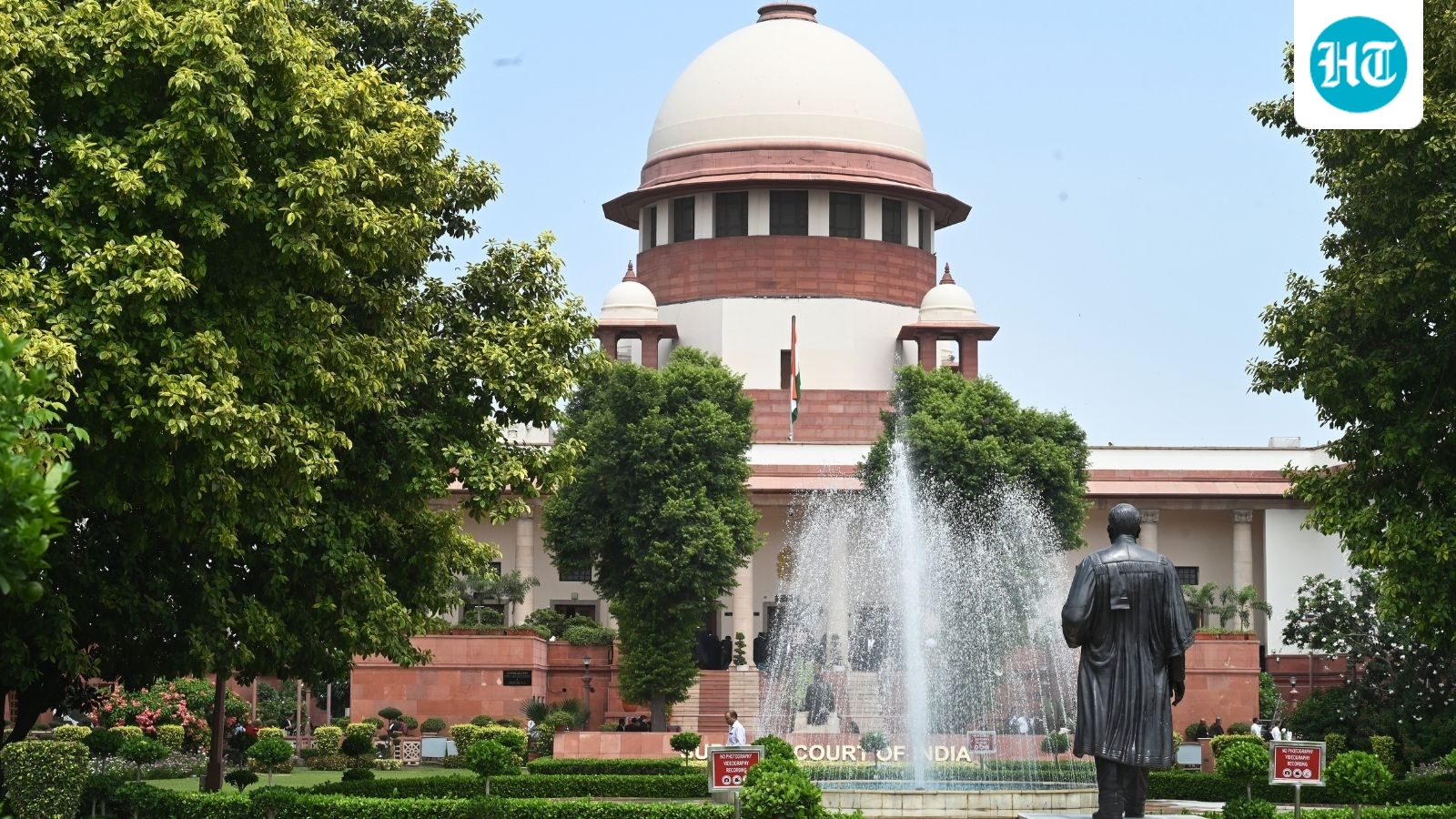
Supreme Court seeks law reform proposals to protect people from Northeast by Dec 18
The Supreme Court has directed the committee constituted by the Centre to monitor complaints of violence and harassment against people from the Northeast region living in other parts of the country and recommend necessary changes in law for their protection by December 18.
The Centre’s monitoring committee examined nine cases of alleged violence and harassment against people from the Northeast across several states over the past year. (Arvind Yadav/HT Photo)In an order passed on October 14, the top court further directed the committee to ensure that in future, victims’ statements are recorded soon after the incident to avoid delay in tracing them.
The order comes close on the heels of the recent killing of a 54-year-old music teacher from Manipur, Vikram Singh Chongtham, in Delhi last month by a group of men after he asked them not to create a commotion outside his house.
The bench of justices Sanjay Kumar and Sanjeev Sachdeva said, “The committee shall also address the issue of necessary changes being made in the law to ensure protection and make suitable recommendations to the authorities concerned after due consideration.”
The order passed in a petition filed by advocate Alana Golmei gives an impetus to the long-standing demand of criminal law reforms to strengthen the institutional mechanism available to tackle incidents of violence against people from northeast living in other parts of the country.
Also read: ‘Clothes torn, hit with bamboo stick’: 2 women from Assam and Bihar molested, racially abused outside Delhi club
In 2014, following the death of Nido Tania, a student from Arunachal Pradesh, in Delhi, the Centre set up a committee headed by former IAS officer MK Bezbaruah, that recommended changes in the Indian Penal Code (IPC) among other set of reforms concerning issues faced by northeastern people.
Two specific changes were recommended by the Bezbaruah committee seeking introduction of new provisions section 153C dealing with hate speech and section 505A on provocation of violence on grounds of race, caste, place of birth, residence, etc. In 2017, the Law Commission of India made similar recommendations to the Centre for inserting the two provisions.
The Monitoring Committee was constituted by the Centre in 2016 on a PIL proceeding filed by Karma Dorjee. One of the mandates assigned to the committee was to ensure implementation of the Bezbaruah committee recommendations. However, though the issue of law reforms to prevent racial discrimination of Northeast people was discussed, no concrete recommendations have been made by the committee so far.
Also read: Couple held for racial abuse of northeast women; charges under SC/ST Act slapped
Posting the matter on December 18, the court went through an affidavit filed by the Centre giving details of the proceedings of the Monitoring Committee that met on September 8. The committee dealt with nine cases of violence and harassment reported across the country against northeasterns over the past one year and the action taken by the police in the respective states.
The bench was informed that in some cases, the complaints could not be acted upon as the complainant was untraceable. To avoid delay in pursuing the complaints in future, the court held, “Henceforth, measures shall be put in place to immediately record the full details, including addresses, of the complainants as and when complaints of any harassment are received and necessary further action shall be initiated without fail.”
The court also pulled up the committee for showing lack of “seriousness” in attending the meetings. Going by the minutes of the meeting held last month, only three out of the 11-member committee attended the meeting physically while the remaining connected virtually through video-conferencing.
Not satisfied by such an approach, the bench said, “It is distressing to note that out of the committee members, only three attended the meeting physically and even those, who were stationed in Delhi, including two under secretaries to the Government of India, participated in the meeting through video-conferencing.”
In February this year, the court had directed the committee to meet at least once in three months.
“It would be advisable to fix the actual date of the next meeting as per the convenience of the committee members,” the order said.
The top court while hearing the present case early this year had observed that targeting people because of cultural or racial differences is unacceptable. The instances of hate crimes and racial discrimination against northeasterns still continues. In December last year, Anjel Chakma, a MBA student was attacked along with his brother while they were shopping in Selaqui area of Dehradun in Uttarakhand.
The Angel Chakma case is one of the nine incidents being overseen by the monitoring committee set up by the MHA. The other cases pertain to Delhi, Karnataka, Madhya Pradesh, Uttar Pradesh, and Maharashtra.
Original Source
This content was distilled for a focused reading experience. All rights belong to Hindustan Times.
Read original publication