Audit finds Bengal-specific access curbs in ECINET code
The Election Commission of India’s (ECI) portal, ECINET, carries a feature that can bar Electoral Registration Officers (EROs) and Assistant EROs (AEROs) only in West Bengal from reviewing voters’ enumeration forms and viewing the notice-and-hearing dashboard, according to a third-party audit of the portal’s publicly served code.
the audit could not establish whether the restriction was used or when it was introduced. (PTI/Representational)The audit –– conducted by civic-tech initiative Charchagram –– found the feature present in code fetched as recently as October 19. No such exclusion for EROs and AEROs in the code for any other state was found.
HT couldn’t independently verify the audit. The exercise couldn’t ascertain whether the feature was used or when it was introduced. ECI did not respond to a questionnaire sent by HT.
Also read: ECI reverses stand on searchable electoral rolls; adds no safeguards against misuse it once cited
The audit –– carried out on October 2, 6, 7, and 9 –– by Charchagram data scientist Saurav Rajput found that the “View Enumeration Form Details” tile was available to officers on the SIR Phase II landing page, with an exception written into the code for West Bengal.
“The ‘View Enumeration Form Details’ is a general tile available to SIR Phase II landing page,” Rajput said. “West Bengal is separately hard-coded in the codebase and excluded from it (for ERO and AERO).”
The same exclusion covered the notice-and-hearing dashboard, a window designed to track, process, and clear notices and hearing actions related to voter registration and electoral roll revision.
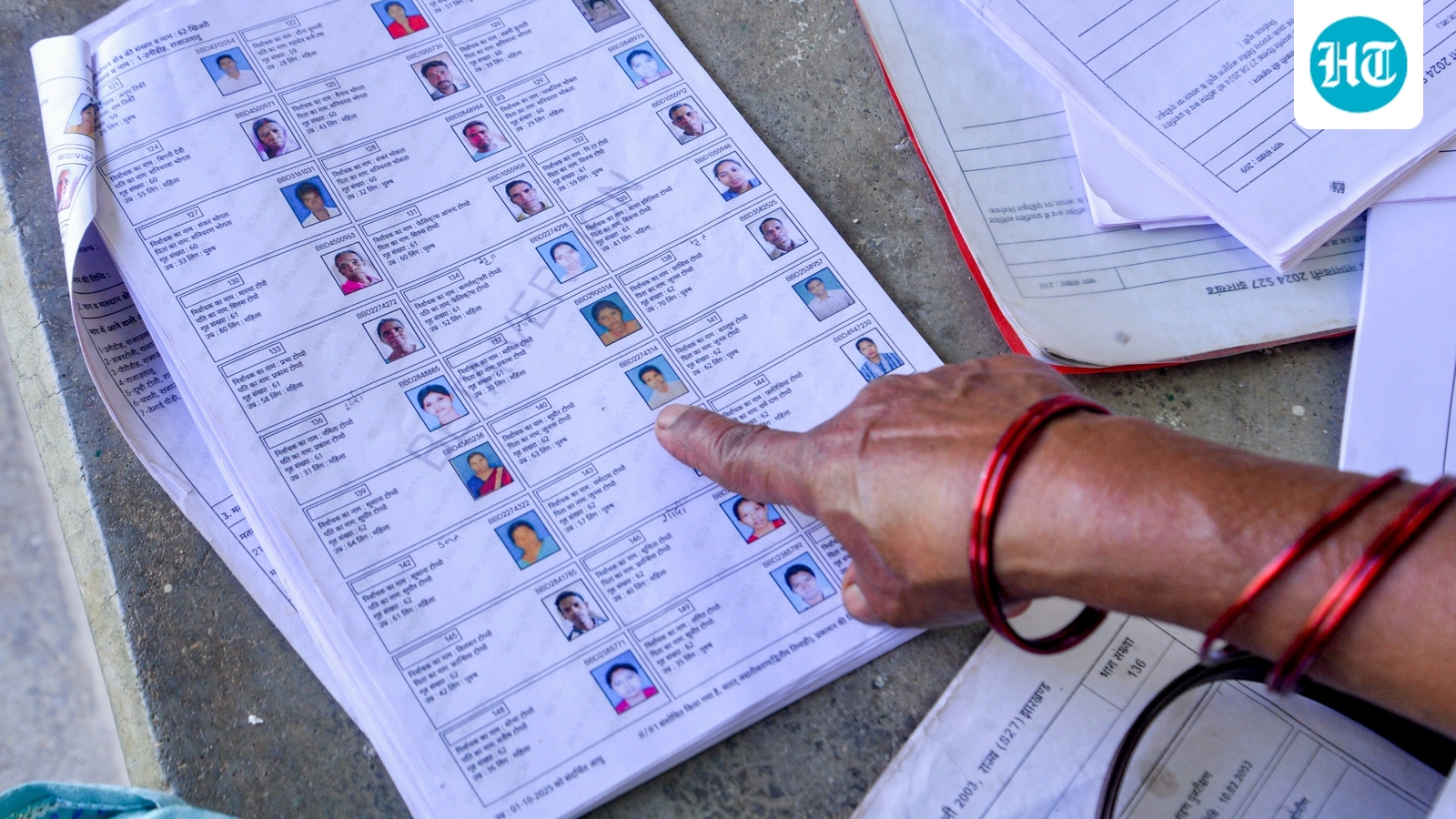
The View Enumeration Form Details page lists each form with its constituency, part and serial number, the elector’s voter ID number and name, who submitted the form, the documents uploaded, and the booth level officer’s recommendation. It also holds documents labelled “ERO/AERO-Document” and “Hearing-Order”, and has buttons to send a form back to the BLO or flag an elector as a previous-SIR elector.
To be sure, the audit only confirms restrictions imposed on the frontend. “Server-side enforcement isn’t visible to us,” Rajput told HT. Asked if the rule existed in earlier builds, he said, “We don’t know. We did not have access to earlier versions, so we cannot say whether the rule existed before or has changed.”
The current build was introduced on October 16. Rajput said the feature has existed in the app at least since September 28, when he first saw it. The special intensive revision was the most contentious in West Bengal, where it resulted in the disenfranchisement of 2.71 million people. The exercise began on November 4 last year.
On December 16, the draft roll was released, removing 7.8% of the pre-SIR electorate.
ECI then flagged another 13.6 million people for logical discrepancy – a controversial category introduced in West Bengal.
But the hearings for the logical discrepancy process dragged on as ECI and the West Bengal government clashed over the rank of officers deputed to be EROs.
On February 20, the Supreme Court invoked its extraordinary powers under Article 142 and entrusted the process of hearings to judicial officers. It asked the Calcutta high court chief justice to spare serving and former judicial officers to revisit and dispose of the pending claims.
On February 24, the top court noted that about 250 judicial officers were assigned about five million cases, which meant that the process could take up to 80 days. As a result, the court widened the pool of judicial officers and said only documents submitted on or before February 14 would be considered. “It shall be the entire responsibility of the ERO/AERO to satisfy the presiding judicial officers of the documents referred to in paragraph 3(iii) above,” the court said.
Also read: From decision-making to SIR deadline extensions: What changed at ECI since Sep 23
The judicial officers finished their work on April 6. Among the 13.6 million discrepancy cases, 2.2 million were removed from the rolls.
Those removed were allowed a chance to approach one of 19 appellate tribunals – which were yet to be fully set up as the assembly elections approached. The final roll was published on February 28, removing 10% voters from the pre-SIR roll.
But due to the backlog of logical discrepancy cases, supplementary lists were issued till one day before the West Bengal assembly elections in April.
Eventually, 2.71 million people were disenfranchised. Many of those appeals, as well as appeals by people against the inclusion of people –– in all about 3.8 million –– are still pending before the tribunals. In the past two months, several judges presiding on tribunals have complained about ECI’s portal and backend processes, saying it impeded their work.
Trinamool Congress MP Abhishek Banerjee, on February 21, had alleged that EROs in Bengal were “no longer able to monitor” AEROs’ progress on ECINET in the conduct of SIR. He called it a violation of Sections 13B and 13C of the Representation of the People Act, which make the ERO responsible for preparing the rolls and place AEROs under the ERO’s control.
Supreme Court advocate Harshit Anand said such a feature, if applied, would run against the court’s directions. “At least in the context of West Bengal, this option goes clearly against the mandate of the SC direction,” he said. “The two orders read together place primary responsibility of verification of documents on the EROs/AEROs; satisfaction of judicial officers is a subsequent step. To deny them access to forms and claims would impede even the judicial officers from forming an opinion as they do not verify the documents themselves and only rely on the EROs/AEROs reports.”
Original Source
This content was distilled for a focused reading experience. All rights belong to Hindustan Times.
Read original publication