400+ Indian-origin students, alumni abroad sign 'Spare India from Anarchy' appeal
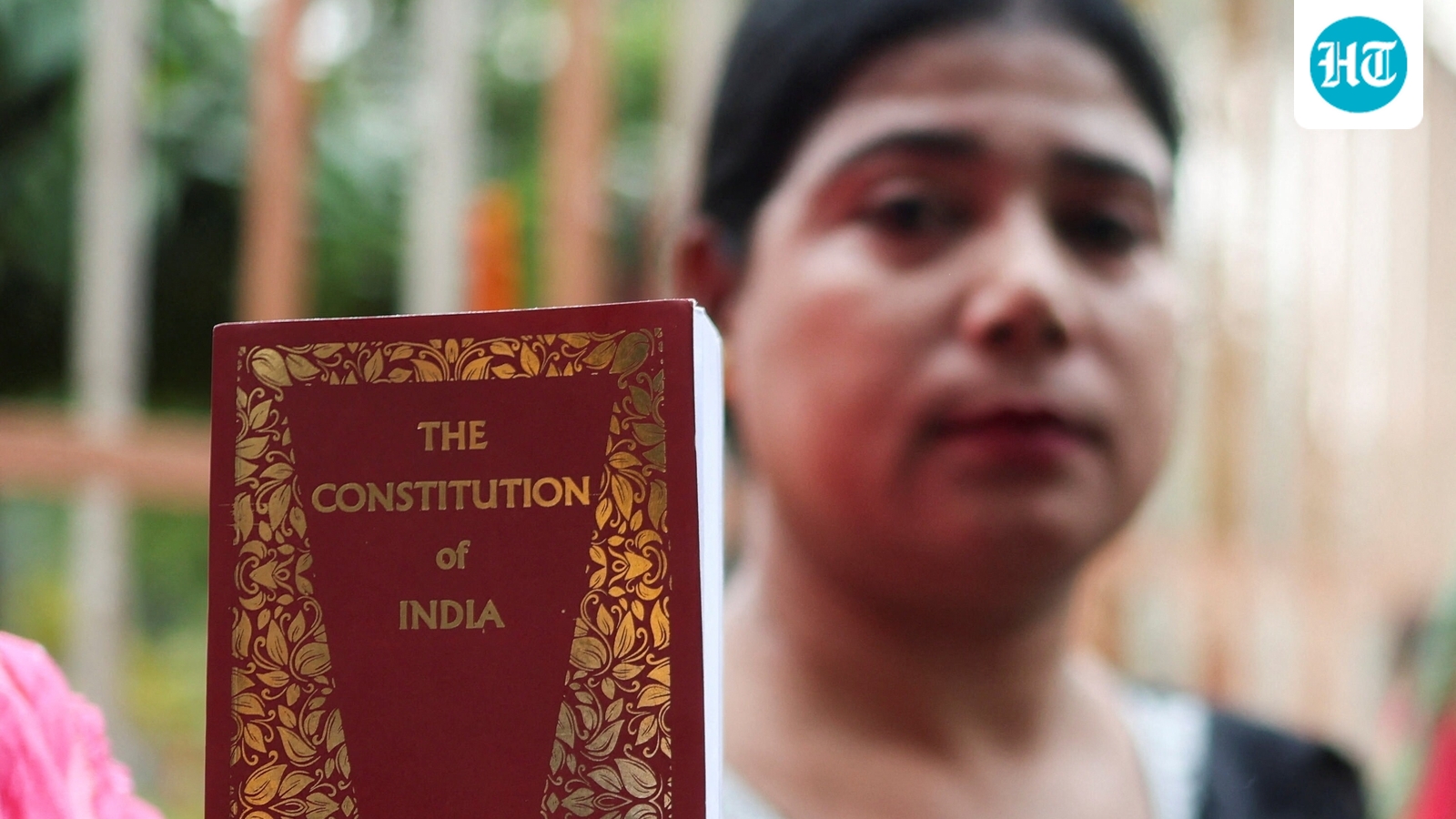
The statement leans on a warning from Dr BR Ambedkar, the chief architect of the Constitution. REUTERS/Sahiba Chawdhary (Representative Image)“We understand dissent is an essential ingredient of democracy, but we refuse to be silent spectators to the subversion of democratic apparatus in its guise,” the signatories said. They added that they were speaking as people who “have stakes in the future of this country” and are “deeply anguished” by the current state of affairs.
Also Read: ‘Jantar Mantar is Everywhere’: Indian diaspora across the world stage anti-CEC protests after massive Delhi demonstrations
The signatories say “unfavourable election outcomes have led to questions of procedural integrity” and that “adverse judgements have provoked unfortunate commentary on judicial independence.” They also say the Armed Forces, which they describe as “the most apolitical institution in the country,” have been “gratuitously and unjustly entangled” in partisan discourse.
The statement does not name any political party, leader, election, court ruling or specific protest. Nor does it specify which developments in India prompted it. This leaves the target of its criticism open to interpretation, a point readers should bear in mind when assessing its claims.
Ambedkar made the remark cited in the statement during his closing speech to the Constituent Assembly on November 25, 1949, a day before the Constitution was adopted. In that speech, he argued that constitutional methods must be used to achieve social and economic goals once a constitutional path is available. The signatories invoke the passage to argue that debate and dialogue must remain within constitutional institutions.
Also Read: SC Constitution's watchdog, must bite if warnings don't work: Ex-Justice Kurian Joseph amid anti-CEC protests
The note highlights 13 institutions among the affiliations, including the Massachusetts Institute of Technology, Oxford, Cambridge, Princeton, Harvard, Yale, Stanford, Columbia, the London School of Economics, the National University of Singapore, Seoul National University, the University of Manchester and the University of Toronto. It adds that “institutional affiliations do not imply endorsement by the respective institutions.”
A reading of the appended list reveals a broader mix of affiliations than the headline names suggest. A count of the entries shows that at least 43 of the 402 signatories, or about 10.7%, list Orenburg State Medical University in Russia as their institution. Many others list medical universities in Russia, Ukraine, Georgia and Kazakhstan, as well as business schools and colleges in Australia and Canada.
The graduation years listed also vary widely. Entries range from 1969 and 1974 to 2032, indicating that many signatories are current students rather than alumni. A few entries do not include a year, while some list the word “Working” instead. The list provides no designations or professional details beyond the institution and year, making it difficult to verify individual credentials.
Also Read: SC order on Delhi protest crackdown: Why ‘procedure established by law’ matters and what it means
The statement comes at a time when questions about electoral integrity, judicial independence and the limits of protest are regular features of political debate in India. Opposition parties have often described street mobilisation as a legitimate democratic tool. The statement acknowledges that dissent is essential but draws a line at methods it considers anarchic.
Supporters of such statements argue that diaspora voices add weight to efforts to defend institutions at a time when India's democratic standing is being discussed abroad. Critics, however, may argue that calls to keep dissent within institutions can be interpreted as appeals to temper protests. The statement does not specify which protests it considers legitimate.
The signatories urge “all social and political forces” to “take cognizance of our distress and desires.” They call for differences to be resolved through “debate, discussion, dialogue and dissent under the roof of constitutional institutions” created by the founding fathers.
The statement closes on a note of hope. “We hope wisdom will prevail,” the signatories say, adding that India should set an example for the democratic world “for all the right reasons.”
Original Source
This content was distilled for a focused reading experience. All rights belong to Hindustan Times.
Read original publication