Russia-led Eurasian Economic Union urges Armenian referendum
The Ring is Euronews’ weekly political showdown, where Europe’s toughest debates meet their boldest voices. In each episode, two political heavyweights from across the EU face off to propose a diversity of opinions and spark conversations around the most important issues of EU affairs and the wider European political life.
No agenda, no argument, no bias, No Comment. Get the story without commentary.
Dare to imagine the future with business and tech visionaries
Euronews Tech Talks goes beyond discussions to explore the impact of new technologies on our lives. With explanations, engaging Q&As, and lively conversations, the podcast provides valuable insights into the intersection of technology and society.
Europe's best food experts are joining forces to crack down on fraud. Euronews is following them in this special series: The Food Detectives
We give you the latest climate facts from the world’s leading source, analyse the trends and explain how our planet is changing. We meet the experts on the front line of climate change who explore new strategies to mitigate and adapt.
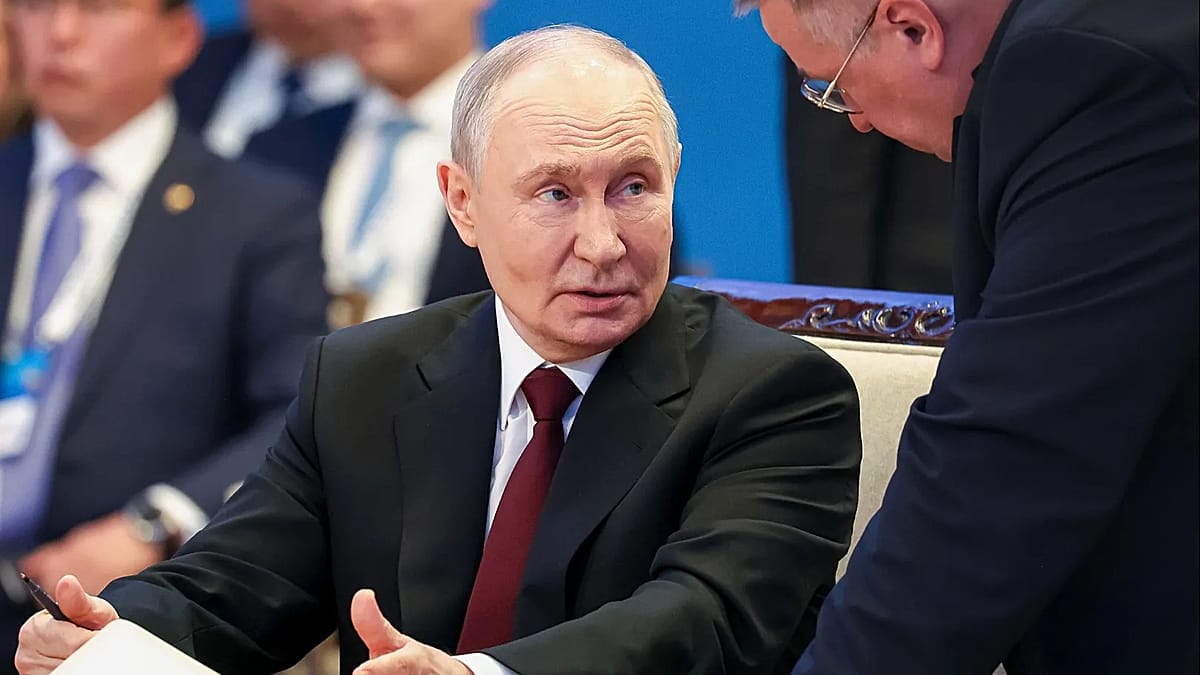
During their summit in Astana on Friday, the leaders of Russia, Belarus, Kazakhstan and Kyrgyzstan called on Yerevan to hold a national referendum as soon as possible on Armenia’s choice between the EU and the Moscow-led bloc.
They warned Yerevan that its move towards EU accession may lead to the country's suspension from the organisation and launched a so-called formal review into Armenia’s membership in view of a possible suspension by December.
Russian President Vladimir Putin has already touted the idea of a referendum on Armenia's future, saying earlier that it would be “quite logical ... to ask the Armenian citizens what their choice would be."
"Based on that, we would make our own choice as well," he said at the time.
Putin has previously said that membership in both blocs was "impossible".
Armenia was represented at the Moscow-led union summit by Deputy Prime Minister Mher Grigoryan, as Prime Minister Nikol Pashinyan was busy with the election campaign for the 7 June elections.
A video from the summit showed Putin shaking hands with Grigoryan while greeting the other leaders.
The EAEU statement was conveyed to Grigoryan, who told the summit that Armenia “remains committed to constructive participation in the EAEU based on mutual respect, equal partnership, and consideration of all members’ national interests,” and that Yerevan supports “mutually beneficial cooperation”.
Armenia has consistently maintained that it does not plan to withdraw from the EAEU but will continue its pro-EU course.
Russia’s Deputy Prime Minister Alexey Overchuk asked for patience when asked if there has been any movement on the matter during the summit, adding that the situation is “not so straightforward.”
Russia’s restrictions come as the Kremlin has ramped up its repeated warnings to Yerevan over its pro-Western path, threatening to end its cheap gas and oil supplies, which are vital to Armenia, and to show Armenians the consequences of a possible Pashinyan victory on 7 June.
“I told Pashinyan, 'Everything that is acceptable and good for the Armenians is acceptable and good for Russia. Do as you think is good for the Armenian people," Putin said at the summit on Friday.
“Our people are connected by centuries of friendship and nothing can damage our humanitarian ties. But, there are questions that are purely economic."
"It is not possible to reconcile the standards of the EU with the standards of the EAEU. That is why we shall be forced to roll back all our economic activities in Armenia” if it were to move closer to the 27-member bloc, Putin told reporters at the end of the summit in Astana.
Amid widespread allegations of Russian interference in Armenia’s election campaign and support for the Armenian opposition, Russia’s Foreign Ministry announced on Friday that Armenia conveyed informally to Moscow the message that certain Russian officials were not welcome as election observers.
The EAEU statement only mentioned Armenia's pro-EU course, but it comes just one day after US President Donald Trump gave Pashinyan his "complete and total endorsement" for re-election, describing him as "a great friend and leader" who is making Armenia "strong, wealthy, and very secure."
Earlier this week, US Secretary of State Marco Rubio visited Yerevan, where he and Armenian Foreign Minister Ararat Mirzoyan signed a strategic partnership framework, a critical minerals memorandum of understanding, and a cooperation agreement on the Trump Route for International Peace and Prosperity — known as TRIPP — a transit corridor linking Azerbaijan with its Nakhchivan exclave through southern Armenia.
Trump linked his endorsement directly to Rubio's visit, saying the US and Armenia would "soon break ground" on the TRIPP corridor, which he said would "transform the South Caucasus" and open energy access from Central Asia to the US.
Standing next to Trump at the White House on Wednesday, Rubio described the critical minerals deal as "a reminder of another war President Trump helped settle," referring to the historic Armenia-Azerbaijan peace agreement Pashinyan signed with Azerbaijan's President Ilham Aliyev at the White House last year.
"We are seeing the emergence of a great new relationship with Armenia," Rubio added.
Pashinyan thanked Trump for the endorsement on X, posting the US and Armenian flags side by side.
Original Source
This content was distilled for a focused reading experience. All rights belong to euronews.
Read original publication