Mind-Blowing Simulation Reveals What 36 Hours Of Fasting Really Does To Your Body
Are you sure you want to post this? We're asking people to rethink comments that seem similar to others that have been reported or downvoted this warning is a mistake
Enter your email address or username and we’ll send you a link to reset your password
An email with a link to reset your password was sent to the email address associated with your account
Your account isn't active yet. We've emailed you an activation link. Please check your inbox and click the link to activate your account
You're on the list! Expect to receive your first email very soon!
Newest Trivia & Quizzes in Your Inbox Discover trivia, brain teasers, and quirky quizzes — fresh every week!
Praised by some as a simple and effective health strategy, the discussion around the practice is never-ending, with one of the most asked questions being: how exactly does it work?
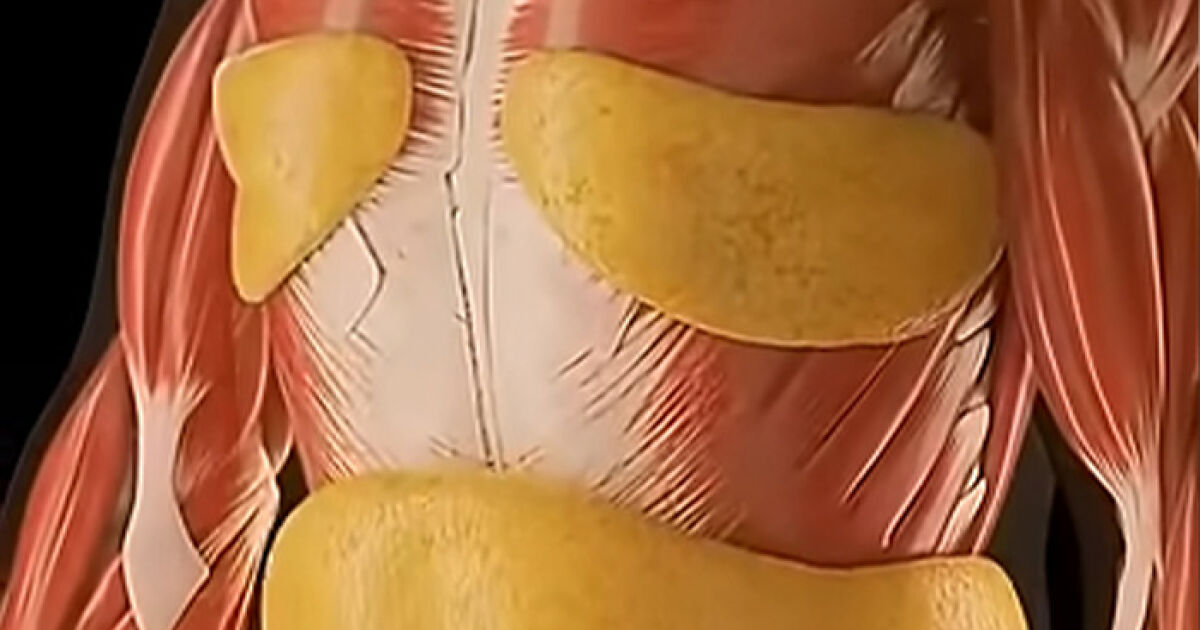
As curiosity around fasting continues to rise, a simulation video from the YouTube channel Wellness Wise takes viewers through the physiological changes that unfold inside the body when it goes 36 hours without food.
The animation offers a detailed look at how the body adapts as it shifts through different metabolic stages before reaching a point where it relies more heavily on stored fat for energy, a process often associated with fat loss.
It was posted a year ago and has amassed 28M views as of this writing.
The visuals in the footage are graphic, depicting highly realistic human organs and other internal structures.
"What happens to your body when you fast for 36 hours?" the narrator of the video asks before following up with detailed information.
The video claims that four hours after eating, digestion slows, insulin levels drop, and the body begins using stored energy to function.
Around 8 hours in, it shifts to glycogen (carbohydrate) stores for fuel.
By 12 hours, fat burning begins as the body moves toward ketosis, a natural metabolic state in which it uses stored fat for energy.
After 16 hours, a natural cellular cleanup process called autophagy begins. At 24 hours, repair processes and insulin sensitivity improve. By 30 hours, growth hormone rises, helping preserve muscle.
Ultimately, at 36 hours, autophagy peaks, supporting cell renewal and metabolic reset.
Rishi Sunak, the former UK prime minister, was known for undertaking a 36-hour fast, with a source close to him telling the Sunday Times in 2024 that he consumed only water, tea, or black coffee from 5 pm on a Sunday to 5 am on a Tuesday.
Adam Collins, associate professor of nutrition at the University of Surrey, corroborated that fasting for 36 hours offers significant weight-loss benefits and strengthens "metabolic flexibility" - the body's ability to switch between fuels.
A US-based diet and mental health service provider, The Emily Program, outlined several side effects of the practice.
Excessive hunger pangs, fatigue, low energy, headaches, dizziness, digestive issues, irritability, mood changes, bad breath, and sleep disturbances are among the most commonly reported side effects of prolonged periods without food.
More concerning potential risks include impacts on reproductive health, as well as nutrient deficiencies and malnutrition.
There also isn't an extensive amount of data regarding intermittent fasting.
The Emily Program states: "Current human research is very limited in size and duration, in part because this diet fad is not sustainable.
James Betts, a professor of metabolic physiology at the University of Bath, echoed this sentiment, despite the growing number of supporters who endorse it.
Speaking to The Guardian, he said, "There are a lot of proposed benefits to running on fats. But a lot of the research hasn't really been borne out in human beings, so we don't see dramatic benefits, certainly not in the short term."
A December 2022 study by Kyle T. Ganson, assistant professor at the University of Toronto's Factor-Inwentash Faculty of Social Work, and his associates explored the association between intermittent fasting and disordered eating among 2,762 Canadian adolescents and young adults.
They surveyed participants on their use of intermittent fasting over the previous 12 months.
Per the study, women showed the strongest associations between intermittent fasting and disordered eating, whereas men showed a significantly weaker correlation.
Image credits: Maksim Goncharenok/Pexels (Not the actual image)
Intermittent fasters, according to The Emily Program, are hard on themselves for breaking their fast too early or eating too late.
Depriving oneself of food for an extended period of time can also lead a person to feel out of control when the eating window arrives, the organization states.
Not achieving expected results within a short time frame can further push a person to eat less while promoting low self-esteem and body image issues.
News writer with over two years of professional experience covering celebrity news, film and television developments, and viral phenomena. My expertise lies in source verification and storytelling that focuses on the why behind the moment. Skilled in social media monitoring and SEO optimization, I produce timely, engaging content that resonates with readers while maintaining editorial integrity.
5 5points reply Peter Parker Peter Parker Community Member - points posts comments upvotes 1 day ago Created by potrace 1.15, written by Peter Selinger 2001-2017 Svg Vector Icons : http://www.onlinewebfonts.com/icon Report I agree 100%. Intermittent fasting has been debunked so many times. It's not WHEN you eat, it's how much you stuff in your cakehole, period.
3 3points reply Load More Replies... Nova yt Nova yt Community Member - points posts comments upvotes FollowUnfollow 22 hours ago Created by potrace 1.15, written by Peter Selinger 2001-2017 Svg Vector Icons : http://www.onlinewebfonts.com/icon Report This article wasn't really about intermittent fasting, although it does come up but a 36-hour fast. And the science is there for the 36-hour fast especially for the benefits of autophagy. I do think intermittent fasting is just a throw away fad diet BUT doing a fast once of twice a year definitely has it's benefits and the science is there. If not just to get rid of damaged cells (autophagy). Especially in the cases of illness and to prevent illness not in the case of trying to lose weight in my opinion.
0 0points reply Tam Tam Tam Tam Community Member - points posts comments upvotes FollowUnfollow 16 hours ago Created by potrace 1.15, written by Peter Selinger 2001-2017 Svg Vector Icons : http://www.onlinewebfonts.com/icon Report I did intermittent fast for one year to lose weight. Boy did I ever lose BUT blood work after the year showed all my labs were screwed up. Most of them in the "danger" and "severe" scale. My B12 got so low I am now on B12 injections which is itself is no biggie but the reason I'm on such a high dose on injections is the deficiency caused optic/brain nerve damage. The high dose is to, hopefully, stave off blindness. Other medical conditions attributed to the fasting as well I'm just not going to list them all. Eat, people. Good, healthy food that sustains your body and brings good health. Take it from me, it's just not worth it.
0 0points reply Madame SuperTips Madame SuperTips Community Member - points posts comments upvotes FollowUnfollow 12 hours ago Created by potrace 1.15, written by Peter Selinger 2001-2017 Svg Vector Icons : http://www.onlinewebfonts.com/icon Report So important not to listen to those who make such absolute proclamations. ("The more certain you are of a subject, the higher the likelihood you're d**d wrong!") These comments that ABSOLUTELY endorse or repudiate a claim demonstrate only their lack of education in the subject they pretend such expertise at -- 3 idiots on this page already commented. From a jackanapes who didn't nourish his body across fasting periods, to two putzes who clearly have no related degrees. #smh A) ANYTHING you do too much of is imbalanced. Balance and flexibility explain my youth B) Fasting is magnificent. You do it every day.. from dinnertime, to breakfast. Stretching a few hours, drinking, for example, lemon water, is just physiologically terrific C) NEVER LISTEN TO ANYONE WHO'S NOT OUTPERFORMING YOU (and most all of us) 𝗪𝗵𝗼 𝘀𝗵𝗼𝘄𝘀 𝗶𝘁 𝗯𝗲𝘀𝘁 𝗶𝘀 𝘄𝗵𝗼 𝗸𝗻𝗼𝘄𝘀 𝗶𝘁 𝗯𝗲𝘀𝘁. Everyone else needs to be silent, because the mouth does not work when the ears are working, and vice-versa.
-1 -1point reply Back to Homepage More about Food Homepage Trending Food Homepage Next in Food Related on Bored Panda
Original Source
This content was distilled for a focused reading experience. All rights belong to Bored Panda.
Read original publication