The gap between knowing and doing
In India, this discourse emerged at a more particular juncture. The protests following the Delhi gang rape of 2012 brought diverse groups of people, many without experience of political engagement, on to the streets, and moved the question of sexual violence to the front pages. Notably, this may well have been the first public protest movement to transition from the streets to the internet, coinciding with the rise of social media.
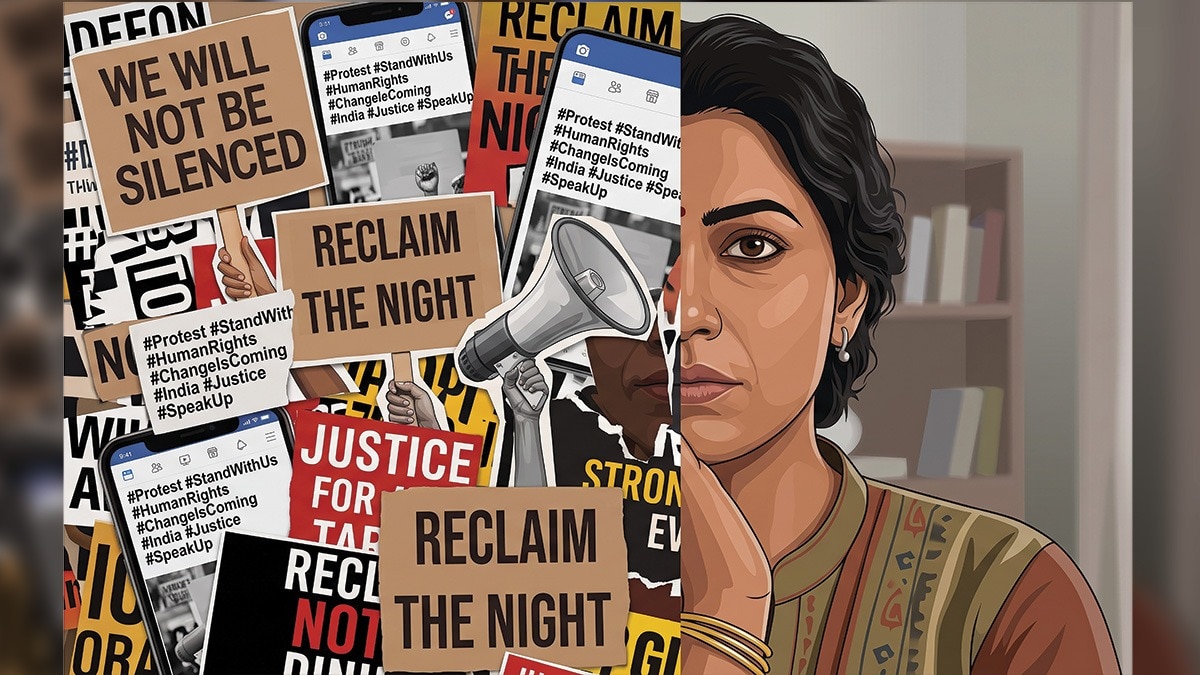
Social media’s power to transmit messages to incredibly large numbers at speed, and its tools for quick creativity and campaign-building, were invigorating. It became a space for raising conversations and building connection. A number of initiatives and accounts focused on gender and sexuality proliferated. When #MeToo arrived, they were able to leverage these digital resources to sustain the issues. Consent discourse grew rapidly in these years. The story of this digital success, as well as its limitations, illuminates the overarching finding of the india today consent survey: that there is a significant gap between women’s awareness of consent and their actual experience of it.
Consent discourse, with its clear messaging of ‘no means no’ and ‘yes means yes’, was well suited to the conditions for social media virality. To gain traction, a message must conform to social media formats: small word counts, short videos and a simple, preferably one-point message, repeated often, as in advertising. When Amitabh Bachchan thundered ‘no means no’ in the courtroom drama Pink (2016), it was celebrated as the mainstream penetration of a feminist message.
Consent discourse, boiled down to its basics, could be ‘scaled up’ by numerous players—from brands to NGOs to influencers—because in its common minimum form, no one will disagree with it. But is the bare minimum enough to imagine freedom?
Social media numbers validate impact and make it feel like a politically fertile space. By delinking consent from other structural questions of autonomy and equality, it enabled the wide acceptance of consent as a ‘gender product’, or a behaviour change campaign, but not as a politics of freedom.
The granular acceptance of this personhood, our ability to listen to each other and respect difference, might be called a larger culture of consensuality, an intimate solidarity. This personhood is also the bedrock of equality, and equality is at heart about access to resources, material as well as cultural.
The survey’s finding that economic strength has a bearing on women’s positive experiences of consent speaks to the relationship between equality and consent. It is not generative to have atomised conversations about consent. They can be vibrant only if rooted in larger political conversations and struggles that imagine a culture of consensuality between people, between communities and castes, and between governments and citizens.
We have seen, as recently as in the case of Twisha Sharma, the visceral denial of this idea of personhood and sexual autonomy as something to be subdued. We have seen, in recent cases of dowry and intimate partner murders, that women earning their own money and cultural capital, manifesting autonomy, can call up a violent backlash from their own families. And we have seen, in the overturning of trans rights, the State’s refusal to acknowledge personhood.
What the survey points to, then, are not simply more conversations about consent but more types of conversation about consent, more politically integrated understandings of consent and freedom. As we watch a new youth movement, the Cockroach Janta Party, make the opposite journey today, from the internet to the streets, perhaps the time is announcing its approach.
—The author is a writer, filmmaker and Founder, Agents of Ishq, a multimedia project about sex, love and desire
Original Source
This content was distilled for a focused reading experience. All rights belong to India Today.
Read original publication