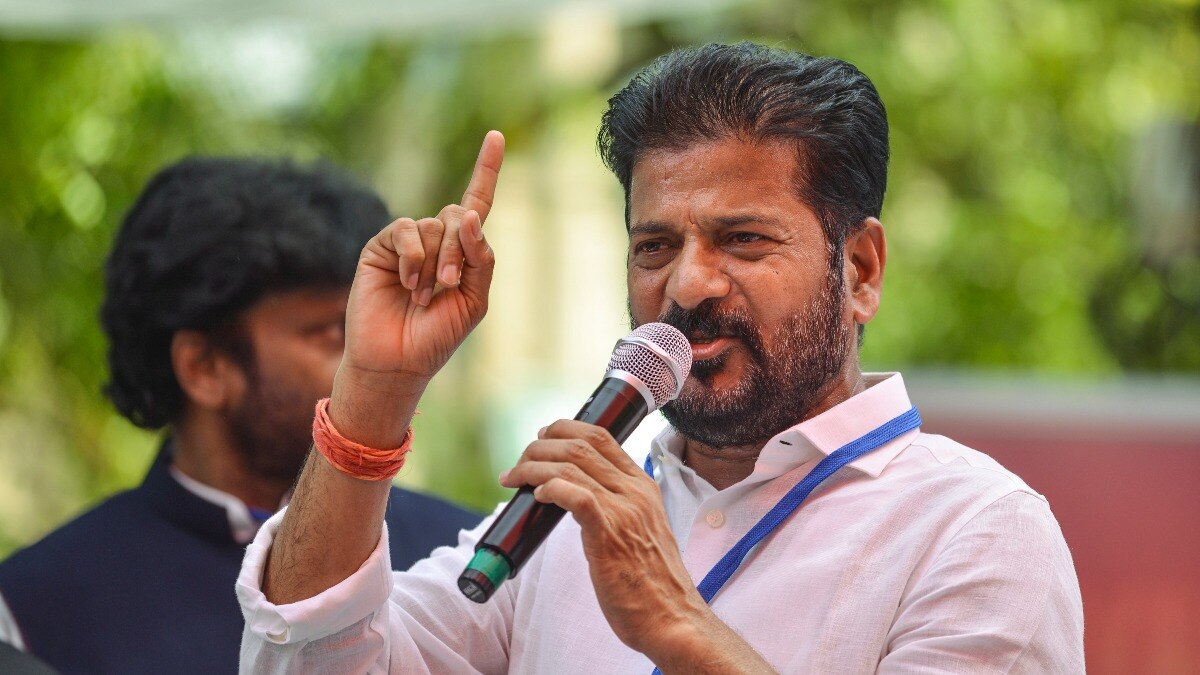
Nandi Bull vs Pandi pig: Revanth Reddy jibe triggers fresh Congress-BRS war of words in Telangana
“What comparison is there between you and me? There is as much difference between us as there is between Nandi and pandi,” Revanth Reddy said.
The remark was a play on the Telugu words “Nandi”, the sacred bull and vehicle of Lord Shiva, and “pandi”, meaning pig.
“A donkey does not know the fragrance of sandalwood. No matter how much colour you apply to a donkey, it will never become a racehorse,” the Chief Minister added.
The remarks came amid Reddy’s continuing criticism of KCR for making few public appearances since the BRS lost power in the 2023 Assembly election.
The Congress leader has accused his predecessor of failing to take his responsibilities as Leader of the Opposition seriously and remaining absent from major political and public engagements.HARISH RAO DEMANDS APOLOGY
BRS leader and former Telangana Finance Minister T Harish Rao hit back, accusing Reddy of using personal insults to divert attention from his government’s performance over the past 1,000 days.
“Every time you resort to abusing KCR personally and stooping to personal insults, it does not elevate your stature one bit,” Harish Rao said.
He said such remarks by a sitting Chief Minister reflected poorly on the dignity of the office and Telangana’s political culture.
The BRS leader asked Revanth Reddy to explain what his government had achieved during its 1,000 days in power instead of repeatedly targeting KCR.
He also questioned the implementation of the Congress’s six guarantees and accused the government of failing to fulfil several election promises.
“Mere abuses will not fill people’s stomachs, and criticism alone will not resolve systemic issues,” he said.
The former Telangana Finance Minister demanded that Reddy withdraw his remarks and offer KCR an unconditional apology.- EndsPublished By: Aprameya RaoPublished On: Sep 1, 2026 19:14 IST
Original Source
This content was distilled for a focused reading experience. All rights belong to India Today.
Read original publication