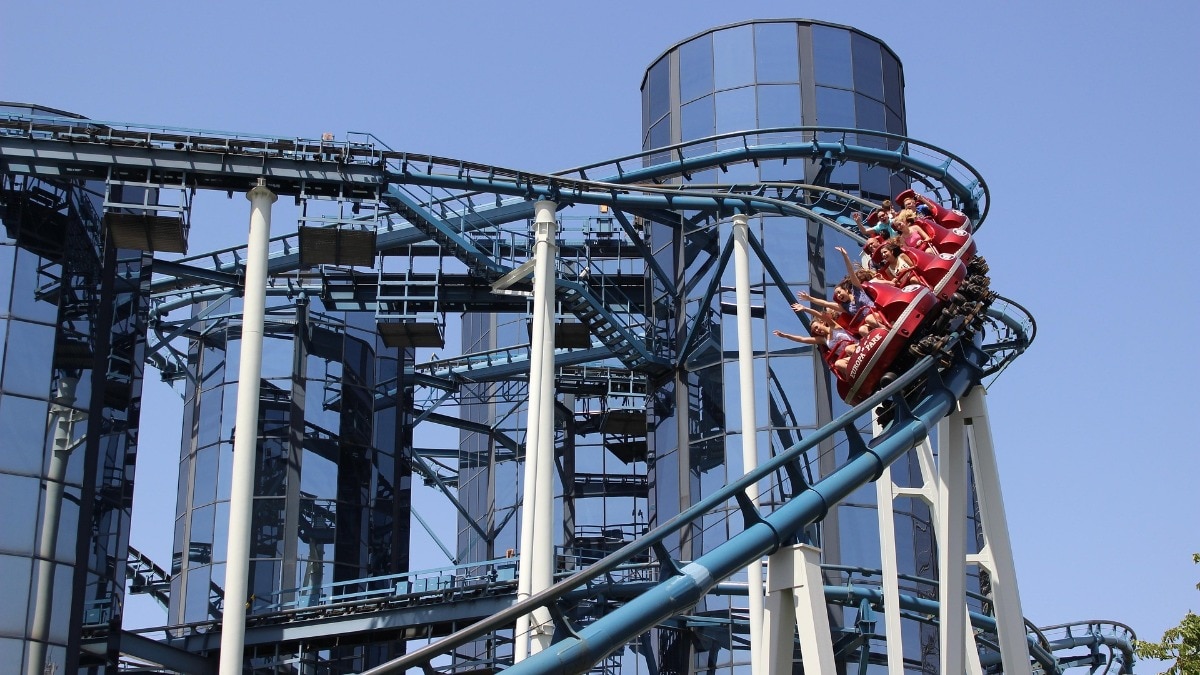
Can a roller coaster ride cause brain haemorrhage? Neurologist explains the risk
According to reports, surgeons treated two women for strikingly similar brain haemorrhages last month. Their injuries reportedly resembled the kind of trauma doctors usually associate with high-speed vehicle crashes or other violent accidents, where the brain can rapidly move, twist or strike against the inside of the skull.
But neither woman had reportedly been involved in a car crash, fall or similar accident. Both had ridden X2, an extreme roller coaster at Six Flags Magic Mountain in Southern California.
The cases are rare, but they have put the spotlight on what happens inside the head when the body is subjected to sudden acceleration, rapid deceleration and powerful G forces.
So, can an extreme roller coaster really cause a brain haemorrhage? And should people be worried the next time they get on a high speed ride?
According to Dr Jaideep Bansal, Principal Director and Head of Department of Neurology at Fortis Hospital, Shalimar Bagh, the concern is not that roller coasters routinely cause brain bleeds. Instead, the issue is that extreme forces may pose a greater problem for people who already have certain vulnerabilities.
An extreme roller coaster can subject the body to sudden changes in speed and direction. The head and neck may move rapidly while the brain continues to move within the skull.
“Extreme roller coasters expose the brain to sudden acceleration, deceleration and high G forces, similar to whiplash,” Dr Bansal says.
In most people, these forces do not result in serious injury. However, in rare circumstances, sudden movement may put stress on blood vessels or structures surrounding the brain.
One possible injury is a subdural haematoma, in which blood collects between the brain and its protective covering. According to Dr Bansal, sudden forces can theoretically cause the bridging veins to tear and result in bleeding.
Another concern is an arterial dissection. This happens when a tear develops in the wall of an artery in the neck. If blood flow to the brain is affected, it can potentially lead to a stroke.
“While brain haemorrhage is exceptionally rare, the forces can theoretically cause tearing of bridging veins leading to subdural haematoma, or dissection of neck arteries leading to stroke,” he says.WHO SHOULD BE MORE CAREFUL?
The biggest takeaway is that the risk may depend less on the roller coaster itself and more on an individual's underlying health.
Someone with healthy blood vessels and no major risk factors is unlikely to suffer a brain haemorrhage simply because they went on a roller coaster. However, certain conditions can make a person more vulnerable to bleeding or blood vessel injury.
Dr Bansal identifies several groups that may need to be particularly cautious. These include people with undiagnosed cerebral aneurysms or arteriovenous malformations, also known as AVMs.
An aneurysm is a weakened area in a blood vessel that can potentially rupture. An AVM is an abnormal connection between arteries and veins in the brain.
Older adults may also be more vulnerable to certain forms of head injury.
This does not mean that everyone with these conditions will develop a problem after a ride. However, anyone with a known neurological or blood vessel condition should discuss whether high-intensity rides are appropriate for them.THAT HEADACHE AFTER THE RIDE MAY NOT BE ‘JUST A HEADACHE’
Feeling dizzy or having a mild headache after an intense amusement park ride may not automatically signal a brain injury. But some symptoms should never be brushed off.
The most important warning sign is a sudden, extremely severe headache, particularly one that reaches peak intensity very quickly. Doctors often describe this as a thunderclap headache.
Persistent neck pain following a forceful ride is another symptom that deserves attention.
Other red flags include vomiting, confusion, slurred speech, weakness or numbness on one side of the body, seizures, loss of consciousness and changes in vision.
“Any such symptom warrants immediate emergency evaluation, not sleep or painkillers,” Dr Bansal warns.
These symptoms can have several causes, but they can also indicate serious problems such as bleeding around the brain, a stroke or injury to a blood vessel.SHOULD YOU AVOID EXTREME ROLLER COASTERS?
The reported cases should not be taken to mean that roller coasters are generally unsafe. Serious brain injuries associated with amusement park rides are rare.
For most healthy people, an extreme ride is unlikely to result in a brain haemorrhage. However, the cases highlight why people with certain medical conditions should not ignore the potential effects of sudden acceleration, deceleration and forceful neck movement.
If you have a known aneurysm, AVM, previous brain haemorrhage, bleeding disorder or another condition that could increase your risk of bleeding or blood vessel injury, it is worth speaking with your doctor before going on an extreme ride.
And if you develop a sudden severe headache, persistent neck pain, weakness, speech difficulty, confusion, seizure, loss of consciousness or visual disturbance after a ride, do not simply go home and sleep it off.
The chances of a roller coaster causing a brain haemorrhage may be exceptionally small. But when serious neurological symptoms appear after an intense ride, getting medical help quickly matters far more than assuming it is simply part of the thrill.- EndsPublished By: Smarica PantPublished On: Sep 1, 2026 09:58 IST
Original Source
This content was distilled for a focused reading experience. All rights belong to India Today.
Read original publication